Bienvenidos a la familia

The first thing I noticed after we pulled into town was the smell of smog. In Bolivia, on the weather report it is common to see ‘smoke’ listed as if it were a naturally occurring phenomenon like wind or rain. But smoke has been introduced into the nation, a byproduct of mining and concrete factories and the wood people burn in their homes to combat the dusty, dry, creeping cold of the Altiplano winter, which runs June through August.
IMG_2088
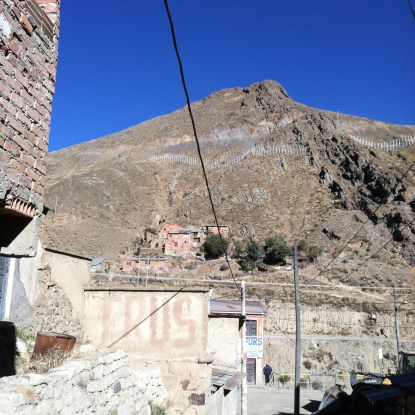
Looking up at the denuded mountains from a Bolivian tin mining village.

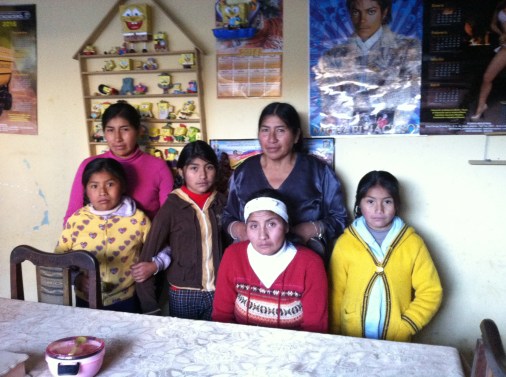
After we’d checked into our hotel in the city center, we rode to the clinic in an ambulance that I’m still not sure the status of. It may currently be in operation, or it may just be the finest van in town. Upon entering the building we were greeted by immediate embraces and kisses from all who had come for the focus group. The first to hug me was a woman wearing a traditional pollera skirt and whose thick, jet-black braid ran far down her strong back. She kissed me solidly on either cheek and rubbed my shoulders vigorously, her eyes glistening with emotion.

That woman was the mother of Angela (name changed), a 19 year old girl who has had Type 1 Diabetes (T1D) since she was around 14. The next day we visited the whole family in their pueblito at the base of a giant tin mine where many of the residents, including Angela’s mother, work to collect minerals from inside the mountain or from the river bed that catches the heavy-metal runoff.IMG_2095
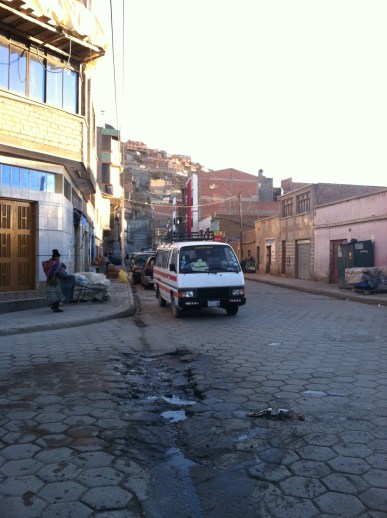
Earlier in the day we had boarded a dusty microbus on the side of the road next to women selling fried breads of all varieties and hot drinks in plastic bags with red straws sticking out of the tied ends. Maria bought one of each for the road. I poured hot water into my orange backpacking mug balanced on one knee and made a cup of instant coffee to sustain me through the morning van ride. We had three home visits ahead of us, separated by miles of pockmarked and potholed roads, and coffee was non-negotiable.IMG_2064
Each day from my time in Bolivia could stand alone as a life-changing experience based on the stories I heard and people I connected with, but this day in particular shines bright in my memory. Maybe it was the sun rising over the arid quinoa fields at the base of the Bolivian Andes, or talking with the teenage sisters who live with Type 1 Diabetes in temporary housing with no electricity or running water. But I suspect above all it was the immense kindness and generosity we encountered from the families we visited. Not only did they share their experiences living with Type 1 Diabetes and managing it in a country where finding supplies is hard and affording them is nearly impossible, but they also filled our stomachs with homemade breads, hot drinks, and even fresh sheep milk ice cream, frozen overnight in the rafters (that was breakfast).

All this social eating was a little tricky for a gal living with Type 1 Diabetes herself, but I came to realize just how immensely blessed I am to be able to manage my blood sugar with an insulin pump and to check my blood sugar anytime I want to. I already had some idea of this, which is part of why I wanted to go on the trip in the first place. I connected with the organization ‘Life For A Child’ (LFAC) because they provide test strips and insulin to children living with Type 1 Diabetes in low-resource nations who lack access to adequate medical supplies. I was hoping my practicum could translate to a learning experience for me and an immediate benefit for others living with Type 1 Diabetes who don’t enjoy the luxuries of management that we have here.OruroOvejasMy purpose on the ground in Bolivia became to interview, chat with, observe and learn from as many people living with Type 1 Diabetes or supporting those who do. Over the course of three weeks and five cities I got to do over 40 interviews and focus groups with nearly 100 participants made up of youth with T1D, their families, and the clinical staff and volunteers who support them. Everywhere I turned, a new element of life with diabetes in Bolivia jumped out at me. It became apparent that Bolivian cultural values were critical to consider when thinking about successful health outcomes for youth with T1D, especially the role of the family. One participant who volunteers as a leader for the group in Potosí and who has had T1D for 23 years himself, said that in all the situations he has observed, “La familia ha sido fundamental para poderlo apoyar..cree una necesidad, de, en todo diabético, de que la educación no sea sólo en el paciente diabético, pero sea también en su entorno. Ese apoyo a la familia, o esa educación a la familia, creo que también es muy importante, porque es un daño que afecta la familia” (“The family has been instrumental in that it can support…it creates a need, that, for all diabetics, the education not reach just the diabetic patient, but also their environment. This support for the family, or education for the family, I think it’s also really important, because it [diabetes} is an injury that affects the whole family”).
walkingOruro
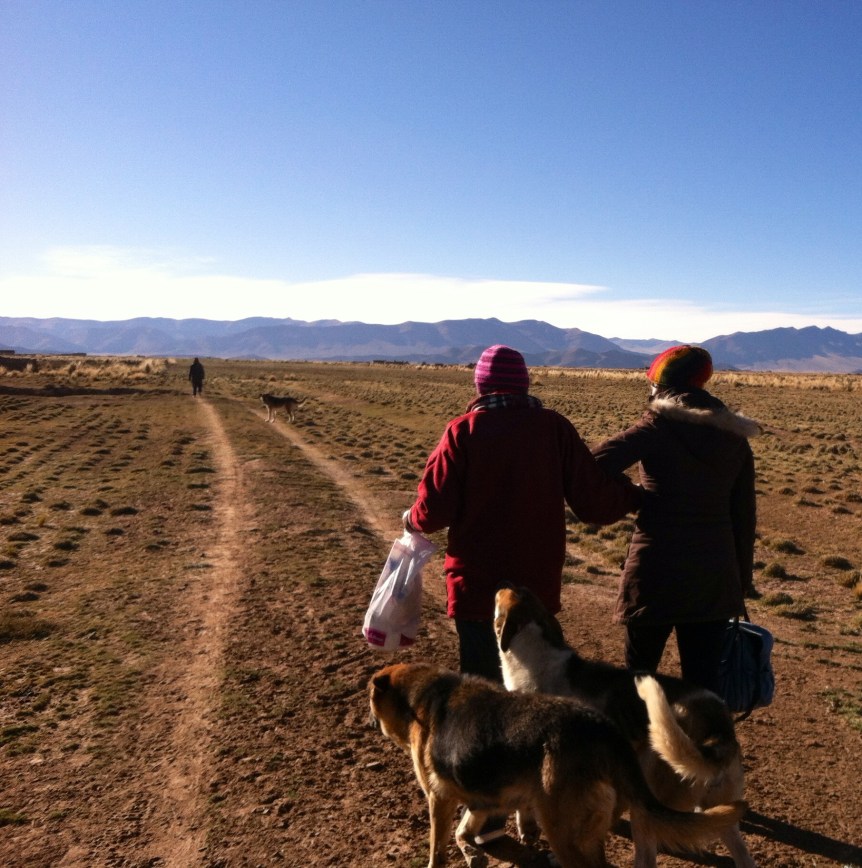
Sisters walking home

Worth the insulin


image

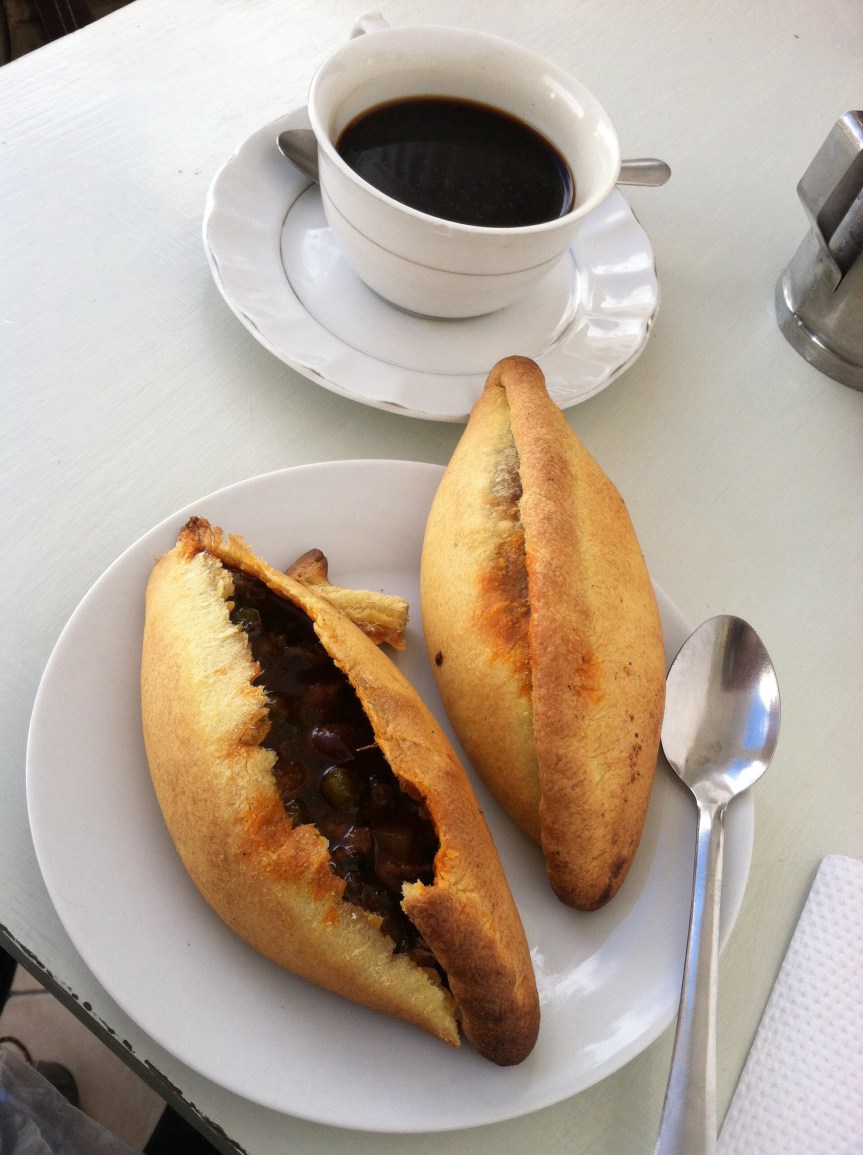
Here are a few Bolivian specialties that I declare are worth the extra insulin. Salteñas, various baked and fried goods at street markets such as this one that appeared to be purely cookies, and small batch Greek yogurt w blackberry beet sauce at ‘Frozz’ icecream and yogurt shop in Sucre.

The best laid plans

imageWhen one is traveling, going with the flow is essential, de acuerdo? I think the same with diabetes. I actually missed my flight to Bolivia. But the plane came back for me, as it turns out. We’ve visited so many amazing families who have fed us some amazing Bolivian delicacies. It’s been necessary for me to take more insulin than usual in order to aprovechar de la experiencia and also deal with the stress of last minute changes and running to throw our luggage onto buses. Also, blogging, probably not going to happen much. But I did spend a 6 hr bus ride trying to photograph an alpaca or maybe a llama, for my friend Ms. Boffa, and I finally succeeded. Continue reading “The best laid plans”

Glucolift, checklists, and a lot of luck

My Glucolift is packed, I’m ready to go…

glucolift
I love Glucolift. It’s the only glucose tab that I don’t dread eating. I buy it on Amazon. Vegan, gluten free, no artificial flavors or colors.

I’ve been marking through checklist after checklist for the last two weeks. The nice man who works at CVS doesn’t need to ask for my card number anymore, he just remembers it.

Today I went to the pharmacy twice, yesterday once, and the day before, yep, at least once.

The last time I traveled out of the country was in 2011. At that time I was preparing for a three month long trip. I quit my job, packed up a huge suitcase and my backpacking pack and filled a lunch box sized cooler full of insulin. This time it’s just a three week trip, and yet I feel like my wheels are spinning as I try to get organized with all these medical supplies.

It’s my first trip out of the country since getting the Omnipod insulin pump. I wore it when I flew to San Antonio for a business trip and to San Francisco to visit two great friends, but never on an overseas adventure and never to a place where I’m not sure what obtaining supplies will be like.

diabetesmeds

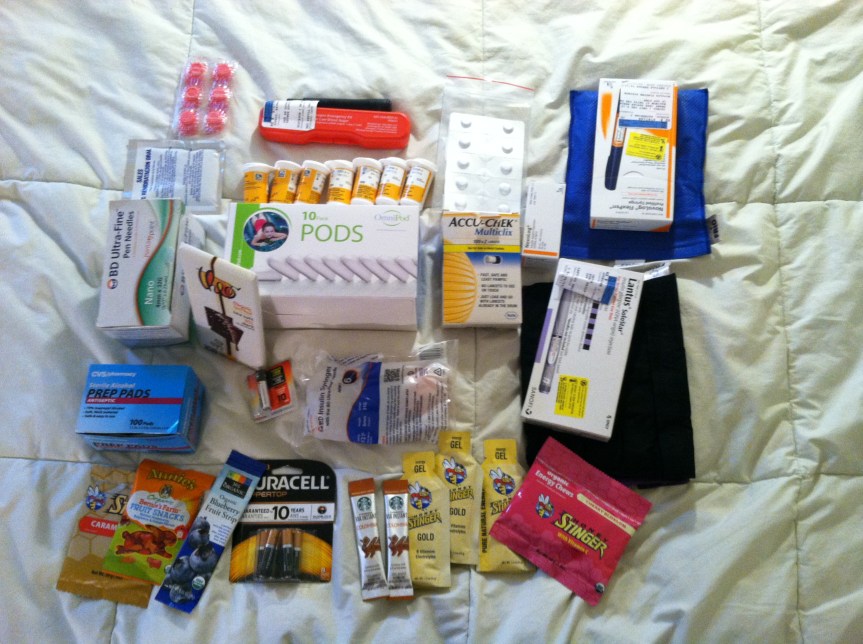
These are some of the diabetes-related supplies I have to carry, and yes, before you say anything, chocolate is a necessity. In the past, I’ve felt so burdened by all of this ‘stuff,’ but in this moment, embarking on this project, I feel so exceptionally lucky.

I am so lucky to be able to afford and obtain these supplies. I am so lucky that this technology is available in the U.S. and that my insurance covers at least a portion of it. And I’m lucky to have so many amazing friends and family supporting me.

When I was diagnosed with T1D 10.5 years ago, a doctor looked at me in my hospital bed and said, “You know, it could always be worse.” At the time, that was not the wisdom I was hoping to hear (actually I was hoping for, “most cases of diabetes clear up in two to three weeks…”). Yet, nearly a decade later I realize how right those words were, although maybe not in the way that doctor intended. I am so very lucky to have been born in this time, with these resources, and this support network, and have such a good starting point for managing diabetes. Not everyone is.

One more thing this time: if you enjoy my blog please go ahead and become an official follower (see the little button bottom right of the screen). It’d be a big help to me and I’d really appreciate it! You can always unfollow or change your email settings if you feel like you’re getting too many notifications from me, but I rarely write more than once a week.

Heading South for the Winter

I’m so excited that in a couple of weeks I’ll be traveling to Bolivia to explore the Altiplano and do work that is very near and dear to my heart. Once again, I plan on blogging intermittently about my experiences traveling with diabetes. In the past I’ve lived in and traveled around Costa Rica four months and through France, Switzerland, and Austria. With international travel there is always a little bit more to consider. For one, I have to pack all the insulin and medical supplies I’ll need for the whole trip, or at least I have had to in the past, because getting these abroad can be a challenge. Then there is the altered schedule and different food options that traveling presents.

photo (9)
Bedtime reading for the next two weeks (although I should also be studying Quechua, Aymara, and other indigenous languages).

The way I’ve decided to blog this trip is by one picture a day while I’m there. I’ll post again at least once before the trip, and I’ll be reading blogs to find out what others with T1D have done when traveling in South America. This is new terrain for me! Thank you in advance for any comments you have that might be useful tips for a person with T1D managing blood sugars at high altitude. Or if you can recommend a high quality, affordable digital camera!

Oh also, about the title of this post, it’s going to be winter there. I’m anticipating a nice cool down from the glorious, yet humid NC summertime.

A misty summer day in Austria

…that looks not very different from this misty winter day in North Carolina. Except for the cows, and the ice cold glacial stream and the rugged evergreen peaks.

In this mountain town in Austria the water was piped directly from the source, glacial springs high in the mountains, and poured out of copper pipes into intricately carved basins. Here in NC I can turn on my faucet and fill up my water bottle and not worry about bacteria and contamination.

Managing Type 1 diabetes or any chronic condition in an area where you don’t have access to clean water would be terrifying! Today I am so grateful for water.

Can’t stop thinking about…

Costa Rica right now. It’s cold here in North Carolina! Here are some pics now and then, side by side. It’s crazy how much our climate shapes us. Right now I’m going to the gym or bundling up for walks, down there I was rambling outside and running by the surf.

Diabetes was wild in Costa Rica. It was the first time I’d ever introduced myself to new people as a person with diabetes. Before that it was all about telling people who knew me that I’d been diagnosed. In some ways, it was sort of a relief to not have to explain how I got sick, stayed sick, and was finally diagnosed. To not have to fight people’s expectations of how I would be based on how they knew me before.

It’s nice to have better words to explain diabetes now. It’s taken me ten years – there have been a lot of hard emotions to sort through when it comes to how much to share, how much to ask for help. Being vulnerable with friends though, and there is a lot of interesting research right now about vulnerability that seems to confirm this, in my experience has blessed me with deeper relationships and more trust.

Good Morning 2016

Even though I know it works, I forget that gratitude is a choice, like a lens you put into your camera to brighten the vibrancy. It always works, sometimes more than others, to heighten our focus on the present and make life something solid to hold on to.

During the two weeks I was traveling over my break between semesters, I slept on 2 different sofas and 6 different beds. The hospitality of my friends and family was heart rendering. I rolled in like a rambler and left full of good food, laughter, and strong coffee. I carried an increasingly buoyant load of love around with me from house to house. I am so exceedingly grateful that in my life I have people who I can feel connected to even when I’m miles away.

These are the people who bring a smile to my face as I’m falling asleep and whose very presence makes me feel healthy and whole. I just wanted to take a moment to celebrate the power of being present with each other, here at the start of this new year.

On the Road with Diabetes

Lately I’ve been on the road a lot. Which is a way I love to be! I love the adventure of navigating a new place. I like to go at it without a GPS (which is good since I don’t own one) and ask for directions as many times as possible from as many different people as I can. This seems strange, I know, but it is a fabulous way to discover the hidden nooks of a place and to get a sense of the general friendliness and openness of a community.

When you ask a local for directions, you can often tell right away how they feel about that place. People will light up when describing a route to you through a town or countryside that they love. They will shake their heads and look down and make scoffing, grunting sounds, or else, like when I landed in the worst neighborhood in San Francisco dragging my big red suitcase, with no cash, they will make purse-lipped, “Mhmm,” sounds with a furrowed brow and tell you not to make eye contact and to just keep moving. That’s not my style, so I asked a cop for directions further down the road hoping he might offer to transport me in his squad car. He didn’t, he just made more, “Mhmm,” sounds of worry and confusion for me.

When I’m traveling half of my mind is engrossed in the outer landscape and the other half is engrossed in my inner physiological landscape. I simultaneously hate and appreciate this. As much as I try to tell myself beforehand, “I’m going to just not care what my blood sugar is on this trip,” I always still do! When I have high blood sugar and have an hour or two of a drive yet, I feel like frustration is swelling inside of my heart. Having high blood sugar already makes me feel like a caged animal, and having it while being in a car is like that feeling times two. I can’t even (quite literally) shake it off, by going for a walk, or jog, etc. And I’m always puzzled between the fine dance of ‘conservative’ bolusing, so that I don’t go low if I’m driving, and extra bolusing or increased basal for the more sedentary time of travel.

Diabetes management thrives on routine or else requires the operator (me) to become a lot more involved. Which is the opposite of what I want to do on vacation. I want to say to my friends, “I don’t care where we go to dinner, take me to your favorite place!” Or, “Yeah, cheesecake sounds great!” Sometimes, I have an impulse to do that thing called…relaxing, where your mind sort of goes blank and you stop strategizing for the best possible way to achieve balance and you just sort of…veg.

But instead I pack a rigorous cooler full of literal veggies and nut butters, snack foods of all kinds, instant coffee (can’t really attribute that to diabetes, but it helps), and try to picnic as much as possible. The picnic is key because usually a good spot for picnicking is also a good spot for walking, which is a really useful tool on car trips. Often I park far from my ultimate destination and play the ‘ask for directions’ game on the way to wherever I’m going, which usually helps me get a good walk in. But I think the best outcome for me on the road comes from that good cache of snacks that I can use to fill-up a little before and meal at a restaurant that might not have as much to offer in the way of non-spiking foods or to munch on in the morning before my companions wake up. I would recommend the noble avocado, as the perfect snack for morning, afternoon, or night, compatible with sweet and savory, filling, and rich in happy making omega-3’s. I have more to say on this topic, but for now I’ve got to move.