Backglamping

Today is my 39th birthday. That makes over 20 years of living with type 1 diabetes (T1D). I’m writing this in anticipation of my first podcast episode, which I’m hoping to record and air in August. A chipmunk runs by under the bushes outside of my porch screen. I am outside-inside here on the screened porch, which mirrors life recently. I have woken up in the woods enough lately to know that it is essential – at least for me – to me feeling like a real human. To feeling real at all. So, this post is about – hmm – what is real and what is not? What is outside and what is inside? What is helpful and what detracts from our relationships and connections to ourselves, the earth, and each other?

I recently found out that the Omnipod 5 app is now available for iPhone. After googling this, I learned that it became available in October of 2024! Neither my endocrinologist nor Insulet/Omnipod notified me in any way. I found out from someone else who happened to ask their doctor when the app would be released, only to learn – like I did – that it had already been out for over a year. This is wild to me based on the constant stream of notifications I get. I get a notification from my bank when I redeem my credit card points for cash. The bank emails me to say, “we are working on the thing you literally just asked us to do.” Then I get another notification when it is done. I don’t like these notifications. I get notifications from Omnipod or Dexcom when their product has been recalled – at least at some point (which has been a lot lately). Why not a notification when there has been a major advance that affects the ease with which I can manage diabetes? Because, believe it or not, it has been major. Now, I traipse into the grocery store with my fanny pack containing pretty much only what it would if I did not have diabetes. Granted, I still have at least one other bag full of backup supplies and a small cooler in my car, but from there I head out on foot with just a phone, my money, and my keys – plus a stash of several low treats such as Annie’s bunnies, Werther’s, and a honey packet (I’m still hoping one day that Annie’s will read my blog and elect to sponsor me). Before, I was toting at least two phones in my purse at all times, both of which I had to keep charged with different types of chargers. Now, I’m not saying this was horrible or anything – it was fine for the added convenience, but being able to manage it all from one place – to have my blood glucose and Omnipod both on my phone…it’s a mini game changer. In some ways, this makes me feel footloose and fancy free, but in another, as you might imagine, at times I feel more connected and tethered to my phone than ever before.

This is not so apparent in the grocery store. But in the woods, it suddenly sticks out like a bag of dog poop someone has left on the trail (maybe not that intensely, but please remember to throw away your dog poop). Back to the woods. So, this summer I have come to appreciate a third form of camping – somewhere in between car camping and backpacking. There has to be an accepted name for this already, but I’m going to call it “Backglamping.” Backglamping is what you do when you don’t want to see (or hear) cars, but you do want to have a pretty elaborate camping setup that you will post up at for at least 24 hours. Backglamping involves effort, but rather than the sustained effort of an 8-mile hike with a backpack on, it is a 2-mile or less haul in which you have a backpack and also an assortment of items carried haphazardly in your arms. This allows you to live the life of leisure at a site too far from the car for a casual back-and-forth, but not so far that you can’t decide to run back if the weather suddenly turns or you forget something major. This relieves a lot of the pressure of backpacking. Getting prepared for backglamping involves less diabetes-related anxiety about my survival, although it’s still essential that I have the supplies I need. But maybe it’s a more manageable emergency if I did forget something. I remember the moment I decided to start this blog years and years ago, miles into an overnight backpacking trip. I had discovered that the assumption I had made when I was diagnosed, that camping and backpacking were now out of reach for me, was false. As I have said time and time again, it just involves more planning. And I wanted to let people know! And what activity better than backpacking to prove that I can carry all I need to survive overnight in the woods. This is an empowering feeling when you have a chronic health condition that requires you to do this literally every day wherever you go. If I get to work without extra supplies on hand and my pump fails – well I’ve got to go home. That’s why I have extra insulin and diabetes supplies with me right now, and I’m just a few miles down the road at a coffee shop (I moved from the porch).

But backglamping has taught me something new. Really, a key goal is the same but the methods are different. With backpacking, it’s all about how little you can carry to be comfortable. You don’t want to be lugging a 60 lb pack down the trail. With backglamping, it’s about how much you can carry to be comfortable once you get to camp. On our last trip off of the Blue Ridge Parkway, this meant two trips, a frontpack and backpack, and extra items flung about our arms. The result was basically moving into our creekside campsite for the entire 4th of July weekend. And during the course of this venture into maximum comfort, relaxation backglamping, something shifted in me. Because if I’m being honest, ever since my diagnosis I have toted a little bit of shame along with those extra supplies. It’s not rational shame. I would never put down another for having to carry around a load of supplies and backup supplies, but it conflicts with my previously developed and relatively entrenched desired self-image as a low-maintenance person. To be able to just go. To need little. To live simply. This makes intuitive sense to me, but type 1 diabetes has changed the expression of this drastically. What I didn’t know when I was diagnosed at 18, was that aging would change the expression of this too (especially when it comes to sleeping on the ground!). And what I could have never guessed, was how much technology would change this too – in both directions.

As I said, planning and packing and creative solutions are essential. When I go camping or backpacking or backglamping, I now carry a power brick with me so I can charge my phone, because now my phone tells me my blood sugar and allows me to control my insulin. My phone is pretty important. What a piece of technology! But an iPhone has a different energy than an insulin pump or a blood glucose meter. An insulin pump wants nothing from you and you don’t get lost in it. You go to it for one reason – managing blood sugar and taking insulin. It doesn’t pull at you. On our backglamping weekend, my phone was within 20 ft of me at all times. And it had to be that way. Previously on a camping trip, my phone would hit the tent and lie there useless. We didn’t have service, I couldn’t call or text or use the internet (which was glorious), but still – its presence felt more demanding than my insulin pump did, even though that had technically been a phone too.

This is the power brick I use. It is made by Anker and stores a hefty amount of energy.

And I thought about how the internet-phone creates its own chronic condition. We are tied to something that has become – or at least feels essential for survival. To tote around a phone, keep it charged, look to it as the balm for boredom, uncertainty, lack of knowledge, trouble with recalling a memory or a fact, that’s a high level of dependency. That’s being tied to something like I’ve been tied to my diabetes supplies for years. And that’s just the state we’re all in.

I think the more zoomed out view is that no one is without these ties, phone or not. But when you are diagnosed at 18, you are at this moment where it feels like you could take off and fly anywhere. You don’t see all of the invisible ties around you, and you don’t think about what they do for you, what they allow. And this is how I view phone-based diabetes technology right now. When I was diagnosed, and for many years after, I used a meter, lancet device, and test strips to check my blood sugar, sometimes upwards of 16 times a day. I took short- and long-acting insulin shots using either vials or pens, which meant an average of 7 to 11 shots a day. I did not wear a continuous glucose monitor, so I did not know what direction my blood sugar was going in or how quickly, which resulted in a lot more over- or under-correcting, and therefore a lot more unexpected lows and extreme highs. For me, life with diabetes is way easier and more comfortable now. However, I still think about it all the time. The mental burden is different, but it’s still there. And I think I have to see this as separate from my relationship to my phone. We all have a relationship to our phones. For me, this relationship activates some of my other values – connection and engagement, but over-involvement with it takes away my capacity for both of those things. And using my phone to manage diabetes makes it more complex to set boundaries in that relationship, because I’m continually pulled back towards it. I don’t have any firm conclusions yet, just a growing awareness of the need for balance. That said, I have figured out a few tricks that have been helpful to allow me to use the phone as a CGM without getting pulled into its other features. First, I added a small widget for the Dexcom app to my lock screen that shows a little circle with my blood sugar. I can also click on this if I want and it opens my Dexcom app right up. I also added a large widget to my home screen where I can see my blood sugar with just a glance if I am using my phone for other functions, so I can easily do both at once without forgetting to check my blood sugar and then having to go back to my phone again (see pics below). But this is all still a work in progress. I would love to hear how others manage the duality offered by the phone of increased freedom from the demanding, cumbersome, and often painful tasks of diabetes on the one hand, and decreased ability, perhaps, to set boundaries related to engagement with the phone itself, on the other.

Look out for my first podcast episode! No firm launch date, but I’ll put up a quick post when it’s out. Oh, and one last thing. When you backglamp out of camp, you usually have less stuff because you ate most of your food. I like to carry a couple of empty trash bags to pack out all of our trash, of course, but also pick up any extra trash at the site and leave the place a little cleaner than when we arrived!
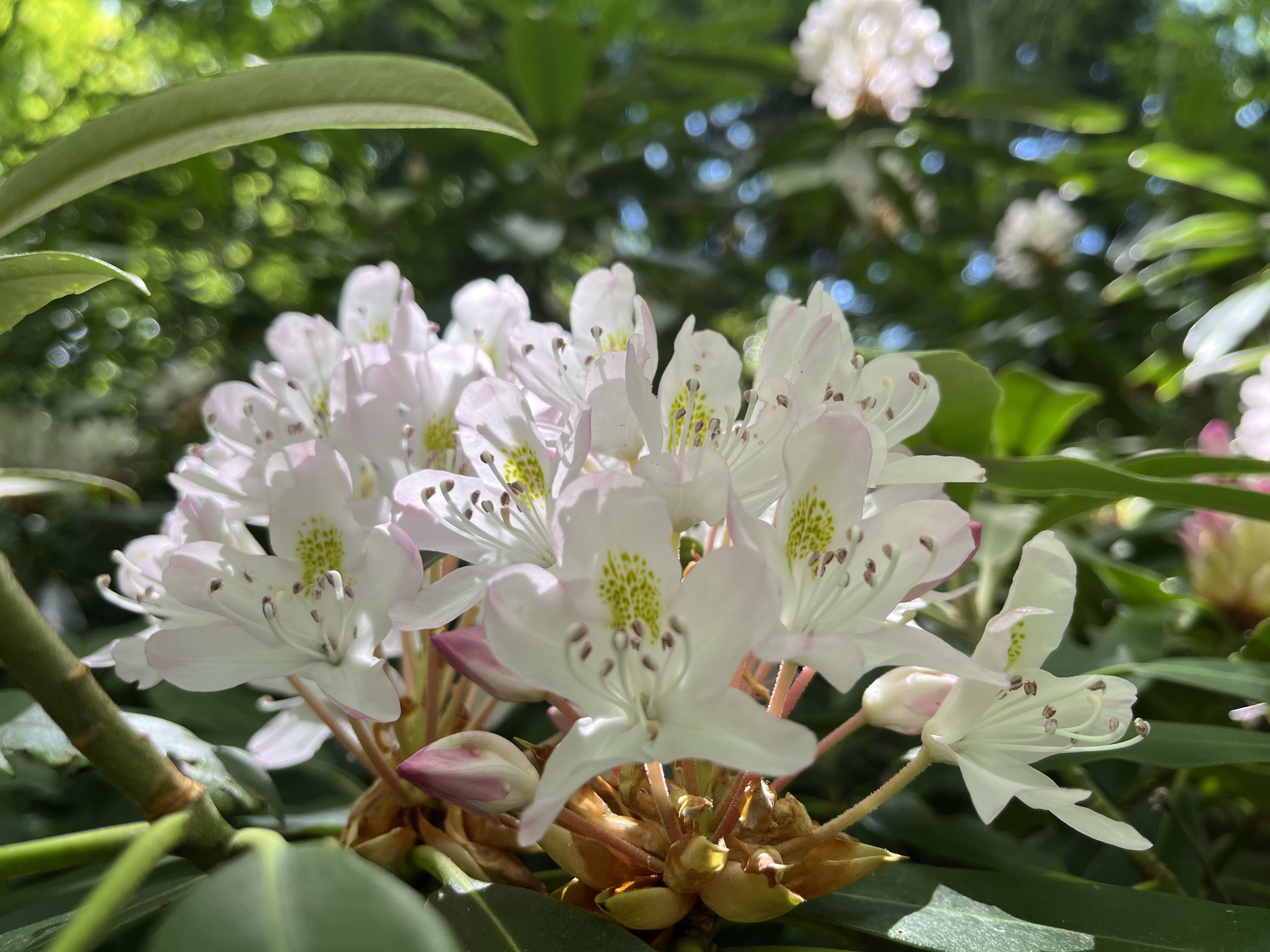
New Chapter

I love starting new things. I am what I would describe as a starter. Maybe that’s why I haven’t been writing lately, because I’ve been engrossed in new projects. But I’m always grateful when I return to older interests and pursuits. It’s a relief knowing that although maybe it is a long arc, I do circle back around to what I’ve invested in previously.

The new thing that I have on my horizons is really a culmination of many elements that have flowed together in my life. In about three weeks, I’m beginning a Master of Clinical Mental Health Counseling Program. It’s a two year program, after which I hope to create a multidimensional counseling practice, that involves in-person, written, and audio support. My focus is, as it has been for the past 10+ years, supporting people with chronic conditions, especially individuals living through acute or chronic instability.

My mission, as far as I’ve defined it, is to help people with chronic conditions live healthier and more joyful lives. My vision is that people with chronic conditions, which is really, at one point or another, all of us, have the time, skills, and support they need to care for their health, pursue joy and creativity, and nurture meaningful relationships.

Care for their health – I used to have a more prescriptive idea about what this meant, but that’s no longer the way I see health with diabetes or other chronic conditions. Sometimes caring for our health means moving more, sometimes it means moving less. Sometimes caring for my health means having ice cream with people I love and bolusing for it and going high anyway. Sometimes that’s what health means for me. My New Years Resolution this year was to eat more cheese. I’ve accomplished it well so far.

Health is also an individually and culturally personal concept. I’ve been proud to work for a diabetes advocacy organization over the past two years that recognizes this and creates space for its volunteers and supporters to define individually what health means and pursue that ideal as their right.

More about the specifics of the vision coming later as I’m sure it will change anyway, but broadly I believe that finding health, joy, and meaning as a society requires deep respect and care for the Earth as our sustainer. In this next chapter, I am excited to weave my original passion for environmental connection and care with my less expected calling of health and well-being with chronic conditions.

Slowing Down

Why haven’t I been writing? Months ago I promised a Chapter 2 to follow my last post about Costa Rica. I thought that more posts would follow that – about traveling around the globe for friends’ weddings, conferences, and maybe a little vacation. I had a busy year planned. And yet, now, here it is nearly July and I find I haven’t been more than 30 miles from my home since February.

Slowing Down.

What I’ve been doing during this time of social distancing. It’s a privilege that I have as a single woman with no children or even pets to care for. Up until recently I had a job, which made things still feel busy. I don’t have a full-time job at the moment, and I’m trying to figure out what my life and my schedule looks like without it.

Slowing down. A reset. I’ve been resisting this idea hard. As I think back over the last couple of years, I feel like I’ve been living my life in leaps and bounds. Sprinting towards the next goal without pausing at each milestone along the way. And I wouldn’t say this is unique to me or has even been by choice.

A big part of it is the society we live in. Things move fast – too fast sometimes for reflection. Maybe part of it too has been the pressure of diabetes. For 14 yrs I’ve lived my life on a schedule aimed at balance. A consistent wake time, consistent carbs at each meal, daily exercise everyday, sometimes multiple times a day, whether I really feel like it or not. And the self-improvement articles and health educators (like myself) will often tell you that just this is the recipe for health. “Once you get going you’ll feel better.” “Exercise is the best medicine.” And I actually believe it’s true. But I think this mindset, combined with a taxing chronic disease and a personality type leaning towards perfectionism can get out of control.

I certainly feel like I’m running on vespers sometimes. Running on the diabetes treadmill: time to eat, first take insulin. Now blood sugar will likely spike even if I called the dose right, so it’s time to walk. Maybe walked a little too much, time to eat a snack, and that’s just one meal cycle. That doesn’t take into account sleep and rest; sometimes I want more of it, but I know if I linger in bed my blood sugar will start to rise or maybe it’s falling and I’ll end up feeling worse later. There’s no easy answer. I’m not looking for one. I’m just recognizing the cycle that I feel like I’ve been on for a long time.

And this cycle bleeds over into other realms of my life. Pushing past what feels right into the territory of ‘shoulds.’ Lately it’s started to feel right to write again, but about what I don’t know. Because life doesn’t look like any of us thought it would. So I’m going to keep taking it day by day. Maybe this is Chapter 2 – because Chapter 1 was all about finding myself for the first time as a woman with diabetes in a new country, with a new group of people. And this Chapter is about meeting myself here, now, with very little else to distract me. I mean apart from the imminent dread of the news, but looking inward, maybe this is an opportunity for growth, as they say. Or just an opportunity to slow down and feel.

Does diabetes limit your life?

My dad came to visit me for Father’s Day this past weekend. After dinner one night we got to talking about my work and about how the landscape of diabetes and its management has changed over the years. He asked about my experience of living with diabetes and how it had changed over the past 12 years or so. Dad, who I probably haven’t ever talked as openly about diabetes with, was more willing to be curious than I previously remembered. He asked me: “So – do you find that it (diabetes) limits your life?”

What an interesting question.

If you had asked me two days after diagnosis, I would have started bawling and talked about all of the dreams I had that I could never do now that I had to tote diabetes around with me. Dreams like: hiking the AT, kayaking in a remote jungle, abandoning society with no cellphone or attachment to the outside world…

If you had asked me two weeks after diagnosis I would have given some sort of manic response cloaked in coping positivity, like, “No! It has made me stronger, more organized, and more appreciative of life!”

If you had asked me two years after diagnosis I would have probably given you some more truthful examples, like how hard it was to be a summer camp counselor only 5 months after I’d been diagnosed; to be chipper and on full-time, while trying to give myself shots, check my blood sugar, eat someone else’s cooking, sleep in a cabin full of 8-year-olds, and otherwise make sure everyone was safe and entertained.

And then there have been other moments when the thought of doing it and doing diabetes, was just too much. I’ve said no to weekend plans and trips with friends, stayed in at night because I didn’t want to have to keep strategizing about my blood sugar so that I made sure to be at a good level to drive a car.

But – and I may be conveniently forgetting something – I’ve never not done anything I really wanted to do because of diabetes. Maybe I’ve been more exhausted before, during, and after it, maybe it’s made me ask myself how important something was to me before committing, but I’ve kayaked in a jungle, have gone on long trips, and have otherwise lived the life that I wanted to.

And – what’s interesting is how the “life that I wanted” has changed. My desires seem to be increasingly able to co-exist with a life that gives me space for diabetes management.

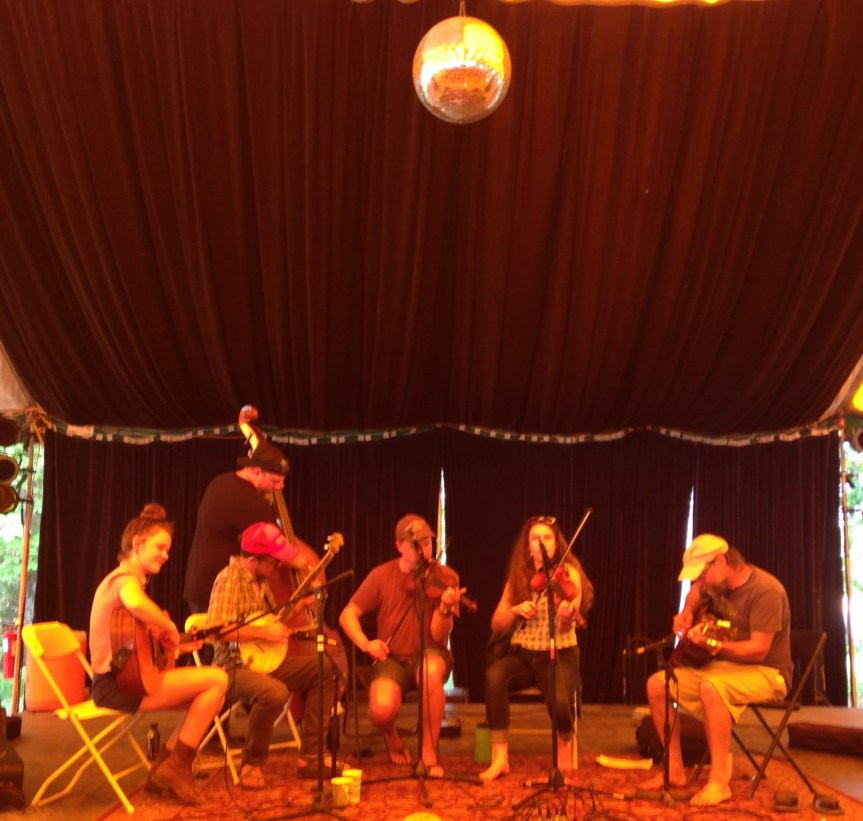
Natalie Goldberg says our obsessions can be our inspiration – and I’d be lying if I said I wasn’t obsessed with diabetes. But I’d also be lying if I pretended that obsessions wasn’t a prerequisite of diabetes; either you’re obsessed with it upfront in order to manage the moment to moment decisions and tasks, or you end up obsessed with the symptoms of high or low blood sugar, and other short and long-term complications. And to say I’m obsessed with diabetes is really barely scratching the surface – what I’m obsessed with is what diabetes represents – the interaction between our bodies and our environments. Between the internal and external world. Diabetes gives you a front row seat to watch the effects of every bite of food, every step you take, every bit of anxiety you hold on to, minute of sleep you get, sunburn, bug bite, cold, allergy, all of it – it’s all a weird dance. Or orchestra. Or rowdy old-time band (represented by featured image taken at Shakori Hills music festival, 2018).

So, after traveling a long and winding mental road to an answer, I replied to Dad that the question didn’t quite fit for me anymore. It was the first time I’d realized this, that the answer required a reimagining of the question. Deciphering whether diabetes limits my life, or impacts it in positive or negative ways doesn’t make sense anymore, because it’s an inseparable part of my life and experience. And letting go of that qualifying, deciphering, and even meaning making, feels like a relief.

Walking through Innsbruck

To awaken quite alone in a strange town is one of the pleasantest sensations in the world. – Freya Stark

I stayed in a small Air BnB across an azure blue river that ran straight through the middle of Innsbruck. I walked there for the first time from the train station – my gracious host offered to pick me up, but I screwed up military time in a text message and told him I was coming 2 hours after my actual arrival. He gave me directions and I looked them up using the train station’s wifi (which was the only way I could use my phone) and headed on my way.

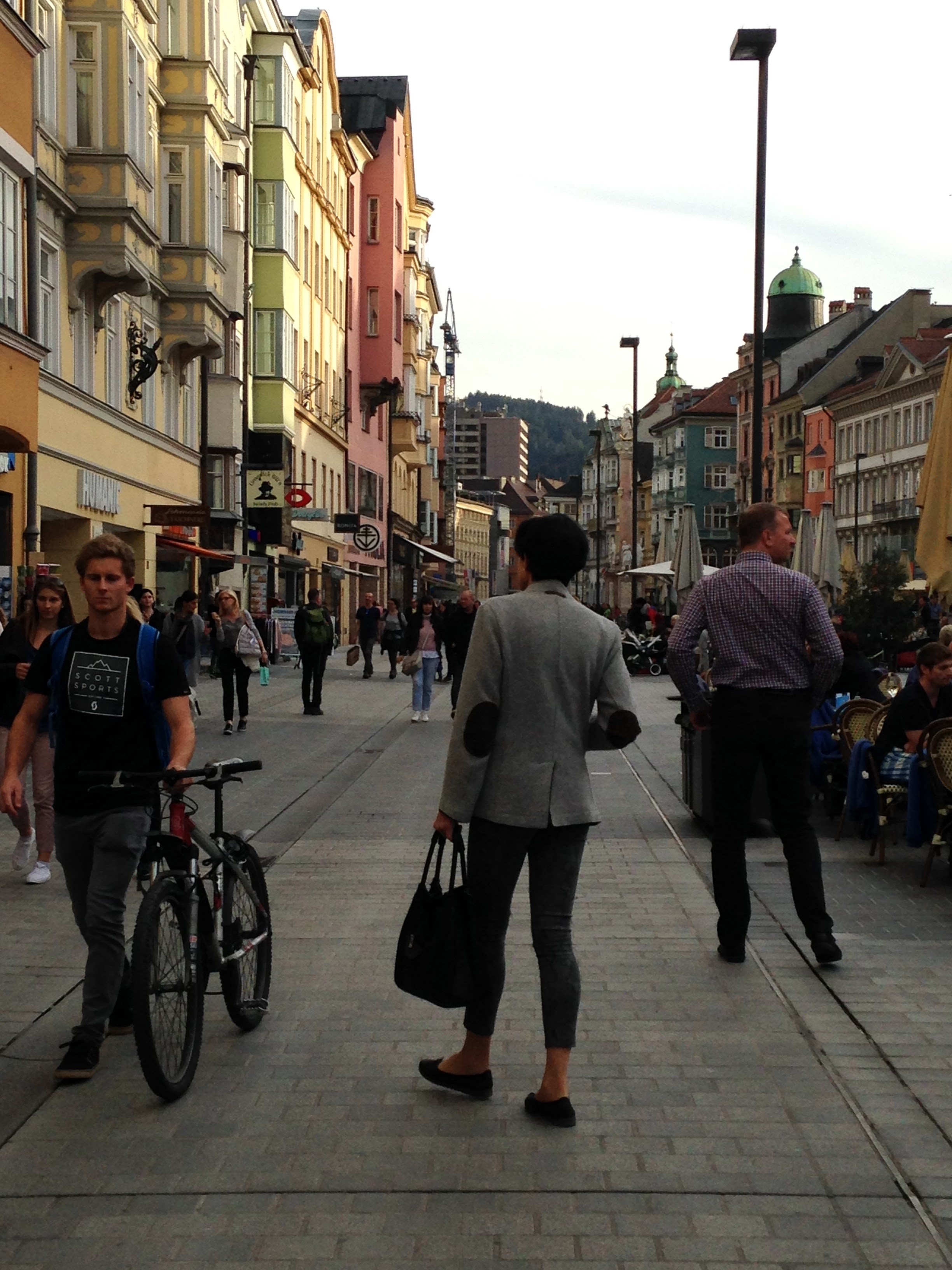
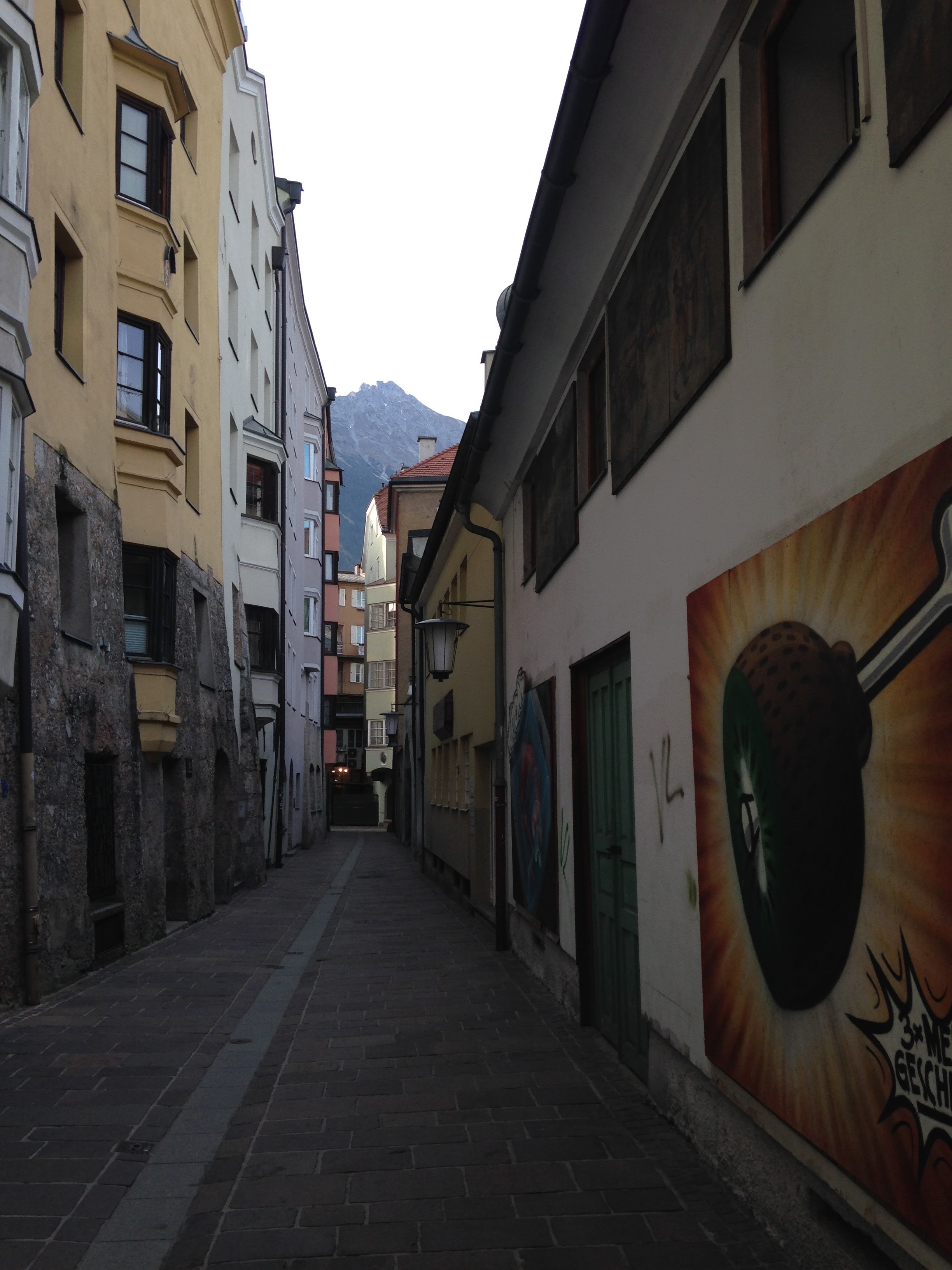
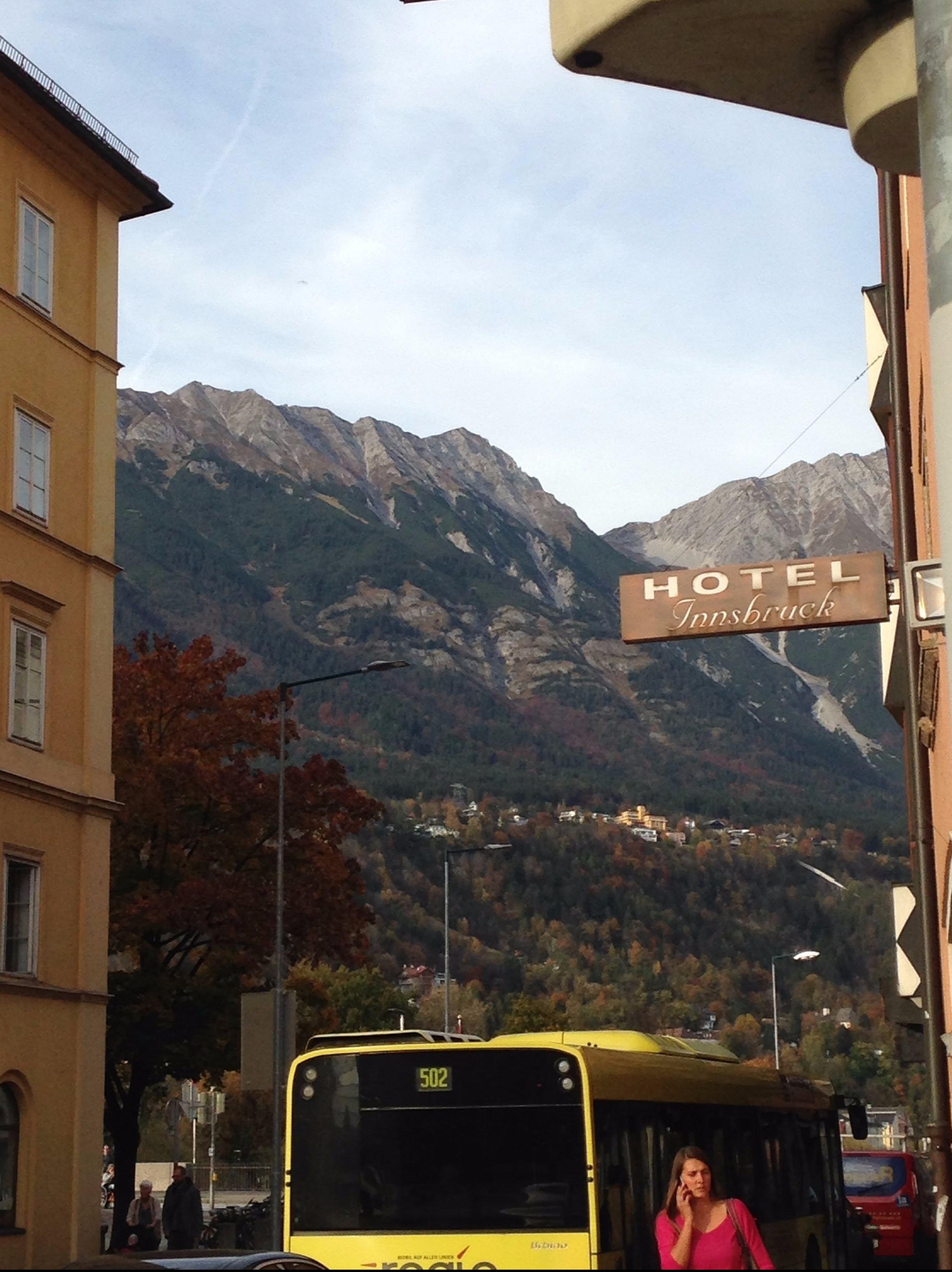
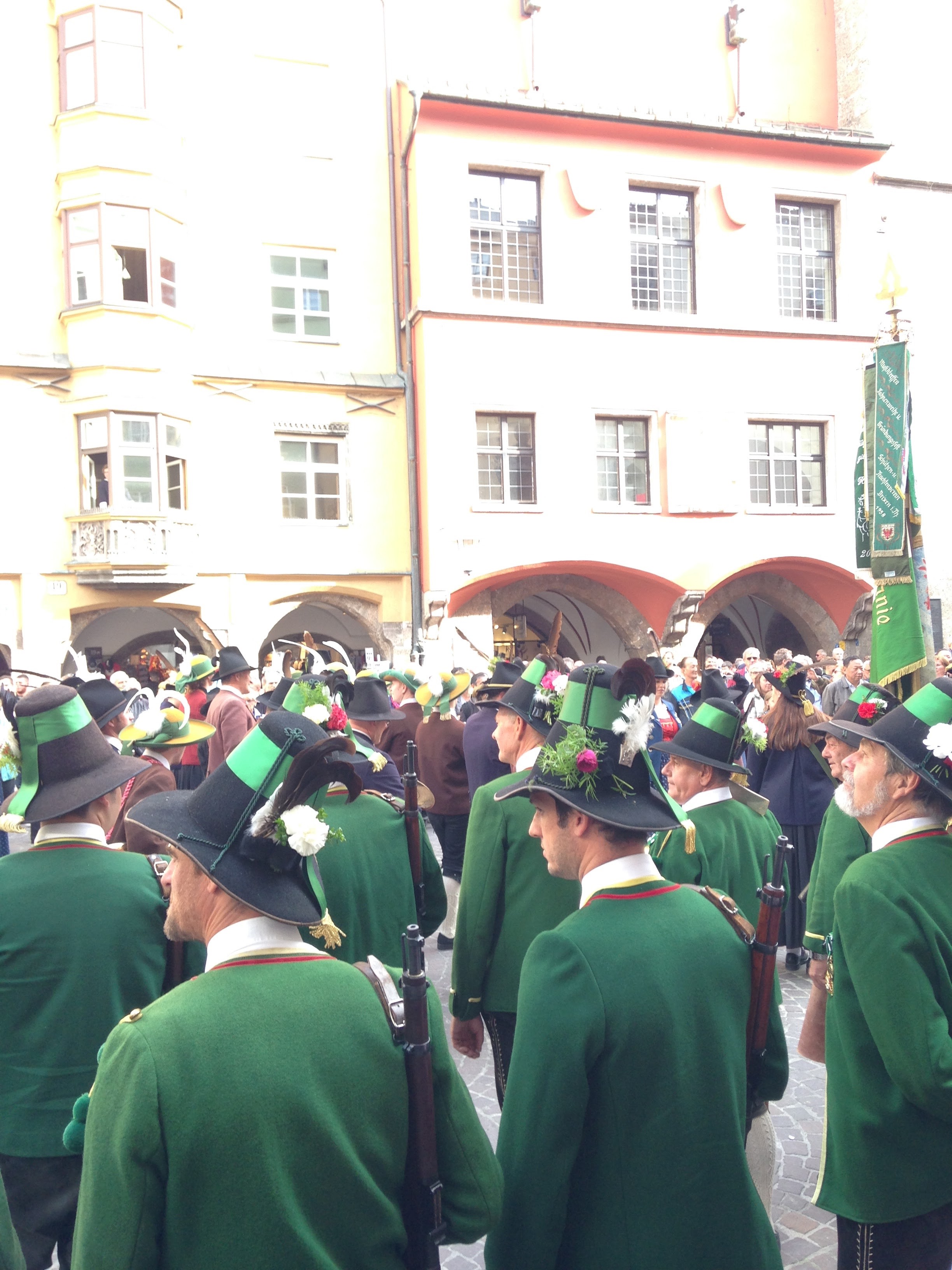
Google Maps estimated a 25 minute walk. I arrived an hour and a half later. Although I was toting my backpack stuffed to the brim, a rolling suitcase, and finally my purse, flung around my shoulders, I wasn’t slowed down too much by my baggage. I just simply couldn’t stop spinning around in circles to take in the shining spirit of the city. Here’s my walk in pictures:

IMG_0390.jpg

I strolled across the street to a pedestrian only plaza where shoppers and diners milled and mingled.

IMG_0400.jpg

…before finding this strange alley of murals. That closest one is a kiwi on a chicken bone. Perhaps a show of peace among vegans and carnivores (although I’m doubtful).

img_0402.jpg I didn’t stay at this hotel; I just took this picture to prove I was really in Innsbruck.
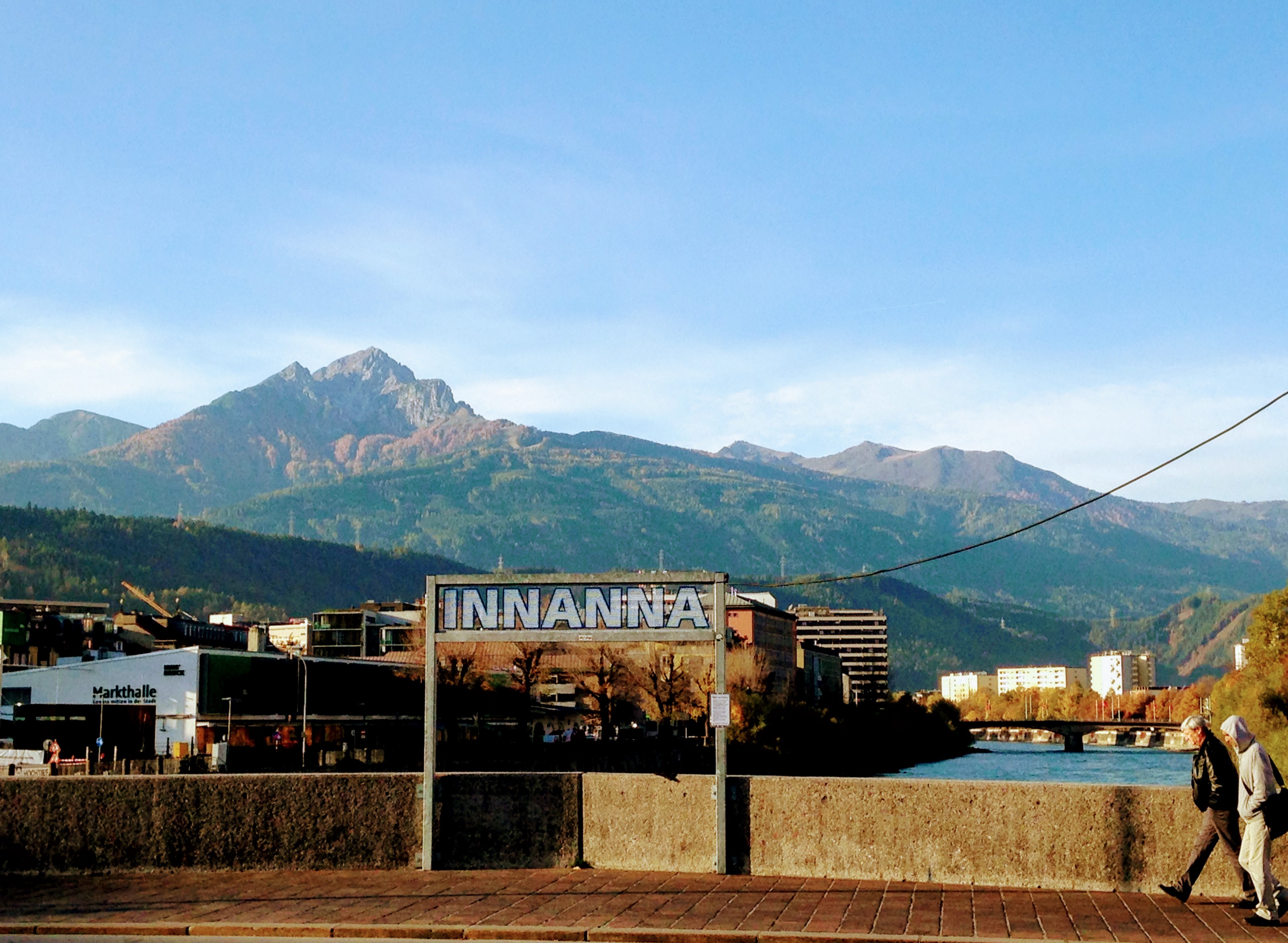
IMG_0438.jpg

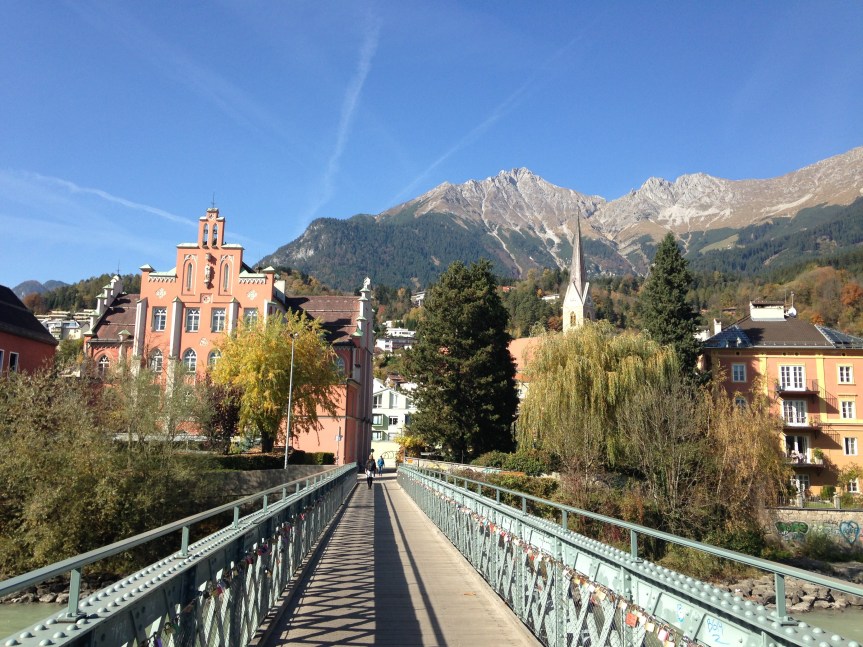
I walked across the bridge towards my new abode in the wake of mountains all around.

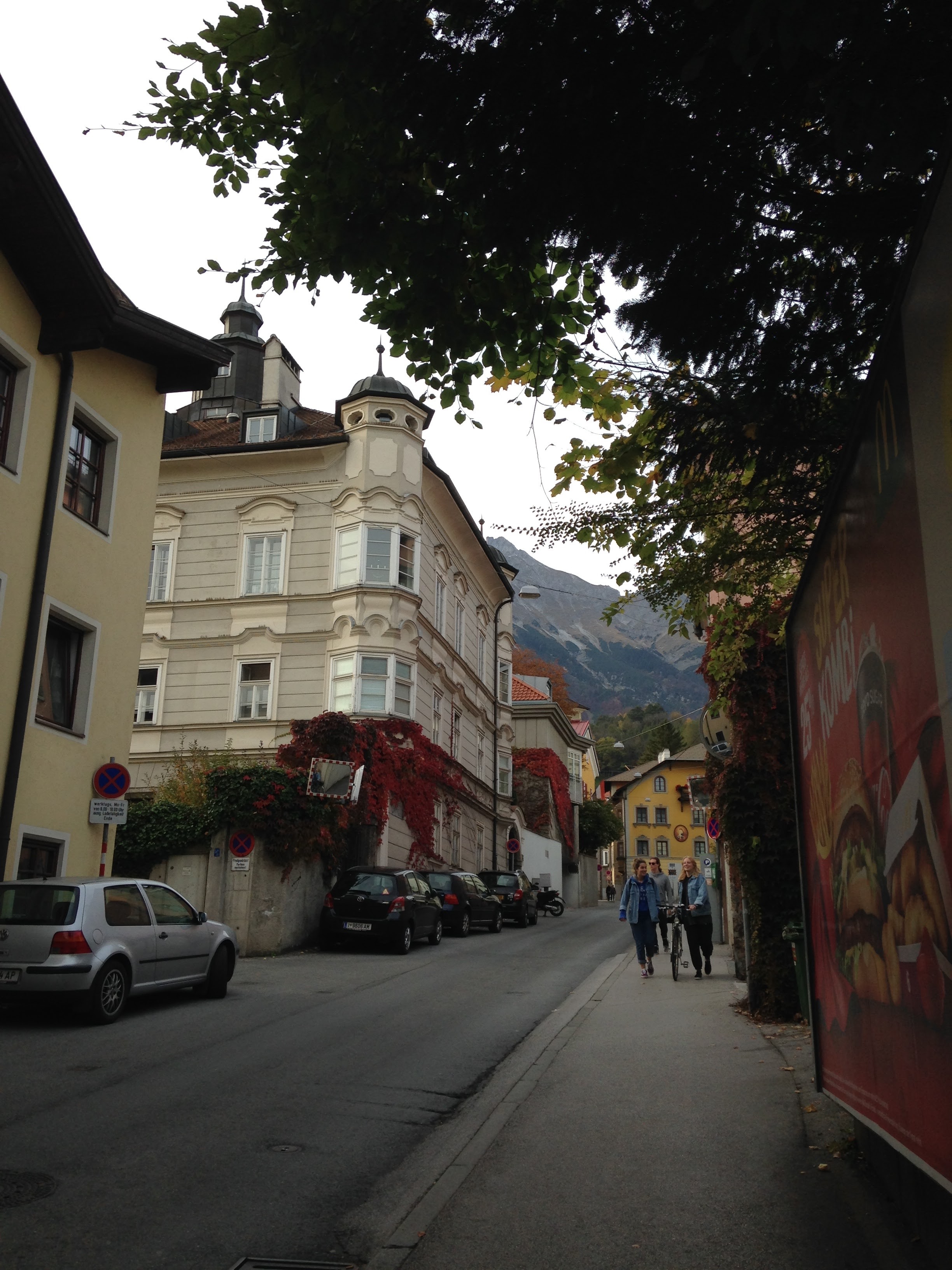
IMG_0409.jpg

Et voila, practically home. The huge wooden door was tucked behind a swath of climbing red ivy between two classically Austrian buildings.

Everyone was walking or biking up and down the steep hills. In many places there were wide pedestrian sidewalks next to double-lane bike paths, bordered by a line of trees and flowers, before finally meeting the edge of a quietly buzzing road on which the motorists dutifully slowed on yellow and stopped on red.

It took me awhile (I mean like two weeks after I returned) to realize why I felt (at least in part) such a sense of peace in Innsbruck. It could have been the mountains all around or the fact that I was at a conference where everyone was thinking and talking obsessively about diabetes (just like me!), but another huge part of it was the pervasive walkability of the city. Pervasive because it was unavoidable – you couldn’t get where you needed to go without walking. It didn’t just feel safe to walk alongside the cars, but in many places there were no cars at all. The restaurant I ate at twice – Osterreich – which I actually thought had something to do with an Ostrich, before I realized how painfully complacent my brain was acting – was only accessible via foot. And, what’s more, the whole time you sat, enjoying grilled chicken or roasted sausages, fluffy piles of freshly grated horseradish, or mounds of sauerkraut, you could watch, not cars whizzing by, but a live feed of humans doing human things.

IMG_0475.jpgFor example, this brass band bedecked in green, who lined up to play in the heart of the city.
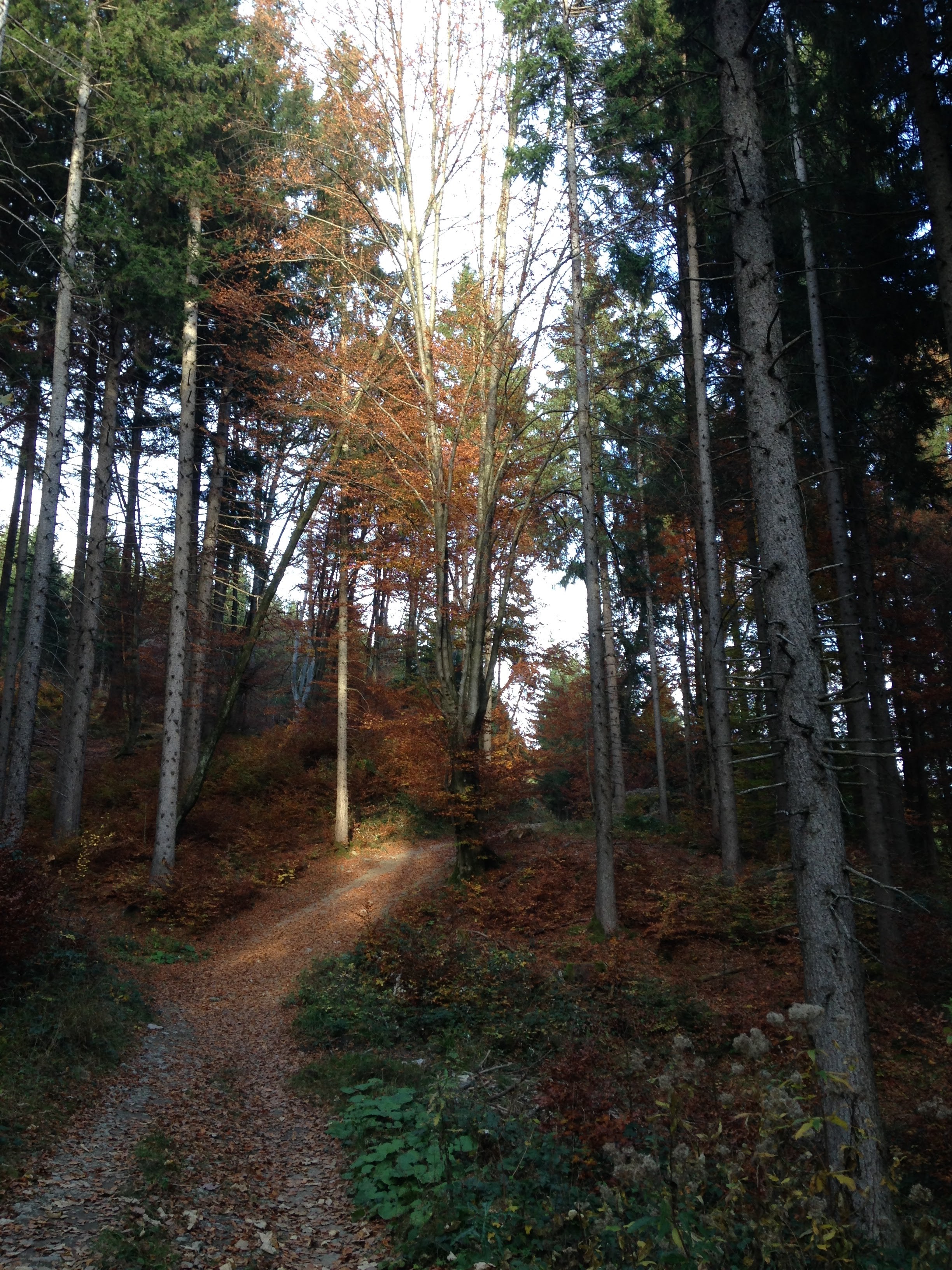
Walking is one of my favorite things. But also, walking is one of my favorite things about traveling. I’m grateful to have a car, but I don’t like cars. I like moving more slowly through life and having the chance, if I so choose, to reach out and touch it. And diabetes loves a walk. People talk about the benefits of exercise for diabetes management, as if exercise was some strange set of unnatural activities that the body must be guided through. I’ll admit, I go for a run every now and then, and it does bring my blood sugar down, but for me, there’s nothing like walking to bring my body into balance. Adam Brown, a writer often featured on diaTribe, explains the blood sugar benefits of walking beautifully here. When my bg is high, instead of dropping rapidly like I do while running, I glide towards a more reasonably blood sugar. Instead of tiring me out, a long walk makes me ready for another walk, or a night of dancing (lucky for me too, because of all the specialists, pediatric endocrinologists are the best dancers).

My last day in Innsbruck, after cramming my head full of presentations and standing up to do a couple myself, I took myself on a mind-clearing walk. My host had told me there was a tram to the top of the mountain, so I headed up the hill towards the peak. Shockingly, I did eventually find the tram, but then decided that my budget preferred continuing to walk. Oh also, that’s another thing, walking is cheap!

IMG_0491.jpg

Not to mention beautiful.

IMG_0487.jpg

Gazing out over Innsbruck, I felt overwhelmingly grateful for my experience and for all the people who helped me get there. Although I enjoy the feeling of solo exploration, traveling, more than anything else I think, makes our interconnectedness blazingly obvious. I was guided by countless mentors and passed from hand to hand of old and new friends on this journey. Thanks to each and every one.

Wild Adventures with Diabetes

Today diabetes took me on a walk. I’ve been a little resentful of diabetes lately. Sometimes it feels like my blood sugar controls every move I make. It decides what I will eat, if I’ll give myself a shot and how much insulin I will take, if I’ll exercise and for how long and how hard, and sometimes even how I feel about myself.

The last few weeks have been so busy and I’m longing for a little break, just a weekend away from everything, blood sugar included. But you know what, there really is no taking a vacation from diabetes. Checking my blood sugar less and loosening some restrictions in my diet might mean that diabetes takes up less of my time for a day or two, but pretty soon, not feeling as good as I could if I was sticking tighter to my ideal range doesn’t feel very luxurious at all.

So today, around 3 pm, when I was supposed to be working on my manuscript and doing other computer-based tasks, I checked my blood sugar and it was 180 mg/dl. I don’t like sitting when my blood sugar is over 150 – it agitates me to know that I could go on a walk or run to bring it down. It also agitates me when I think about how often blood sugar interrupts my plans. I’ve gotten better at choosing my plans over my perfect blood sugar in the past few years, but it’s a Sunday, and despite my agitation, I decided to let diabetes take the reins.

Immediately, driving off into the countryside around Chapel Hill, I was glad that I did. The sun was bright on budding green fields edged by thick stands of trees waving in the breeze. The trail I found was soft, dirt and gravel, easy on the feet. A muddy Piedmont creek ran alongside it. Towering strong-armed beech trees lined the path. And just when I was almost back to my car, I look up ahead on the trail and saw…

photo 1.JPG
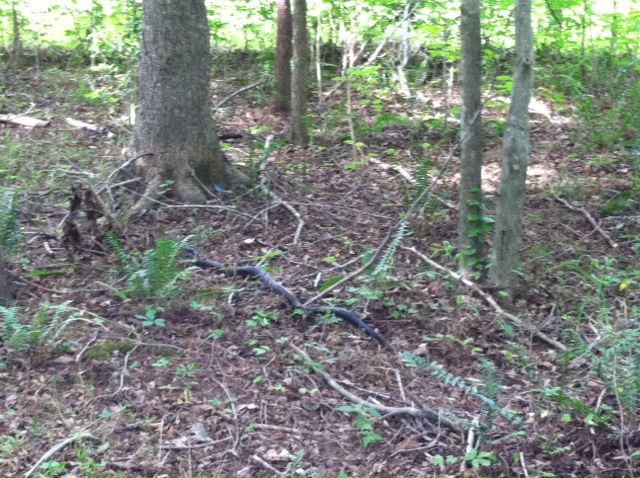
My poor photography skills do not do her justice. Also, I was not going to get any closer.

a six foot long Black snake. I was mesmerized. My mind left diabetes and everything else behind, and as she slithered away I felt some real freedom from all of it for the first time in awhile.


Saying Goodbye to Mary Tyler Moore: a Member of Our T1D Community

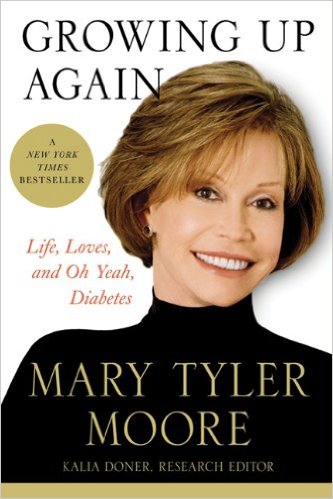
Yesterday the Type 1 Diabetes community said goodbye to Mary Tyler Moore. The New York Times talks about Moore as a “feminist icon” in her role on the Mary Tyler Moore show and NPR discusses her comedy and wit. America knew Mary Tyler Moore for all of these things, along with her beauty and charm, but many may not know that she did it all while managing Type 1 Diabetes. In fact, she was diagnosed in her early 30’s, shortly before the Mary Tyler Moore Show first aired.  In her book, Growing Up Again, she details her journey with Type 1 Diabetes from diagnosis, to becoming a champion and funder for diabetes research. I found the book approachable and inspiring, and recommend it especially for those diagnosed in late teens or early adulthood. I want to offer a quote from Chapter 3, because it resonates with the pain I felt when I was diagnosed so clearly:

“Spontaneity is one of the first of life’s pleasures that’s lost when diabetes appears. Everything must be thought out carefully before doing almost anything. No one likes to give up any sort of freedom, but when dealing with diabetes, there are some things one must accept. This and other matters fall under the heading of control. If you don’t control diabetes, it will control you.”

In this quote I think we see the Mary Tyler Moore spirit that viewers loved her for; the feisty, playful nature, coupled with the acceptance of a life-changing condition. And yet, despite all that careful thinking, Moore did so much in her lifetime, including advocating for others living with T1D, as covered by USA Today.

I’m moved by her story because she’s celebrated as a woman who accomplished so much, and yet all the while she had the full-time job of diabetes to attend to behind the scenes. I’m so grateful that Mary Tyler Moore decided to share this part of herself, her diabetes story, with the world, and give her inspiration to our T1D community.

References:

Moore, T. M. (2009). Growing Up Again: Life, Loves, and Oh Yeah, Diabetes. New York, NY: St. Martin’s Press.

Painter, K. (2017, January 25). Mary Tyler Moore was a role model for others with type 1 diabetes. USA Today, News. Retrieved from http://www.usatoday.com/story/news/2017/01/25/mary-tyler-moore-type-1-diabetes/97058152/

Baker, J. (2017, January 25). She turned the world on with her smile: Mary Tyler Moore dies at 80. NPR: All Things Considered. Retrieved from  http://www.npr.org/sections/thetwo-way/2017/01/25/461947952/she-turned-the-world-on-with-her-smile-mary-tyler-moore-dies-at-80

Heffernan, V. (2017, January 25). Mary Tyler Moore, who incarnated the modern woman on TV, dies at 80. The New York Times, Television. Retrieved from https://www.nytimes.com/2017/01/25/arts/television/mary-tyler-moore-dead.html?_r=1

Constant Resolution

As I alluded to in a recent entry, open conversation, not being silent, is still key right now. In the spirit of embodying my 2017 theme, I’m going to string together a few pearls of wisdom I’ve picked up from the various people who inspire me every day. Then I’ll talk briefly about diabetes, too.

My head is brimming lately with all these phrases and metaphors that my friends have shared with me as the wisdom that guides them around their busy lives. One of my friends, as we were driving down a street full of piles of leaves and Christmas decorations that had been taken halfway down, shared a quote by Martin Niemoller, a Holocaust protester and survivor, which I had heard many years ago but had forgotten until then. It’s important, and I don’t want to forget it again:

First they came for the Socialists, and I did not speak out—
Because I was not a Socialist.

Then they came for the Trade Unionists, and I did not speak out—
Because I was not a Trade Unionist.

Then they came for the Jews, and I did not speak out—
Because I was not a Jew.

Then they came for me—and there was no one left to speak for me.

So much of what I have to be grateful for in my life comes from the friendships, like that I have with this friend, with wise women and men around the world who are searching for purpose and striving to be all they can be every day. Another friend of mine, who I’ve recently reconnected with, reminded me that we are never through becoming ourselves. And yet another, in a parallel conversation earlier this month, shared a favorite guiding quote of hers, “the most important thing in your life is…your life.”

Translating all that to diabetes management, as is the constant struggle, leaves me with some interesting reflections as well. In 2016 I left the pump and moved back to insulin injections. This was a really positive change for me. Interestingly though, so was the pump when I started with it. Which reminds me that diabetes management, like life, is not a static endeavor. Our needs change and being able and willing to adapt is a sign of healthy coping, not an indicator that we are failing or were wrong before.

Now I’m enjoying more fruit and less wheat, more cooked vegetables and spices and hopefully, just a little less hot sauce and salty condiments. I’m borrowing some wisdom from both my Southern mother and Chinese medicine, that cooking foods, especially in winter, makes the nutrients more accessible to the body and of course easier to digest.

And finally, my 2017 health resolution, both because it directly improves my blood sugar and because it makes me friendlier, is to prioritize sleep. I rang in the New Year with this theme last night. But I’m also hoping that regular sleep will also help me effectively abandon it when I have the chance to work on my last, little, other resolution, which is always my resolution, to dance more.

So in sum, may we never be done listening to each other, learning about life and ourselves, and resolving.


The best laid plans

imageWhen one is traveling, going with the flow is essential, de acuerdo? I think the same with diabetes. I actually missed my flight to Bolivia. But the plane came back for me, as it turns out. We’ve visited so many amazing families who have fed us some amazing Bolivian delicacies. It’s been necessary for me to take more insulin than usual in order to aprovechar de la experiencia and also deal with the stress of last minute changes and running to throw our luggage onto buses. Also, blogging, probably not going to happen much. But I did spend a 6 hr bus ride trying to photograph an alpaca or maybe a llama, for my friend Ms. Boffa, and I finally succeeded. Continue reading “The best laid plans”

Free Range Humans

Against a deep black sky, a perfectly halved moon illuminated our small campsite set within the welcoming confines of a scrubby circle of tall grasses and short trees. Nearby, a tributary flowing down into Flat Laurel Creek gurgled the sound of its boundary.

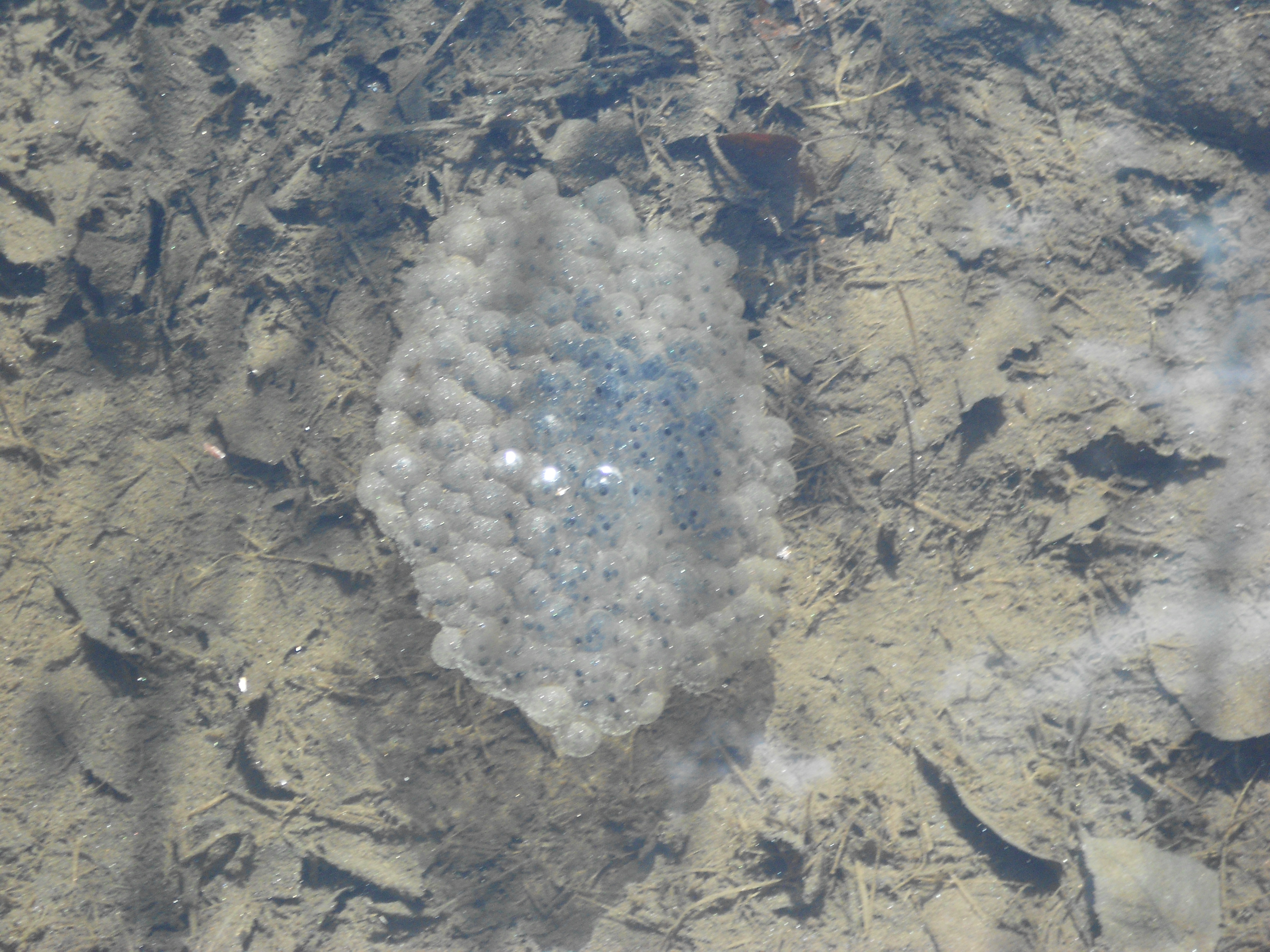
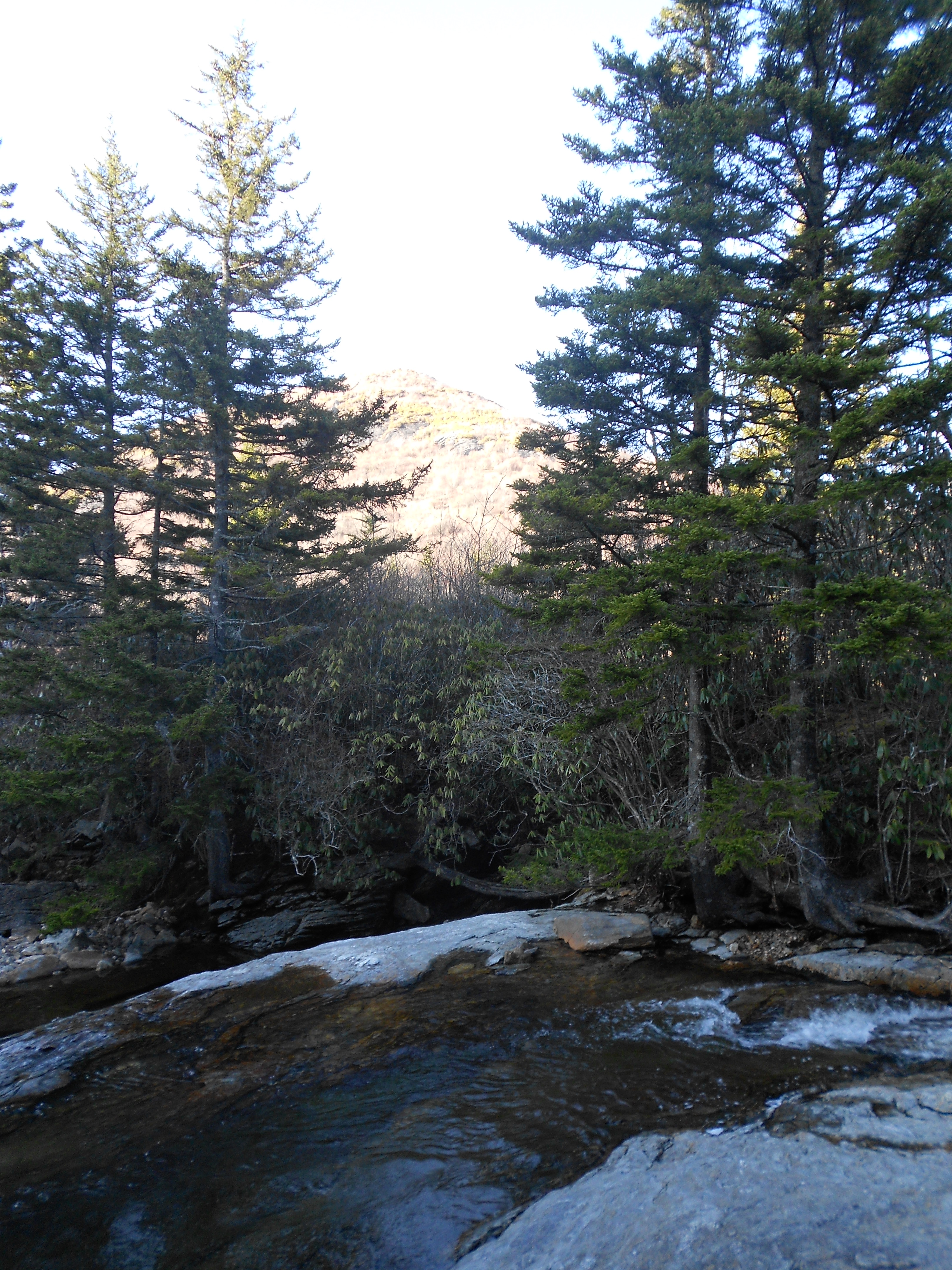
We arrived at our home for the evening before nightfall, when the sun was just releasing its hold on the day. We’d hiked since noon, eating a picnic lunch on the crest of Tennant Mountain, right below the plaque that marks its peak. We hiked over wet and rocky trails where blobs of clear eggs, punctuated by the promise of new frog life, bobbed in pools and puddles. The only other real wildlife we saw was a pack of undergrad males on their spring break, all having reunited in Pisgah Forest from their various schools.

DSCN2764

I hadn’t been back in the mountains, like really back in them, since I moved away from AVL in August. I was afraid to return sooner – afraid that if I didn’t separate myself enough and bond with the land and people in the Piedmont that I’d just live in the mountains in my mind instead of in the world all around me. But coming back home on this trip to Black Balsam and Sam’s Knob felt solid. My friend from school, my backpacking buddy two trips in a row now, couldn’t stop commenting on just how perfect everything was. That’s a heavy word and yet she was so right. You know those moments when you have an awareness of how totally happy and satisfied you are at the time? The whole trip was like that for both of us (I’m willing to say from our continual debriefing). And I was aware, maybe because we’d spent the previous week running from classroom to computer to meetings to google hangouts, that it was so perfect because we had so much less. So much less stimulation, so many fewer options, so many less modes of communication.

And yet I felt more connected.

Laying under the stars, dreaming of life thousands of years ago, my mind was at peace.

It was a good break for my mind all the way around. Only reflecting back now, since this is a blog about life with diabetes, do I realize that thoughts about diabetes don’t dominate any aspect of the trip (except one, and I’ll get there). Of course I thought about diabetes the whole time, as a backdrop to everything else, but I didn’t notice so much that I was thinking about it. It didn’t frustrate me to be thinking about it and I didn’t worry about it. When I reached a level of competency with diabetes I assumed that I had grown with it as far as I would. I had learned that diabetes was in fact manageable but thought that it would never get easier. And that is true; the actual management and burden of diabetes doesn’t necessarily get easier in and of itself, although it does change. But it’s sort of like (I would imagine) a marathon runner training for something and then experiencing a level of ease with certain aspects of it. Yes the last couple miles, or shaving speed, or steep courses, are still a challenge, but there is a certain level of ease with running a distance that to me, a non-runner, seems insurmountable.

Ok, so I mentioned that one aspect of the trip when diabetes did announce itself loudly: the great Bear vs. Nightime-Low debate. If you’re a person with T1d you understand that you can’t go to sleep without knowing where the food is in the house. For me, I keep a honey bear right by my bed. But when I’m backpacking, my goal is to keep bears far, far away from my bed. So what to do?

And I really don’t know. What we did was secure and hang our food appropriately, far, far away from our campsite. One of the recent times that I went backpacking I had to tear the bear bag down from a tree in the middle of the night to get to more carbohydrates, and I just wasn’t prepared to do that again, so I decided to keep two honey zinger packets in the tent.

Sure enough I woke up in the middle of the night with a serious low. I’m not proud of these backpacking lows and I’m still trying to work them out. Walking all day with an extra 30-50 lbs. on my back exhausts my muscles in an unusual way. Even if I got to bed at 175 mg/dl, with very little insulin on board, I could wake up in the 30’s, like I did on this trip. Luckily I had the zingers. This time I stored them in my empty nalgene, which I thought, with it’s good seal, thick plastic, and odor of aquamura, would deter a bear as well as anything else I had. A pelican case could be another option.

So here’s the part where I need some diabexpertise: what do people with T1d who backpack do when they’re camping, say out West, where the stakes involve grizzlies? What do you do here in the East? I really appreciate your comments and dialogue!

DSCN2774