
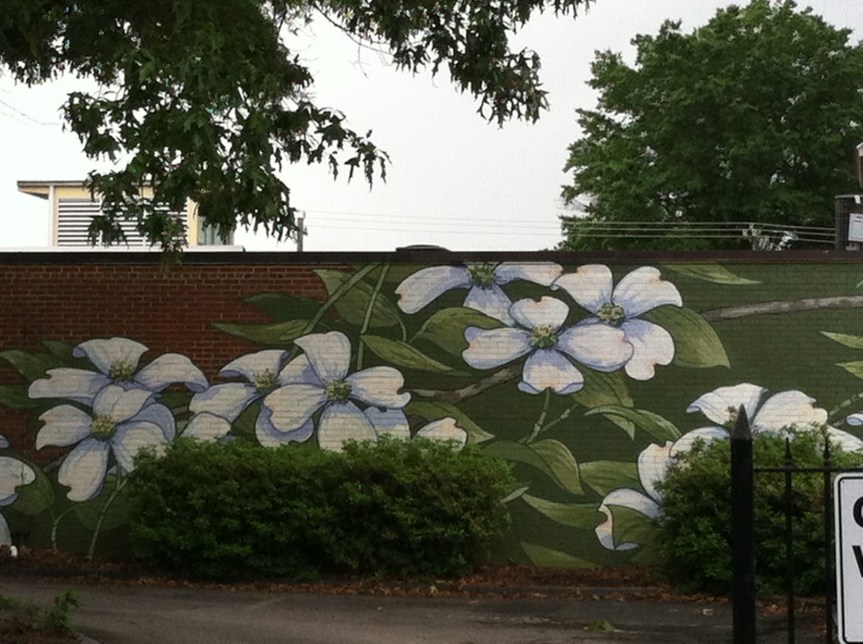
 What a pretty gift someone decided to give to Roberson Street.
Category: Diabetes Daily
These are recent posts since my switchover from tumblr to WordPress
Great Blue Herons and Pelican
Cases…that is.
These are two things I’m into right now.
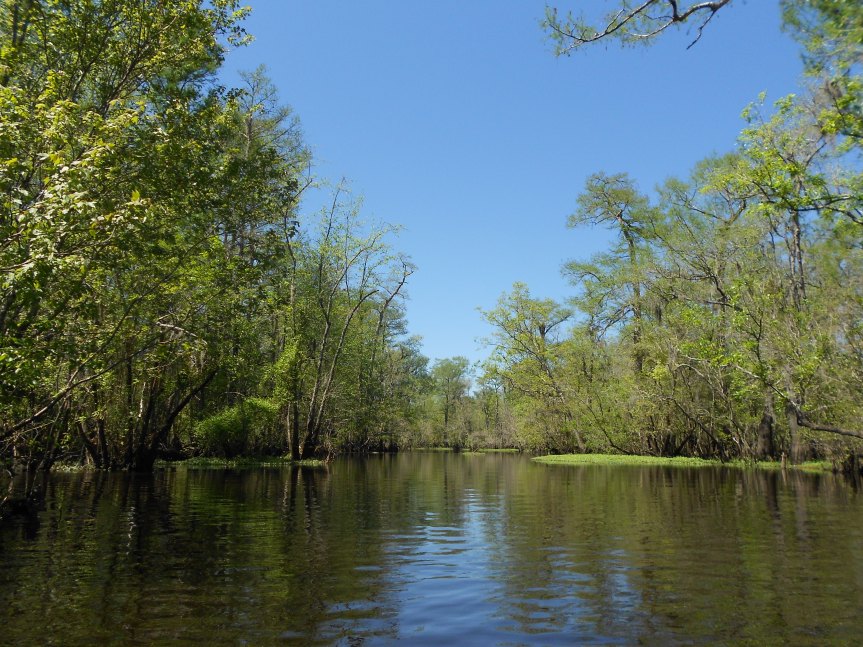 Thanks to adventures with Frog Hollow Outdoors I’ve discovered some amazing new rivers recently. Above is a view down the Black River near North Carolina’s coast, called so because of the high tannin content that makes its waters a coppery blend of dark blue, brown and green. Below and above the tree branches birds wade and fly: Anhinga, or snake-birds soar overhead, Great Blue Herons pick their way through the cypress knees.
From this and other recent river adventures I’d like to give a big T1D shout-out to the ever useful pelican case.  Such a pretty little thing, and air and water tight too! On the river I keep my novolog pen, some extra pen needles, a microfiber cloth, alcohol pads, a spare meter and lancet device, test strips, and chapstick, all sealed inside. All of that seriously fits into one case if you pack it just right. I have another one for my camera and honey zinger packet.
My pfd is also T1D friendly with a nice chest pocket for another honey zinger packet and maybe some energy chews, although these I keep in a plastic bag because there are many to a pack and I typically just have a few at a time.
Last time I went paddling I wished I’d packed more protein, maybe beef jerky or trail-mix. Please feel free to share your ideas for managing Type 1 on the water.
Free Range Humans

Against a deep black sky, a perfectly halved moon illuminated our small campsite set within the welcoming confines of a scrubby circle of tall grasses and short trees. Nearby, a tributary flowing down into Flat Laurel Creek gurgled the sound of its boundary.
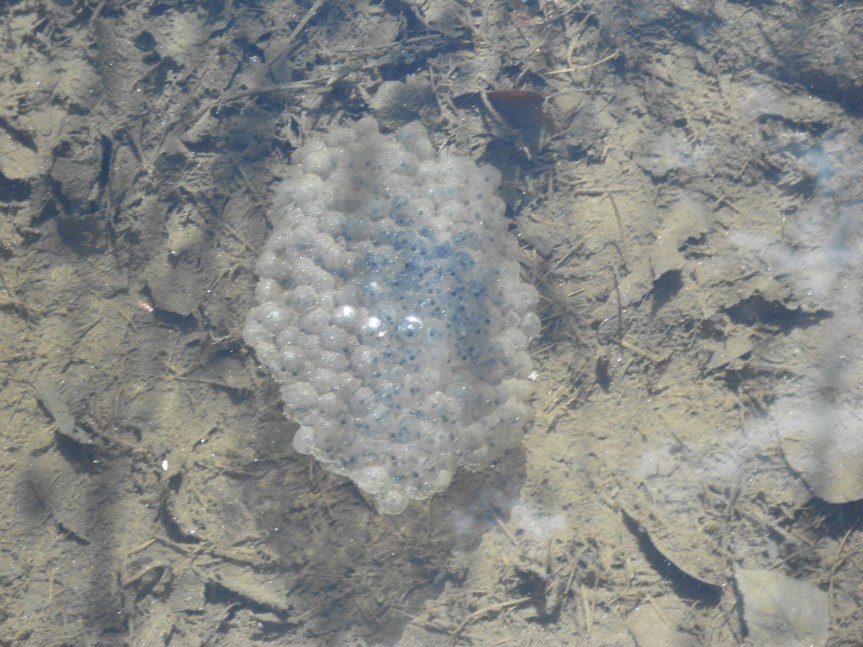
We arrived at our home for the evening before nightfall, when the sun was just releasing its hold on the day. We’d hiked since noon, eating a picnic lunch on the crest of Tennant Mountain, right below the plaque that marks its peak. We hiked over wet and rocky trails where blobs of clear eggs, punctuated by the promise of new frog life, bobbed in pools and puddles. The only other real wildlife we saw was a pack of undergrad males on their spring break, all having reunited in Pisgah Forest from their various schools.
I hadn’t been back in the mountains, like really back in them, since I moved away from AVL in August. I was afraid to return sooner – afraid that if I didn’t separate myself enough and bond with the land and people in the Piedmont that I’d just live in the mountains in my mind instead of in the world all around me. But coming back home on this trip to Black Balsam and Sam’s Knob felt solid. My friend from school, my backpacking buddy two trips in a row now, couldn’t stop commenting on just how perfect everything was. That’s a heavy word and yet she was so right. You know those moments when you have an awareness of how totally happy and satisfied you are at the time? The whole trip was like that for both of us (I’m willing to say from our continual debriefing). And I was aware, maybe because we’d spent the previous week running from classroom to computer to meetings to google hangouts, that it was so perfect because we had so much less. So much less stimulation, so many fewer options, so many less modes of communication.
And yet I felt more connected.
Laying under the stars, dreaming of life thousands of years ago, my mind was at peace.
It was a good break for my mind all the way around. Only reflecting back now, since this is a blog about life with diabetes, do I realize that thoughts about diabetes don’t dominate any aspect of the trip (except one, and I’ll get there). Of course I thought about diabetes the whole time, as a backdrop to everything else, but I didn’t notice so much that I was thinking about it. It didn’t frustrate me to be thinking about it and I didn’t worry about it. When I reached a level of competency with diabetes I assumed that I had grown with it as far as I would. I had learned that diabetes was in fact manageable but thought that it would never get easier. And that is true; the actual management and burden of diabetes doesn’t necessarily get easier in and of itself, although it does change. But it’s sort of like (I would imagine) a marathon runner training for something and then experiencing a level of ease with certain aspects of it. Yes the last couple miles, or shaving speed, or steep courses, are still a challenge, but there is a certain level of ease with running a distance that to me, a non-runner, seems insurmountable.
Ok, so I mentioned that one aspect of the trip when diabetes did announce itself loudly: the great Bear vs. Nightime-Low debate. If you’re a person with T1d you understand that you can’t go to sleep without knowing where the food is in the house. For me, I keep a honey bear right by my bed. But when I’m backpacking, my goal is to keep bears far, far away from my bed. So what to do?
And I really don’t know. What we did was secure and hang our food appropriately, far, far away from our campsite. One of the recent times that I went backpacking I had to tear the bear bag down from a tree in the middle of the night to get to more carbohydrates, and I just wasn’t prepared to do that again, so I decided to keep two honey zinger packets in the tent.
Sure enough I woke up in the middle of the night with a serious low. I’m not proud of these backpacking lows and I’m still trying to work them out. Walking all day with an extra 30-50 lbs. on my back exhausts my muscles in an unusual way. Even if I got to bed at 175 mg/dl, with very little insulin on board, I could wake up in the 30’s, like I did on this trip. Luckily I had the zingers. This time I stored them in my empty nalgene, which I thought, with it’s good seal, thick plastic, and odor of aquamura, would deter a bear as well as anything else I had. A pelican case could be another option.
So here’s the part where I need some diabexpertise: what do people with T1d who backpack do when they’re camping, say out West, where the stakes involve grizzlies? What do you do here in the East? I really appreciate your comments and dialogue!

Happy Valentine’s Day
An ode to (some) things I love:

Celebrations with friends

Mom

Backpacking with friends

Mornings in the woods

Tandem Bicycles

photo of llamas by Kuba Los, found at http://kubalos.com/south-american2/

swagger

Baby goats

breakfast and coffee
A misty summer day in Austria


…that looks not very different from this misty winter day in North Carolina. Except for the cows, and the ice cold glacial stream and the rugged evergreen peaks.
In this mountain town in Austria the water was piped directly from the source, glacial springs high in the mountains, and poured out of copper pipes into intricately carved basins. Here in NC I can turn on my faucet and fill up my water bottle and not worry about bacteria and contamination.
Managing Type 1 diabetes or any chronic condition in an area where you don’t have access to clean water would be terrifying! Today I am so grateful for water.
Integration
It’s taken me a long time to accept that this is the way it should be.

Being a PWD – person with diabetes.
For the first four or five years I think I was just in survival mode.

When you first get diagnosed it’s all carb-counting and finger pricks, learning how to give yourself shots, taking over the job of a pancreas so instantly, something that you took so much for granted that you may have never thought of before. There are so many rules, techniques, methods to learn. Keeping yourself alive becomes priority # 1.
When I was first diagnosed, accepting diabetes as part of who I am was the thing I feared the most.
It’s taken ten years, but now the idea that I can begin to integrate the effects of diabetes into my identity is exciting.
And what have I learned? What am I left with? A lot. But today, I’m thinking about thinking. Something that I do a lot of. Something that diabetes requires me to do a lot of. And I’m wondering how all that thinking affects other parts of my life.

Feel free to share your thoughts on how having diabetes has shaped your identity.
Can’t stop thinking about…
Costa Rica right now. It’s cold here in North Carolina! Here are some pics now and then, side by side. It’s crazy how much our climate shapes us. Right now I’m going to the gym or bundling up for walks, down there I was rambling outside and running by the surf.


Diabetes was wild in Costa Rica. It was the first time I’d ever introduced myself to new people as a person with diabetes. Before that it was all about telling people who knew me that I’d been diagnosed. In some ways, it was sort of a relief to not have to explain how I got sick, stayed sick, and was finally diagnosed. To not have to fight people’s expectations of how I would be based on how they knew me before.


It’s nice to have better words to explain diabetes now. It’s taken me ten years – there have been a lot of hard emotions to sort through when it comes to how much to share, how much to ask for help. Being vulnerable with friends though, and there is a lot of interesting research right now about vulnerability that seems to confirm this, in my experience has blessed me with deeper relationships and more trust.
Costa Rica in January


Facebook reminded me that eight years ago this January I was living in Costa Rica. It was a wild and beautiful time. Here are some pics from my trip! Magical places with the best friends.
A Question for Omnipod Users
This is a picture of Olympic cross-country skier Kris Freeman that I found on pinterest…so apparently having muscles and wearing the Omnipod is not a problem.

It’s a challenge in creativity to figure out how to wear a pump and do physical activities like yoga, dancing and other atypical movements. A friend of mine is hesitant to try to the Omnipod because she does aerial arts and is afraid it might come off. I have been having a lot of trouble finding sites that I can wear the pod lately because my favorite sites seem to be building up some scar tissue or something that is interfering with my absorption.
This is a question for anyone reading who wears an Omnipod:
What are your favorite sites and why?
Submit a comment below and thanks for sharing your ideas!
Good Morning 2016
Even though I know it works, I forget that gratitude is a choice, like a lens you put into your camera to brighten the vibrancy. It always works, sometimes more than others, to heighten our focus on the present and make life something solid to hold on to.
During the two weeks I was traveling over my break between semesters, I slept on 2 different sofas and 6 different beds. The hospitality of my friends and family was heart rendering. I rolled in like a rambler and left full of good food, laughter, and strong coffee. I carried an increasingly buoyant load of love around with me from house to house. I am so exceedingly grateful that in my life I have people who I can feel connected to even when I’m miles away.
These are the people who bring a smile to my face as I’m falling asleep and whose very presence makes me feel healthy and whole. I just wanted to take a moment to celebrate the power of being present with each other, here at the start of this new year.
 The Sweet Adventurer