You’re Never Gonna Make It

Well I’m snowed into my apartment in North Carolina, so I think it’s finally time to tell the story of the time I missed my flight to Bolivia and got stuck in Miami, and then, miraculously, how the plane came back for me.

Chapter 1

It was 4 pm on a Tuesday in June, and I sat in the Raleigh-Durham airport next to several women dressed for the beach. A woman on my left read the paper, the news showed the latest escapades involving Donald Trump, who at this point hadn’t become President. Reality still felt somewhat trustworthy, and I expected soon enough to hear over the loudspeaker that my plane to Miami would board.

I was albeit, quite early, having left my house around 2 pm for a 6 pm flight, driven to the airport by my friend Sadie, who escorted me all the way to security at which point she waved goodbye dramatically. We wouldn’t see each other for at least three weeks, which was far longer than any other separation we’d had since becoming friends in grad school.

Sadie sent me several WhatsApp messages while I waited at my gate. I was going to Bolivia, where text messaging wouldn’t be possible, so we’d already assumed the new mode of communication. She told me to be careful, to have a safe flight, implying that I was somehow in control, which seemed doubtful.

Things still felt very normal, but I was on edge, as I am before all big things that involve a dramatic leap into the unknown. In this case, this trip, involved several layers of unknowns, from the people I would be working with to the culture and landscape I’d be entering.

And then the first text message arrived from American Airlines. My flight was now set to depart on time at 8 pm. This was not on time at all. My connecting flight from Miama to La Paz, Bolivia, was set to depart on time at 10:25, which meant that if my flight was leaving RDU at 8:00 and arriving in MIA at 10:05, I would have a layover of 20 minutes. Miami is a large airport, but I did not know this at the time, and even were it small, the gates close 10 minutes (at least, I would learn) before flight time.

I saw people around me lining up at the counter. I, flustered, quickly followed suit.

When it was my turn, I explained my situation, and the airline professional explained theirs right back. There had been heavy rains in Raleigh, making landing impossible for a while, and all the flights coming in, mine included, had been delayed. However, now flights were arriving on time. There was nothing they could do to get me there sooner. However, she looked at my itinerary and said, with a slightly detectable accent, “Oh, you’ll make it, you’ll be fine.”

I went and sat down. “I’ll be fine,” she said. I tried to remain calm, or rather, become calm again, which I hadn’t been for several days. I thought about eating, but I had stress-eaten an apple while trying to interpret the text message, and now my blood sugar would be soaring because I hadn’t thought to give myself more insulin until after I spoke with her, so I decided to wait.

A beautiful woman with lush black hair sitting near me, was talking about her crumpled plans. I guessed she was returning to Brazil, but I found out her destination was actually Argentina, and they had told her a similar explanation of why, but that in fact she would not be fine, and would have to reschedule the second leg of her trip because she would never make her connecting flight with such a short layover. I asked her how long her layover had become, and she said her original connecting flight was set to leave at 10:45 PM. My brain registered a problem.

I went back up to the counter where the woman with red lipstick and perfect scarlet gel nails had told me that I would be just fine. I recounted my situation again, almost verbatim, with the caveat that although she told me it’d be ok, I just didn’t see how that could be true. She clicked her nails on the desk and asked for my boarding passes. “Oh no! You’re never gonna make this. Sorry.”

“What?” I asked, or said, because I had heard her, and really didn’t want to hear it again.

“Yah, no, you’ll never get from that gate to the departing gate in, what, 20 minutes. Nope.”

“Ok, well, can you offer me some other options?”

And then she starts looking at tomorrow’s flights, and she’s talking about how I can leave in 24 hours, from here, this gate, and just do this whole thing that I’ve been waiting for, for months, tomorrow, instead of today. And tomorrow feels so far away, in fact, so far, that it doesn’t even exist in my mind. Tomorrow is supposed to exist in Bolivia, which is a place I can’t even imagine, and that I would learn was totally different than even the small imagining I had been able to do. And I couldn’t imagine, going back home. Going back home to my apartment where I had eaten all of the food except for half of a carrot because I wanted to make sure I could leave everything closed up like a book I had finished and come back fresh from this journey. The house that I had checked four or five times to make sure that the dryer, and coffee pot, and oven, and lights, and sinks, and all of it, were turned off, that the door was locked, the blinds were drawn. I couldn’t go back.

“I can’t go back” I told her.

“Well if you go to Miami, I mean, you might be able to get on a flight tomorrow at 11 AM instead of 6 PM but….”

“No” I said, “I have to get to Bolivia by tomorrow morning.” (I was scheduled to arrive and meet my friend in the airport in La Paz at 5:30 AM).

I began to look more and more frantic. My eyes were wet, I was crying a little. I heard her speak Spanish to a co-worker as she turned and took a break from me. She looked back.

“What are you doing in Bolivia?”

I responded in Spanish, which was a good move, it turns out. I explained to her about the children with Type 1 Diabetes I would be meeting and talking to. Her eyes looked wet too. Suddenly a flurry of google searches, she was really trying to help me. I had become ‘Mamita,’ which I felt really good about. But…there were still no good options.

“What if,” I started, “the weather gets bad in Miami,” and then the planes can’t leave or are delayed from there?”

“Nah, it’s not as hard for them to leave, and your second plane is already there, sitting at the airport. Not gonna happen Chica.”

“Ok, ok, well what if my first flight gets in earlier than expected, I mean that happens right? And then I run like crazy to the next gate and at that one, maybe they know, at the airport, because y’all could give them a call, and tell them, that it’s not my fault but I’m going to be just a few minutes late..and…”

“Mmm, look, if you get on the plane to Miami, you better make sure you have some backup once you get there. Because since this is weather, and we can’t do anythin’ about that, they’re not gonna pay for any accommodations for you either.”

I go sit down. I get on Facebook. Miami in the search bar. I know no one. I start to send text messages fervently. I realize I know two people who know two people in Miami. Neither can promise me outright that those people want a house guest who may, or may not, be arriving at 11:00 PM and leaving early the next morning, but it’s the best backup I’ve got.

I go back up to my friend at the counter. She says hello, with sympathy in her eyes. I explain the situation and I say, “What would you do.” She meets my gaze and says, “You’re never gonna make it. But you could go for it.”

This was the whole truth. I was never gonna make it, but I could postpone that realization by several hours and accept it once I was alone in Miami. So that’s what I decided to do.

To be continued.
Look Up

Every now and then I am reminded that I am in awe of the Earth.

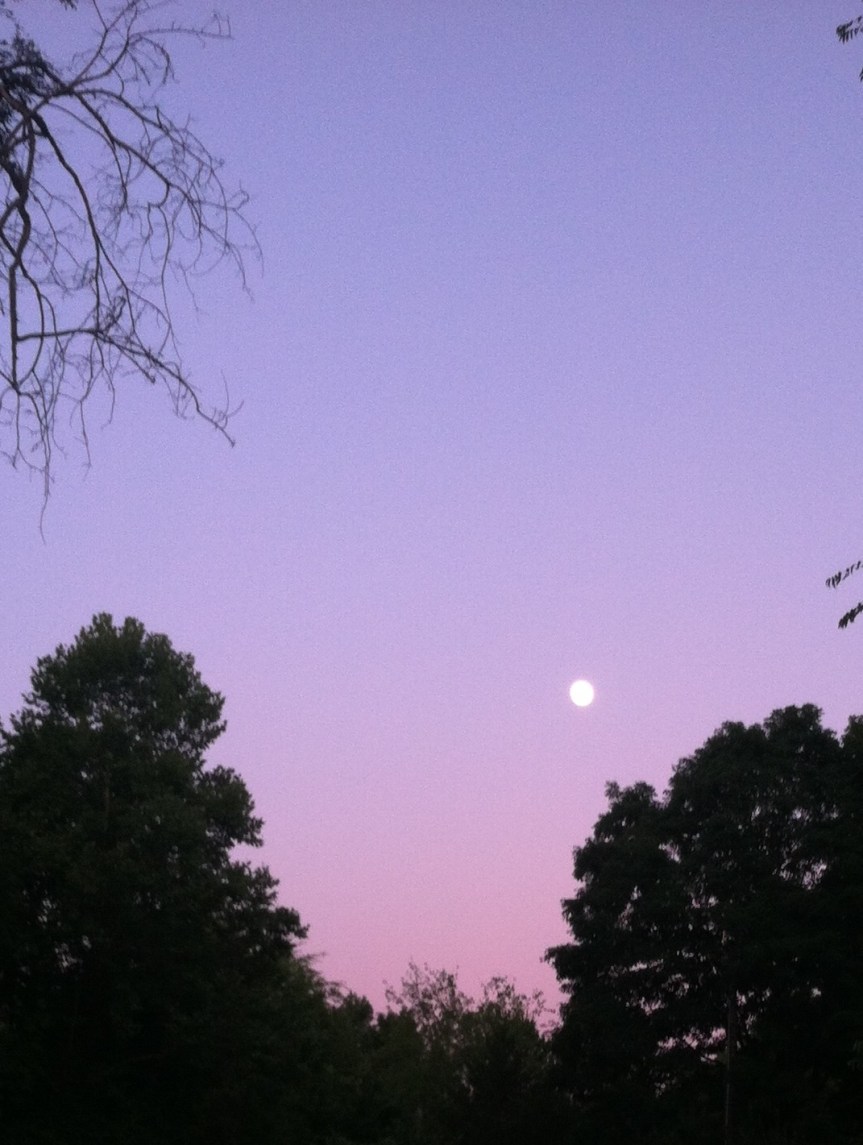
This time it happened paddling down the Eno River after the sun had set, it’s rosy imprint slowly fading away into a violet-blue darkness.

The moment that it hit me involved a Great Blue Heron, so aptly named, sailing like a hanglider overhead, silver wings outstretched, croaking its primordial call.

This night, and all nights, this world exists here on the river, while cars whiz by each other and humans do their violent and hurtful human things.

The fugue of frogs began. At first it was the peepers, a high-strung section of music, the violins of the amphibian orchestra. Then the pickerels chimed in, their voices harmonizing into a smooth mezzo-soprano (I just looked up vocal range on wikipedia). The rubber-band frogs, I don’t know their scientific name, soloed their song of: “boing! boing!” And then, a tribe of frogs illuminated the soundscape with a single wave of speech, their voices so artificially high it sounded as though they had sucked the helium from some abandoned birthday party balloons. I tried to figure out what they were saying but was distracted by the fireflies, just a few at first, strobe-lighting the dark outlines of the sycamores and tulip poplars. Every third stroke or so the half-moon found its way through the dense branches and illuminated my boat or my arm, reminding me that I was now part of the scene. The frogs sang and played on to a constant chorus of insect sound.

As my mind drifted into their performance I wondered what it would be like to stay all night and just soak up this other world. Suddenly a new vocalist called out, a Barred Owl (as pointed out by my friend and fellow Frog Hollow Guide Cathy), with her signature, “Hooo cooks for you???” A friend, or suitor quickly responded in a lower barotone, “Hooo cooks for you???

The stars were out now, so fine in the sky: the Big Dipper scooping up the darkness, and I thought, how did I get this lucky?

Which takes me back to chord that’s been running through so many of my discussions lately about luck and blessings and fate and purpose.

And I still don’t know, how things fell into place. But I feel so lucky to have found Frog Hollow Outdoors so early in my time in the Triangle and through them, a river playground to call home. And that’s just the tip of the heron’s wing. So many things, if I pause to look up, are glittering in my life.
Whenever this happens, which as I said, is every so often, I am reminded of my favorite poet Mary Oliver, who provides me with endless inspiration. Among the frogs and owls and soft clicks of bat wings last night I kept hearing these words from her poem, ‘Mindful.’

Every day

   I see or hear

      something

that more or less

   kills me

      with delight,…”

And she goes on…I encourage you to read this and all of her work if you need to be reminded too of the awe out there, especially if you can’t get straight into the woods.

And I will hope that in the middle of any chaos or sadness or uncertainty, that I can remember the reassuring lullaby of a summer river at night.

Bienvenidos a la familia

The first thing I noticed after we pulled into town was the smell of smog. In Bolivia, on the weather report it is common to see ‘smoke’ listed as if it were a naturally occurring phenomenon like wind or rain. But smoke has been introduced into the nation, a byproduct of mining and concrete factories and the wood people burn in their homes to combat the dusty, dry, creeping cold of the Altiplano winter, which runs June through August.

IMG_2088
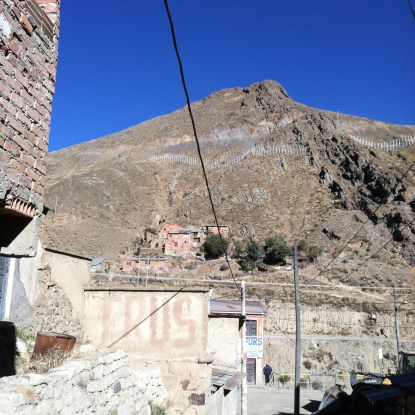
Looking up at the denuded mountains from a Bolivian tin mining village.

After we’d checked into our hotel in the city center, we rode to the clinic in an ambulance that I’m still not sure the status of. It may currently be in operation, or it may just be the finest van in town. Upon entering the building we were greeted by immediate embraces and kisses from all who had come for the focus group. The first to hug me was a woman wearing a traditional pollera skirt and whose thick, jet-black braid ran far down her strong back. She kissed me solidly on either cheek and rubbed my shoulders vigorously, her eyes glistening with emotion.

That woman was the mother of Angela (name changed), a 19 year old girl who has had Type 1 Diabetes (T1D) since she was around 14. The next day we visited the whole family in their pueblito at the base of a giant tin mine where many of the residents, including Angela’s mother, work to collect minerals from inside the mountain or from the river bed that catches the heavy-metal runoff.IMG_2095

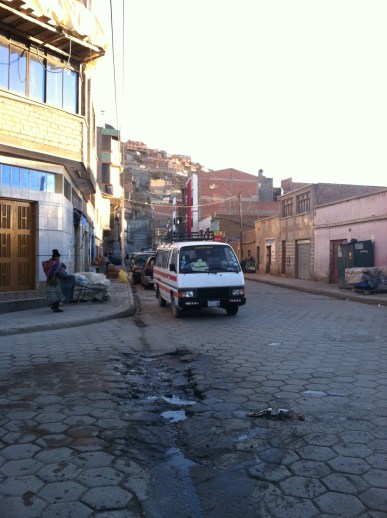
Earlier in the day we had boarded a dusty microbus on the side of the road next to women selling fried breads of all varieties and hot drinks in plastic bags with red straws sticking out of the tied ends. Maria bought one of each for the road. I poured hot water into my orange backpacking mug balanced on one knee and made a cup of instant coffee to sustain me through the morning van ride. We had three home visits ahead of us, separated by miles of pockmarked and potholed roads, and coffee was non-negotiable.IMG_2064

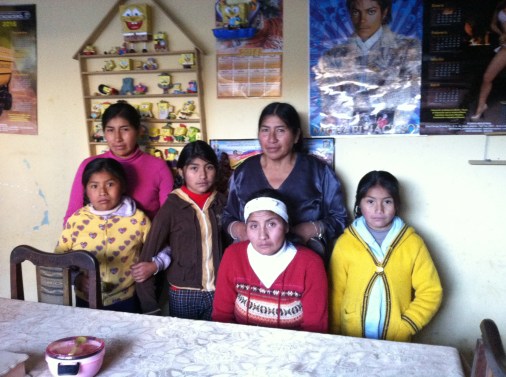
Each day from my time in Bolivia could stand alone as a life-changing experience based on the stories I heard and people I connected with, but this day in particular shines bright in my memory. Maybe it was the sun rising over the arid quinoa fields at the base of the Bolivian Andes, or talking with the teenage sisters who live with Type 1 Diabetes in temporary housing with no electricity or running water. But I suspect above all it was the immense kindness and generosity we encountered from the families we visited. Not only did they share their experiences living with Type 1 Diabetes and managing it in a country where finding supplies is hard and affording them is nearly impossible, but they also filled our stomachs with homemade breads, hot drinks, and even fresh sheep milk ice cream, frozen overnight in the rafters (that was breakfast).

All this social eating was a little tricky for a gal living with Type 1 Diabetes herself, but I came to realize just how immensely blessed I am to be able to manage my blood sugar with an insulin pump and to check my blood sugar anytime I want to. I already had some idea of this, which is part of why I wanted to go on the trip in the first place. I connected with the organization ‘Life For A Child’ (LFAC) because they provide test strips and insulin to children living with Type 1 Diabetes in low-resource nations who lack access to adequate medical supplies. I was hoping my practicum could translate to a learning experience for me and an immediate benefit for others living with Type 1 Diabetes who don’t enjoy the luxuries of management that we have here.OruroOvejasMy purpose on the ground in Bolivia became to interview, chat with, observe and learn from as many people living with Type 1 Diabetes or supporting those who do. Over the course of three weeks and five cities I got to do over 40 interviews and focus groups with nearly 100 participants made up of youth with T1D, their families, and the clinical staff and volunteers who support them. Everywhere I turned, a new element of life with diabetes in Bolivia jumped out at me. It became apparent that Bolivian cultural values were critical to consider when thinking about successful health outcomes for youth with T1D, especially the role of the family. One participant who volunteers as a leader for the group in Potosí and who has had T1D for 23 years himself, said that in all the situations he has observed, “La familia ha sido fundamental para poderlo apoyar..cree una necesidad, de, en todo diabético, de que la educación no sea sólo en el paciente diabético, pero sea también en su entorno. Ese apoyo a la familia, o esa educación a la familia, creo que también es muy importante, porque es un daño que afecta la familia” (“The family has been instrumental in that it can support…it creates a need, that, for all diabetics, the education not reach just the diabetic patient, but also their environment. This support for the family, or education for the family, I think it’s also really important, because it [diabetes} is an injury that affects the whole family”).
walkingOruro
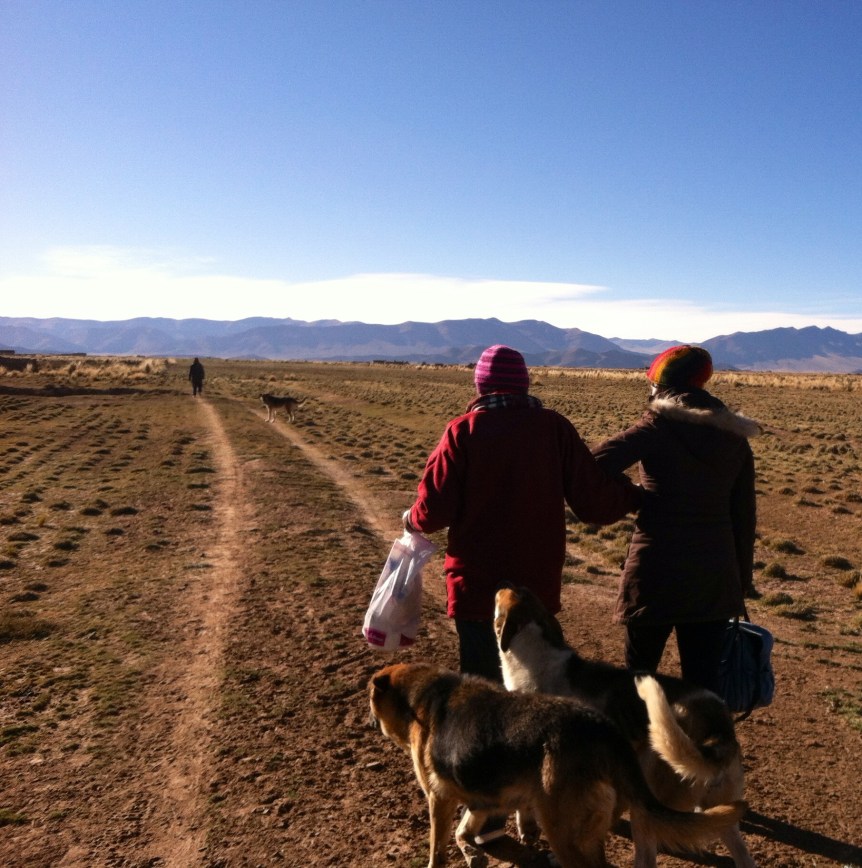
Sisters walking home

The best laid plans

imageWhen one is traveling, going with the flow is essential, de acuerdo? I think the same with diabetes. I actually missed my flight to Bolivia. But the plane came back for me, as it turns out. We’ve visited so many amazing families who have fed us some amazing Bolivian delicacies. It’s been necessary for me to take more insulin than usual in order to aprovechar de la experiencia and also deal with the stress of last minute changes and running to throw our luggage onto buses. Also, blogging, probably not going to happen much. But I did spend a 6 hr bus ride trying to photograph an alpaca or maybe a llama, for my friend Ms. Boffa, and I finally succeeded. Continue reading “The best laid plans”

Glucolift, checklists, and a lot of luck

My Glucolift is packed, I’m ready to go…

glucolift
I love Glucolift. It’s the only glucose tab that I don’t dread eating. I buy it on Amazon. Vegan, gluten free, no artificial flavors or colors.

I’ve been marking through checklist after checklist for the last two weeks. The nice man who works at CVS doesn’t need to ask for my card number anymore, he just remembers it.

Today I went to the pharmacy twice, yesterday once, and the day before, yep, at least once.

The last time I traveled out of the country was in 2011. At that time I was preparing for a three month long trip. I quit my job, packed up a huge suitcase and my backpacking pack and filled a lunch box sized cooler full of insulin. This time it’s just a three week trip, and yet I feel like my wheels are spinning as I try to get organized with all these medical supplies.

It’s my first trip out of the country since getting the Omnipod insulin pump. I wore it when I flew to San Antonio for a business trip and to San Francisco to visit two great friends, but never on an overseas adventure and never to a place where I’m not sure what obtaining supplies will be like.

diabetesmeds

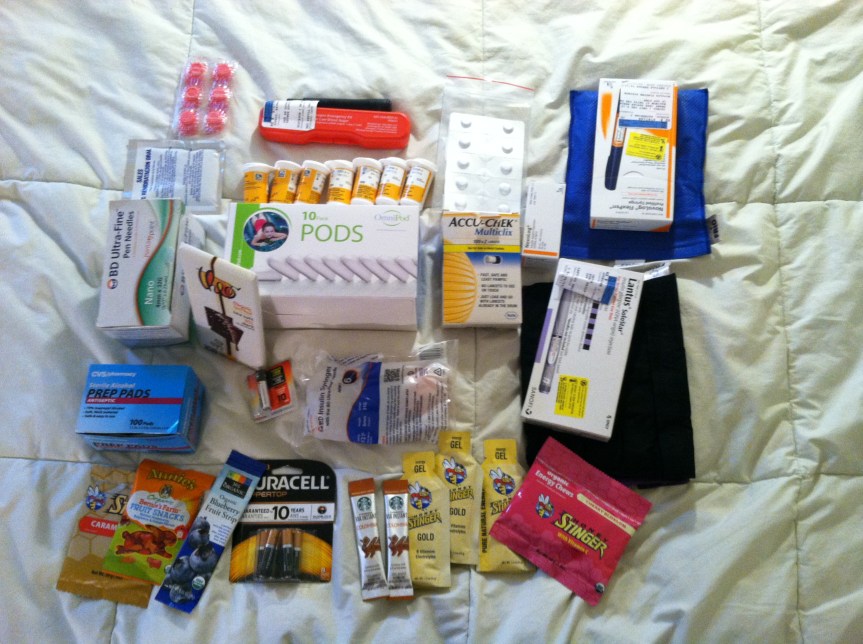
These are some of the diabetes-related supplies I have to carry, and yes, before you say anything, chocolate is a necessity. In the past, I’ve felt so burdened by all of this ‘stuff,’ but in this moment, embarking on this project, I feel so exceptionally lucky.

I am so lucky to be able to afford and obtain these supplies. I am so lucky that this technology is available in the U.S. and that my insurance covers at least a portion of it. And I’m lucky to have so many amazing friends and family supporting me.

When I was diagnosed with T1D 10.5 years ago, a doctor looked at me in my hospital bed and said, “You know, it could always be worse.” At the time, that was not the wisdom I was hoping to hear (actually I was hoping for, “most cases of diabetes clear up in two to three weeks…”). Yet, nearly a decade later I realize how right those words were, although maybe not in the way that doctor intended. I am so very lucky to have been born in this time, with these resources, and this support network, and have such a good starting point for managing diabetes. Not everyone is.

One more thing this time: if you enjoy my blog please go ahead and become an official follower (see the little button bottom right of the screen). It’d be a big help to me and I’d really appreciate it! You can always unfollow or change your email settings if you feel like you’re getting too many notifications from me, but I rarely write more than once a week.

Heading South for the Winter

I’m so excited that in a couple of weeks I’ll be traveling to Bolivia to explore the Altiplano and do work that is very near and dear to my heart. Once again, I plan on blogging intermittently about my experiences traveling with diabetes. In the past I’ve lived in and traveled around Costa Rica four months and through France, Switzerland, and Austria. With international travel there is always a little bit more to consider. For one, I have to pack all the insulin and medical supplies I’ll need for the whole trip, or at least I have had to in the past, because getting these abroad can be a challenge. Then there is the altered schedule and different food options that traveling presents.

photo (9)
Bedtime reading for the next two weeks (although I should also be studying Quechua, Aymara, and other indigenous languages).

The way I’ve decided to blog this trip is by one picture a day while I’m there. I’ll post again at least once before the trip, and I’ll be reading blogs to find out what others with T1D have done when traveling in South America. This is new terrain for me! Thank you in advance for any comments you have that might be useful tips for a person with T1D managing blood sugars at high altitude. Or if you can recommend a high quality, affordable digital camera!

Oh also, about the title of this post, it’s going to be winter there. I’m anticipating a nice cool down from the glorious, yet humid NC summertime.

Great Blue Herons and Pelican

Cases…that is.

These are two things I’m into right now.

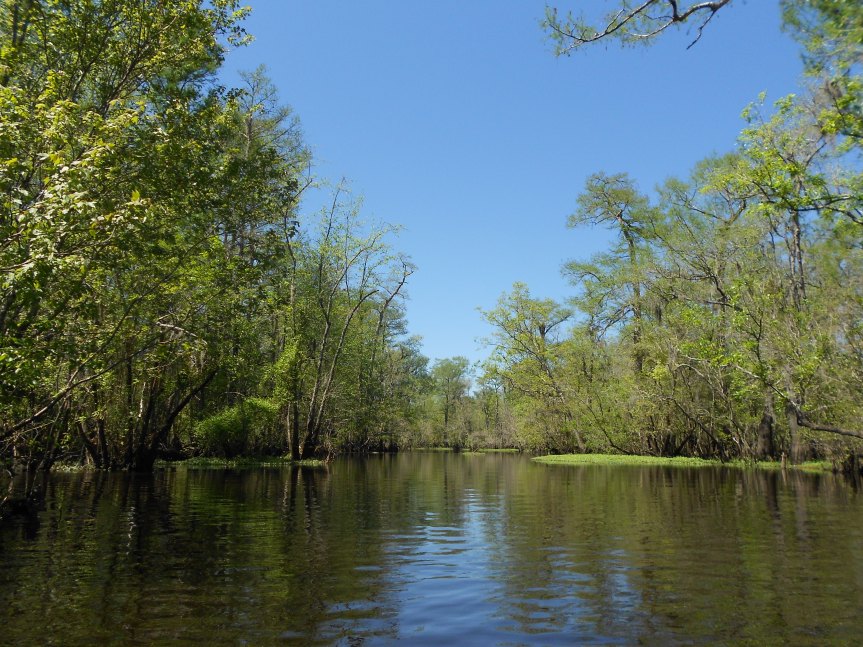
DSCN2791.JPGThanks to adventures with Frog Hollow Outdoors I’ve discovered some amazing new rivers recently. Above is a view down the Black River near North Carolina’s coast, called so because of the high tannin content that makes its waters a coppery blend of dark blue, brown and green. Below and above the tree branches birds wade and fly: Anhinga, or snake-birds soar overhead, Great Blue Herons pick their way through the cypress knees.

From this and other recent river adventures I’d like to give a big T1D shout-out to the ever useful pelican case. Such a pretty little thing, and air and water tight too! On the river I keep my novolog pen, some extra pen needles, a microfiber cloth, alcohol pads, a spare meter and lancet device, test strips, and chapstick, all sealed inside. All of that seriously fits into one case if you pack it just right. I have another one for my camera and honey zinger packet.
My pfd is also T1D friendly with a nice chest pocket for another honey zinger packet and maybe some energy chews, although these I keep in a plastic bag because there are many to a pack and I typically just have a few at a time.

Last time I went paddling I wished I’d packed more protein, maybe beef jerky or trail-mix. Please feel free to share your ideas for managing Type 1 on the water.


Free Range Humans

Against a deep black sky, a perfectly halved moon illuminated our small campsite set within the welcoming confines of a scrubby circle of tall grasses and short trees. Nearby, a tributary flowing down into Flat Laurel Creek gurgled the sound of its boundary.

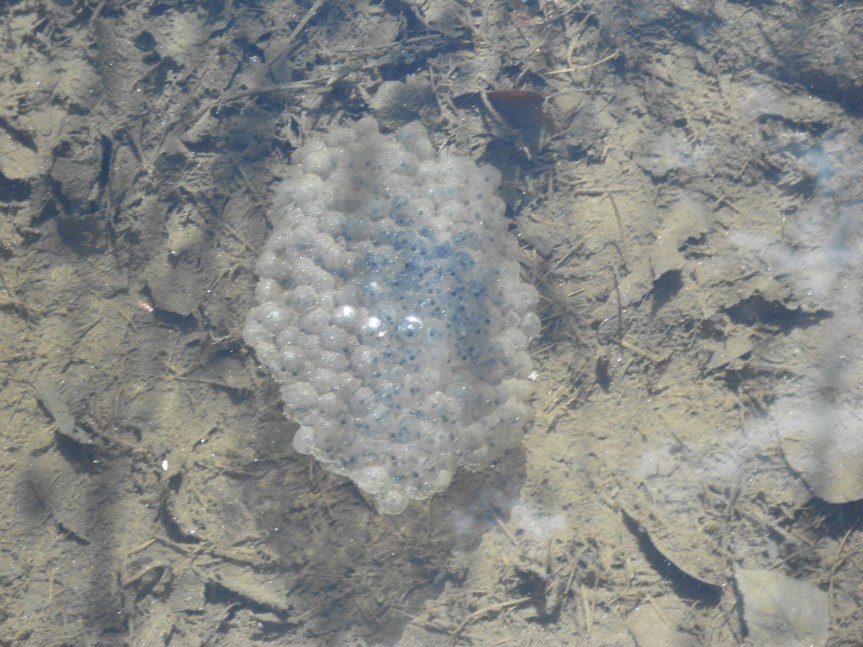
We arrived at our home for the evening before nightfall, when the sun was just releasing its hold on the day. We’d hiked since noon, eating a picnic lunch on the crest of Tennant Mountain, right below the plaque that marks its peak. We hiked over wet and rocky trails where blobs of clear eggs, punctuated by the promise of new frog life, bobbed in pools and puddles. The only other real wildlife we saw was a pack of undergrad males on their spring break, all having reunited in Pisgah Forest from their various schools.

DSCN2764

I hadn’t been back in the mountains, like really back in them, since I moved away from AVL in August. I was afraid to return sooner – afraid that if I didn’t separate myself enough and bond with the land and people in the Piedmont that I’d just live in the mountains in my mind instead of in the world all around me. But coming back home on this trip to Black Balsam and Sam’s Knob felt solid. My friend from school, my backpacking buddy two trips in a row now, couldn’t stop commenting on just how perfect everything was. That’s a heavy word and yet she was so right. You know those moments when you have an awareness of how totally happy and satisfied you are at the time? The whole trip was like that for both of us (I’m willing to say from our continual debriefing). And I was aware, maybe because we’d spent the previous week running from classroom to computer to meetings to google hangouts, that it was so perfect because we had so much less. So much less stimulation, so many fewer options, so many less modes of communication.

And yet I felt more connected.

Laying under the stars, dreaming of life thousands of years ago, my mind was at peace.

It was a good break for my mind all the way around. Only reflecting back now, since this is a blog about life with diabetes, do I realize that thoughts about diabetes don’t dominate any aspect of the trip (except one, and I’ll get there). Of course I thought about diabetes the whole time, as a backdrop to everything else, but I didn’t notice so much that I was thinking about it. It didn’t frustrate me to be thinking about it and I didn’t worry about it. When I reached a level of competency with diabetes I assumed that I had grown with it as far as I would. I had learned that diabetes was in fact manageable but thought that it would never get easier. And that is true; the actual management and burden of diabetes doesn’t necessarily get easier in and of itself, although it does change. But it’s sort of like (I would imagine) a marathon runner training for something and then experiencing a level of ease with certain aspects of it. Yes the last couple miles, or shaving speed, or steep courses, are still a challenge, but there is a certain level of ease with running a distance that to me, a non-runner, seems insurmountable.

Ok, so I mentioned that one aspect of the trip when diabetes did announce itself loudly: the great Bear vs. Nightime-Low debate. If you’re a person with T1d you understand that you can’t go to sleep without knowing where the food is in the house. For me, I keep a honey bear right by my bed. But when I’m backpacking, my goal is to keep bears far, far away from my bed. So what to do?

And I really don’t know. What we did was secure and hang our food appropriately, far, far away from our campsite. One of the recent times that I went backpacking I had to tear the bear bag down from a tree in the middle of the night to get to more carbohydrates, and I just wasn’t prepared to do that again, so I decided to keep two honey zinger packets in the tent.

Sure enough I woke up in the middle of the night with a serious low. I’m not proud of these backpacking lows and I’m still trying to work them out. Walking all day with an extra 30-50 lbs. on my back exhausts my muscles in an unusual way. Even if I got to bed at 175 mg/dl, with very little insulin on board, I could wake up in the 30’s, like I did on this trip. Luckily I had the zingers. This time I stored them in my empty nalgene, which I thought, with it’s good seal, thick plastic, and odor of aquamura, would deter a bear as well as anything else I had. A pelican case could be another option.

So here’s the part where I need some diabexpertise: what do people with T1d who backpack do when they’re camping, say out West, where the stakes involve grizzlies? What do you do here in the East? I really appreciate your comments and dialogue!

DSCN2774

A misty summer day in Austria

…that looks not very different from this misty winter day in North Carolina. Except for the cows, and the ice cold glacial stream and the rugged evergreen peaks.

In this mountain town in Austria the water was piped directly from the source, glacial springs high in the mountains, and poured out of copper pipes into intricately carved basins. Here in NC I can turn on my faucet and fill up my water bottle and not worry about bacteria and contamination.

Managing Type 1 diabetes or any chronic condition in an area where you don’t have access to clean water would be terrifying! Today I am so grateful for water.