Travels with Diabetes, Part 1: Boston to Vienna

I returned about a week ago from a ten night trip spanning Boston, Vienna, and Innsbruck. See timeline below:

Night 1: Boston > Night 2: The sky > Night 3: Vienna > Night 4 – 8: Innsbruck > Night 9: Vienna > Night 10:Boston

Along the way I was blessed to have the company of my gracious hosts in various cities, my mentors at the ISPAD (International Society for Pediatric and Adolescent Diabetes) Conference, and others who are passionate about diabetes care and research just like myself. In fact, the abundance of miracles that transpired during my time has left me in awe. Still, traveling with diabetes, my constant companion, was as always, a little tricky. Diabetes can really be a pain – especially when your body is tired and out of its normal routine. So this post is going to employ grounded idealism – which I find is becoming my default (side effect of aging?) – and will follow a ‘challenge,’ ‘reward,’ ‘strategies’ format.

Challenge: Many legs of travel make for a lot of time on airplanes and lugging around luggage while sort of lost, eating snacky food all day.

Reward: Time with one of my best friends who has recently moved to Cambridge, MA. We explored the city, identified magnificent trees, ate vegan-ish food, and ‘played’ with her turtle Zeke.

Strategies to keep Type 1 diabetes (T1D) happy: I spent about 24 hours in Boston and had plenty of time Monday morning to take a long walk (thankfully the weather was magnificent) across the bridge (in view of the iconic Citgo sign), climbed on some trees, and moved for a solid hour. This brought my blood sugar down, increased my insulin sensitivity, and prepared my body for the long 7+ hour plane ride ahead. If you can’t take a long walk before your flight, some yoga or stretching is definitely better than nothing!

IMG_0338.jpg

Flight attendant“What would you like for breakfast?”  Me“Sleep.”

Challenge: Jet lag! And missed sleep while crossing time zones and traveling

Reward: A full day in Vienna

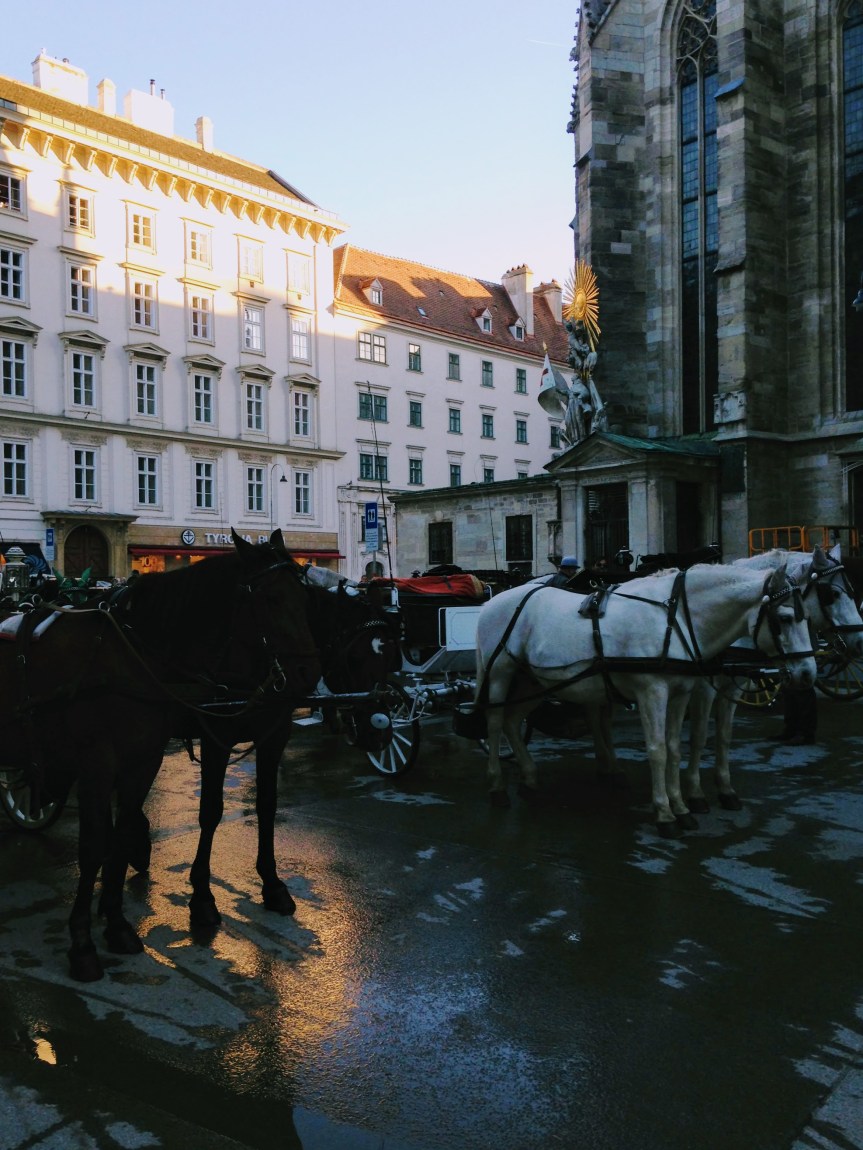
Strategies: So I guess this is always the case, but at the time the wonderful flight crew (thanks Swiss Air, I mean really, you should fly Swiss Air) brought around breakfast, it was 11:30 pm in my world and body. Still, I pressed on, drank another cup of coffee, ate half a croissant, and tried to prepare myself mentally to begin a new day. I learned that perhaps I approached jet lag all wrong. Having slept 0 minutes, I arrived in Vienna and somehow, although I don’t remember the process, made it to my hosts’ 4th story flat. I was graciously welcomed and then immediately fell asleep on the lofted guest bed for 3 hours. One of my hosts woke me and warned that if I slept any longer I’d feel even worse tomorrow. I remembered to check my blood sugar and was pleased to find it wasn’t so bad, 145 mg/dl or so. I took half my Lantus dose, because my schedule was all screwed up and I needed to begin working my doses back towards ‘morning’ and ‘night.’ And then I began the remediation process. After showering and drinking more coffee, I followed my hosts’ directions to Stephansplatz – the city center and location of the giant Stephansdom Cathedral, which I just learned from Wikipedia is one of the tallest in the world. I wandered among the young men in period costumes who showered me with flyers for the Mozart theater experience that I just had to see. I walked inside the giant wooden doors of Stephansdom, carved elegantly and polished, to enter the quiet cavern of worship. It was dark, as most giant cathedrals tend to be, but the stained glass scenes were vibrant and prayer candles lined the front iron rails. I added a candle to the bunch, walked slowly around the wooden floors listening to the echo of my footsteps, snapped a no-flash picture, and exited, emerging again into the light.

My next stop, after more meandering, was my host J’s yoga class at Feel Good Studio. This is what really saved me. Huge life tip: when traveling, look up local yoga studios and see if you can stretch out your body and shake off your jet lag. The amazing side benefit is that many studios offer new student deals, which means that often you might even be treated to a free class. J’s teaching style was just perfect for my state of being – a solid flow with individual attention and mindfulness every step of the way. He recommended plow, with heart lifted toward chin, as one of the ultimate anti-jet lag poses. Afterwards, although I fell asleep completely in savasana, I felt somewhat reenergized and ready to meet the next leg of the trip.

I’m going to break this post up, because it’s important to rest and not rush an adventure in its unfolding.

 

The Best Thing About Backpacking: Part 2

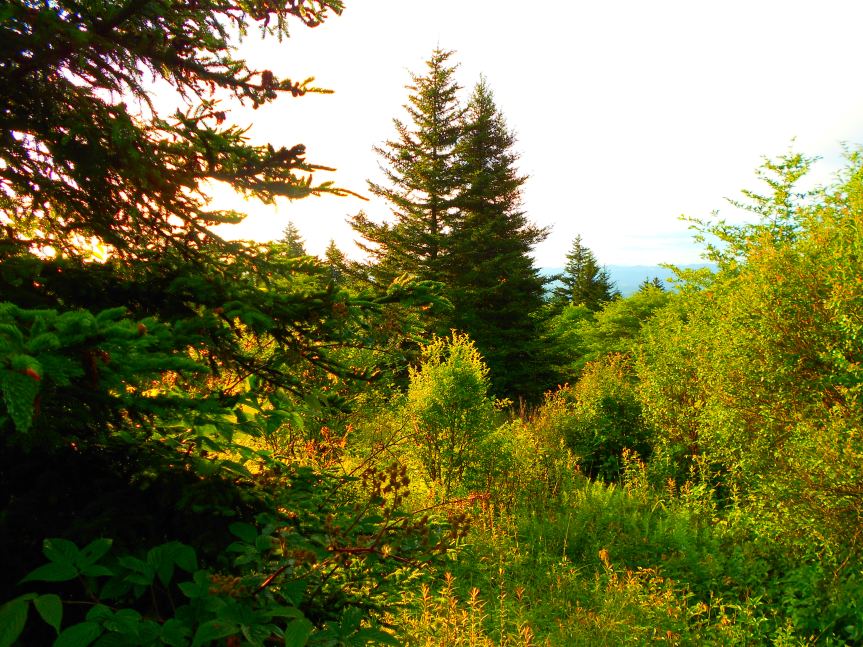
A light breeze was rustling the rainfly when we awoke the next morning, but the downpour was over and waves of sunlight rolled past, lighting up our little orange home. I flipped from side to side a couple of times on the hard ground, trying to keep myself from tumbling down the slope. More sleep being evasive, I was eager to start the water heating for the first cup of coffee in the woods – a unique pleasure that combines two of my favorite things into one. I sat up and put on my old pair of backpacking glasses, found my meter case safely stashed in a plastic bag, and checked my blood sugar. 160 mg/dl – a little high. This was, I thought, to be expected, since I was 137 when I went to bed and I’d cut my Lantus dose by half in preparation for the day of hiking. Better than fighting lows all day, I thought. I unzipped the soaked rainfly which now clung to the tent after its stick stake had crumbled and given way overnight. I managed to haul myself and my pack out from under it and stumble into the bramble patch that we’d appropriated in the night. Ahead of me, a few short oak trees canopied blueberry bushes and huge ferns. Further, at the border where the land turned steeper, big Balsam fir trees spread their evergreen branches into regal teepees. To the right, mountain after soft mountain, rolling in the Virginia way. Behind me, a taller peak with a bright green bald was dotted with what could have been nothing else but a herd of wild ponies.

Unbeknownst to us, we had set up our camp in paradise. I ran back to the tent and crawled into the deflated vestibule. “It’s so beautiful out here!” I shouted to my slowly stirring companions. “Really?” “Oh yeah?” I had already run back outside. The Navigator unzipped the trail side door of the tent, just in time to say hello to a pair of early morning hikers. Also unbeknownst, we had set up our camp at most 10 feet from the Appalachian Trail. In the night, in the rain, it had felt like we were far from the pedestrian thoroughfare. This was an accident of minor importance though. We set up our first breakfast on a small rock to enjoy the views of ponies and passersby. I took about half my normal dose of Novolog to go with a higher carb breakfast than usual and halved my morning Lantus dose (I’m on a split Lantus regimen right now) once again, to set myself up for a day with less lows.

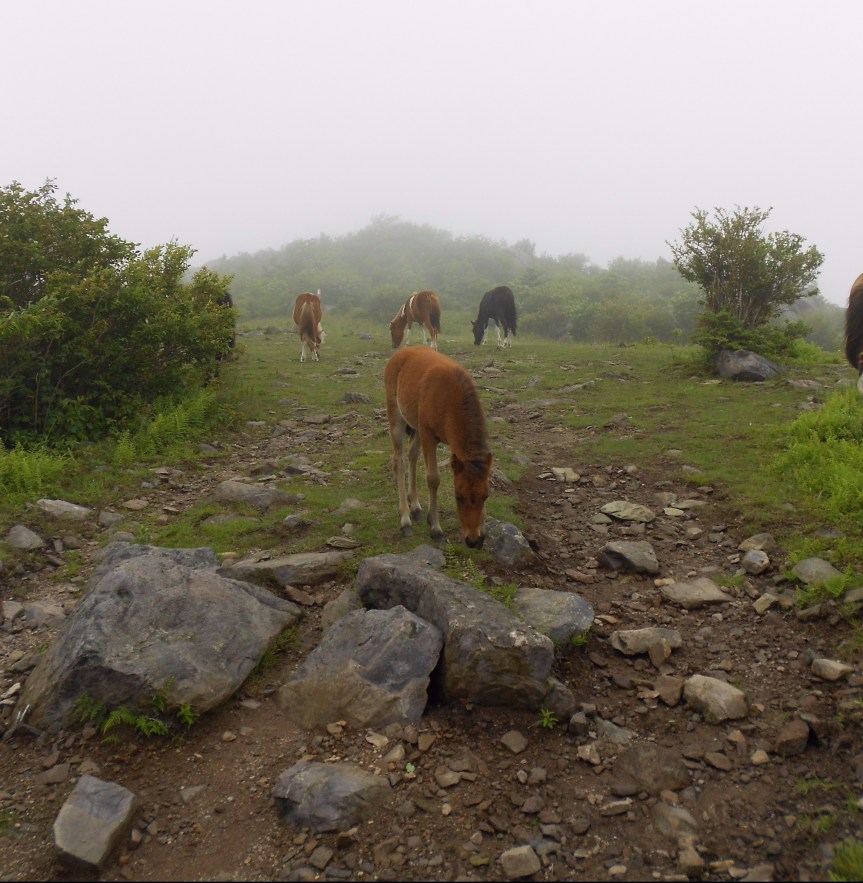
From there the skies just got bluer, in every way. After we’d retrieved our wet clothes from the branches we’d decorated with them, we set off again, this time North on the AT, to begin our ‘loop.’ Within moments we stumbled upon this scene:

DSCN3642

Unlike my last eager venture to Grayson Highlands, I decided that this time I would allow the ponies to come to me if they wanted, but I would not approach them first. Luckily this worked out just fine. They were very friendly. They also seemed intrigued by my hiking poles (just another reason among the many to carry hiking poles).

Sometime later, we said goodbye to the ponies and continued on our way. Light clouds dappled the sky and the colors around us shone in response – bright greens, sunset oranges from the just-past blossoms of the wild, fire azalea bushes. It was slow going because we had to keep stopping to greet and photograph every pony in the area. We could probably provide a pony census to Virginia if it was ever needed. And just when we thought ponies had come to rule the Highlands’ ecosystem, we happened upon…


these lovely (and somewhat intimidating) ladies. They were lunching on a high mountain pasture, so we decided to as well. For the first few minutes of lunch I fed the low blood sugar that had crept over me as I gazed out over the 360 degree views in a partial daze. It seems like for those first few hours of backpacking I can’t ever eat enough to keep my blood sugar up. I slowly came back to our beautiful reality while Raindancer, who had quickly become comfortable with the herd, fell asleep for a 15-minute nap.

Somewhere before or after lunch the trail took us over a little stream and we stopped to refill our Nalgenes. Hiking/life in general with diabetes requires a lot of water. I recently learned (remember this for your next trivia night) that diabetes comes from the Latin for: “It has to flow” (I know that clinically this is not a good thing, but philosophically I really dig that slogan). So anyway we got out our Aquamira and engaged in the process of readying our water. In life, I’m not always patient with the process, but there’s something about the process of purifying water with Aquamira that I love. Maybe this is part of ‘the best thing’ about backpacking – engaging deeply with the process of getting where you want to go.

Sometime around 7 pm we made it to a crossroads, literally and figuratively. We needed more water, we had reached a large boulder that supposedly offered good views, and we were tired. We decided to set up camp and go in search of water, rumored to be just around the bend, after eating dinner. Prior to eating dinner though, we ascended the curved face of the boulder and were met with a literally breathtaking view. You hear people say things like, “she looked breathtaking,” or “wow, this sunset is breathtaking,” but if something is really breathtaking you can’t speak because you are gasping. And that’s how this view was – like, “Ahh!” So beautiful, so unexpected. The sea of clouds had parted and the mountains were everywhere. Although I’ve grown to love the Piedmont of NC, views like this remind me that there’s just nothing like having your breath seized by the mountains. Could this be the best thing about backpacking?

Minutes later, I had wondered if perhaps tearing into a tortilla bowl of beans, tofu, cheese, and avocado as you stretch your tired legs out on the bare ground was perhaps the best thing. There’s nothing like eating dinner in the woods when you’re really tired after a day of hiking. Also, here’s where I’ll make my plug for never going backpacking without hot sauce – it’s worth the weight. I carry mine in a small Tupperware given to me by none other than the Navigator, who understands my love of sauces. It’s very lightweight and a huge improvement over the whole glass bottle of Cholula I carried last time I was in Grayson Highlands.

The day was perfect – magical in every way, and so it shouldn’t have been a surprise to us that the night sky would have been perfectly clear, illuminated only by the pinpricks of a million tiny blazes of light. Why should we have been shocked that the ground flickered with the slow awakening of mountain fireflies, who move with more direction and purpose than the rapidly flitting lowlanders? And yet still, with stars above and around us, we stood mesmerized. I’m all about favorites, ultimates, zeniths, etc., and so I could say that if there was a thing that was best about backpacking, it had to be this mountain field under the cover of darkness – air the definition of fresh, a comforting silence filling the space in between the calls of katydids and click-click of bat wings.

But, I just can’t say that. In fact, no one of the miracles of the day could take the title of ‘best thing.’ To categorize our time would have been to leave out the process, the parts of sum; to forget that each moment was a combination of feeling connected to the Earth and to each other. Perhaps, if I want to answer my friend’s question, I’ll land on connection as the best thing about backpacking. It’s different every time, but it happens, somewhere in between bailing water out of the tent with your bandana, spotting a speckled salamander under an old log, and helping each other find the trail.

A quick acknowledgement and plug for the amazing blog of Hiking Bill. He provides in-depth descriptions of many hikes in the Southern Appalachians and includes helpful ‘hike planners’ at the end. 

You can find his description of the Pine Mtn/AT Loop that we used to plan our route here.

The Best Thing About Backpacking: Part 1

Last night, as we were standing in the kitchen, my roommate and friend asked me what it is about backpacking that I love so much – “You know, like what’s the best thing about it.” It was a good question; I had been talking about how usually, the day after a weekend of hiking and sleeping in the woods, I get back and feel elated for the first half of a day and then grumpy and disoriented for the second. It’s like I’m coming down from the extra endorphins my body makes when I’m frolicking in the mountains. I thought back over the past weekend, starting with the first moment, in order to answer her question.

It was around 9:40 pm this past Friday night when two of my dearest friends and I started our weekend hike. This is by far the latest I’ve ever started a backpacking trip, and I both do and don’t recommend it. I don’t recommend it because navigating in the dark, even with headlamps, is a little trickier, and I do because experiencing the woods at night and getting in touch with the feeling of the ground under your feet so quickly, immerses you immediately in the experience. We planned to hike about 2 miles, half of that headed South on the AT, before resting for the night. Along the way, as I was chatting with a friend I hadn’t seen in several months and who now I could only see via the narrow light of my headlamp, a moth flew down my throat. If you’ve ever been around anyone who this has happened to and you think their coughing seems a little excessive, as if they are just trying to be dramatic, I beg you to think again. This is one of those unique experiences of discomfort that can’t really be compared to anything else. In fact, I couldn’t shake the physio- or psychological trauma of swallowing that little bug until the next morning, its memory eclipsed by the pounding rainstorm we weathered overnight.

It was around 10:20 pm, perhaps five minutes after the swallowing and two minutes after one of my friends made a comment about how glad she was that it wasn’t raining, that the droplets began to lightly fall. At first it felt nice – even though we’d driven North and the air had cooled some from our sticky Triangle, NC climate, hiking had heated us up fast. After the light sprinkle turned steady though, we remembered that there was every chance that the campsites we were searching for weren’t going to be marked with neon signs. At that point we started looking for shelter. We had passed a couple of grassy clearings a few yards back, so we turned around. I headed down a narrow deer (or pony) trail to look for a spot, my friends following. We came to nothing, at least nothing good for sleeping, and I pivoted to head back to whence we’d came. Promptly, one of my friends who I’ll call ‘the Navigator’, alerted me that I was headed off in some random direction that was most certainly not the one we’d come from. This would happen at least 8 more times over the course of barely two days. No one would ever call me the Navigator, nor should they, which is one of the many reasons why I consider backpacking a team sport.

Back on the AT, another deer trail caught my eye, this time leading to a scrubby little oak tree, its branches spreading into an umbrella-like canopy. “Here’s a spot,” I shouted. My friends followed, but when they saw the tiny clearing surrounded by blackberry brambles, they looked skeptical. It was not the best spot ever, but the ground was flat-ish, the tree offered some protection but was not by any means taller than the rest, and it was now pouring. We quickly threw down the tarp and set up the tent, just to realize that the tent stakes were missing.

After finding some sufficiently dry sticks and jamming them into the ground to keep the rainfly off of the tent, we crawled inside. The Navigator was hastily bailing water from her side of the tent which had turned into a puddle over the past three minutes. We realized that the rainfly was sitting on the tent and causing water to pool up and drip inside, so the Navigator suggested that we tie a ‘sky hook’ to keep it off, which basically means tying a rope from the rainfly to a neighboring tree to create a canopy. While the Navigator bailed, my other friend, who I’ll call ‘Raindancer’ and I, leapt outside to tie the hook. At this point we were completely soaked and thoroughly scratched by the bramble we had pitched our tent in, but we reentered the tent victorious to find that Navigator had mostly dried the floor with her bandana.

That evening, as our bodies held the tent down, the long arms of Hurricane Cindy swept gales around us. The rain thumped down and the wind rattled our little tarpaulin home. I closed my eyes, smiled, and fell into an intermittent sleep.

Was the best thing about backpacking swallowing a bug? No, I thought. Was it getting lost down a deer trail within less than an hour of starting the trip? No, I thought. How about sleeping in damp socks, on a slight slope, in the pounding rain? Surely, this couldn’t be it. I’d have to keep retracing our tracks to figure it out.

To be continued…DSCN3619.JPG

Wild Adventures with Diabetes

Today diabetes took me on a walk. I’ve been a little resentful of diabetes lately. Sometimes it feels like my blood sugar controls every move I make. It decides what I will eat, if I’ll give myself a shot and how much insulin I will take, if I’ll exercise and for how long and how hard, and sometimes even how I feel about myself.

The last few weeks have been so busy and I’m longing for a little break, just a weekend away from everything, blood sugar included. But you know what, there really is no taking a vacation from diabetes. Checking my blood sugar less and loosening some restrictions in my diet might mean that diabetes takes up less of my time for a day or two, but pretty soon, not feeling as good as I could if I was sticking tighter to my ideal range doesn’t feel very luxurious at all.

So today, around 3 pm, when I was supposed to be working on my manuscript and doing other computer-based tasks, I checked my blood sugar and it was 180 mg/dl. I don’t like sitting when my blood sugar is over 150 – it agitates me to know that I could go on a walk or run to bring it down. It also agitates me when I think about how often blood sugar interrupts my plans. I’ve gotten better at choosing my plans over my perfect blood sugar in the past few years, but it’s a Sunday, and despite my agitation, I decided to let diabetes take the reins.

Immediately, driving off into the countryside around Chapel Hill, I was glad that I did. The sun was bright on budding green fields edged by thick stands of trees waving in the breeze. The trail I found was soft, dirt and gravel, easy on the feet. A muddy Piedmont creek ran alongside it. Towering strong-armed beech trees lined the path. And just when I was almost back to my car, I look up ahead on the trail and saw…

photo 1.JPG
My poor photography skills do not do her justice. Also, I was not going to get any closer.

a six foot long Black snake. I was mesmerized. My mind left diabetes and everything else behind, and as she slithered away I felt some real freedom from all of it for the first time in awhile.


Immersive Experience

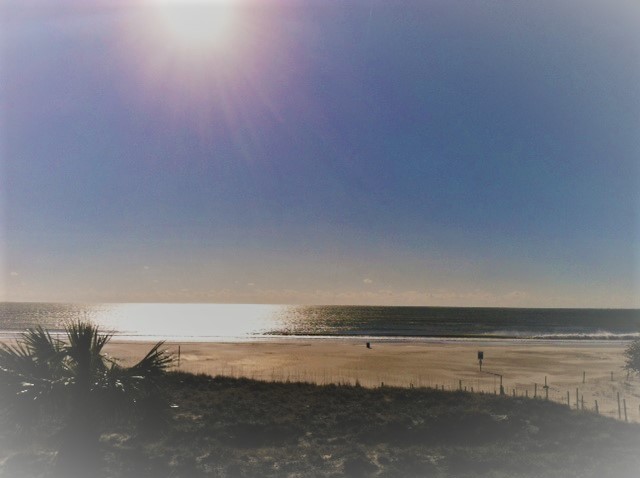
I’m at the beach, looking out at the ocean. As my mom pointed out, the horizon line is choppy and each wave is being attacked ferociously by the wind, causing a thick fan of mist to spray from it.

This morning, inspired by the rhythm and beauty of the sea, we talked about moments in life that become preserved (perfectly?) in our memories. Of course as mother and daughter we had some shared moments to talk about – and also some individual ones. I told mom about a moment I shared with a friend of mine on a backpacking trip, when we rushed to the tip-top of a peak called ‘Shining Rock,’ with just too little time before the sunset to search for and find out cameras in our wet packs. When we hit the crest of the mountain and emerged onto the quartz outcrop, the sun was breaking through the clouds in an array of colors and beams that took our breath away. It reminded me of the ocean in a way – like seeing underneath the water. The clouds set a soft horizon line over the expanse of blue ridges.

There was a moment in this moment when we both were exasperated by our lack of picture-taking devices – but then came the freedom. When ‘preservation’ with a camera is possible it’s hard to resist the fantasy that holding on to these moments in our lives is possible (oops, I guess this is a continuation of my explication on change). When preservation is impossible, say we don’t have cameras and we left our phones locked up in the car, immersion becomes possible. What are the ingredients of immersion? Dedication, curiosity, gratitude? I don’t know. I would say though, that those moments in life that we can never forget, are most likely ones in which we were not concerned with holding on.

Interdependence

This is the English version, slightly adapted to the current moment, of my last post from Sunday.

There’s a lot I could write about, but I’d like to start with a discussion about the word ‘neighbor.’ This word has entered my mind and my world a lot lately, and I’m thinking about what it means to be a good neighbor. Another word that has appeared again and again is ‘community.’ I went to a community this past weekend where it is evident that there is this idea of living, in the words of one resident, “in an interdependent way.” It is, she says, an alternative to living so independently, without recognizing that we do depend on each other. Why is it so hard in our culture (in all cultures?? in some more than others??) to accept help? I think that it’s a function of our perceptions about the relationship between ourselves and others, or saying it another way, between our inner world and our outer world.

It’s here that I’ll bring diabetes into the conversation (did you know that everything relates to diabetes?). A week ago I fell down the stairs (or more like I fell on the stairs while going down them). When I fell, it scared the woman who was climbing up from the other direction and she gasped and grabbed her heart. For a moment she looked worse than me. It was captivating to me that my movements and an action occurring to my body could move her too – that we were connected in this way. Later, in dance class with my leg hurting badly, I realized that my blood sugar was very low and that maybe that was why I had fallen. The level of sugar (glucose, officially) inside my body influences my movements in the world. This is a perfect metaphor for the influence that we have on our surroundings. Our thoughts, beliefs, prejudices, and personal histories have an impact on our environment whether we like it or not. We are connected. We can only operate in the world without recognizing that we depend on each other while we maintain power, or rather, until we lose control. For me, when I fell I lost control. It was a humbling experience that temporarily transformed my body. We’re always talking about shoes, but this journey taught me that a novel way to experience empathy is to imagine what life would be like in another body. Empathy is the key (for me) to being a good neighbor. Obviously, there is another moral here too for my friends who have Type 1 diabetes (or Type 2 for that matter), that is, please check your blood sugars regularly and be careful when you’re having a low.

Today my leg is feeling much better (I danced – joyously, today), and once again I’m thinking about how we can use the word gratitude as a verb. If our heart is struggling to let empathy in, maybe gratitude can help us tear down the wall.  

¿Por qué bailar solo?

Hay mucho sobre que pudiera escribir, pero quiero empezar con una discusión sobre la palabra ‘prójimo.’ Esta palabra ha entrado mi mente y mi mundo mucho recientemente, y estoy pensando en lo que significa ser una buena prójima. Otra palabra que ha entrado es comunidad. Fui a una comunidad ayer adonde es evidente que hay esta idea de vivir, en las palabras de una residente, “de una manera interdependiente.” Es, dice ella, una alternativa de vivir tan independiente, sin reconocer que somos dependientes el uno del otro. Por qué es tan dificil en nuestra cultura (en todas las culturas?? Algunas más que otras??) a aceptar que no podemos hacer todo por nuestra cuenta. Por qué se da tan mucho miedo ser vulnerable y aceptar ayuda? Pienso que es una funciona de nuestras percepciones sobre la relaciona entre nosotros y los demás, o sea, entre nuestro mundo interior y mundo exterior. Es aquí adonde traeré diabetes entra la conversación. Está semana me caí por las escaleras. Le di un asusto a la mujer que estaba subiendo desde la otra dirección. Fue interesante que mis movimientos y la acción a mi cuerpo podría moverla también – que estábamos conectadas en esta manera. Luego, en mi clase de bailar con mi pierna doliendo mal, me di cuenta que mi azúcar fue muy bajo y que posiblemente era por eso que caí. El nivel de azúcar dentro de mi cuerpo influye mis movimientos en el mundo. Esta es una metáfora perfecta para la influencia que tenemos en nuestros aldrededores. Nuestros pensamientos, creencias, prejuicios, y historias personales tienen un impacto en el exterior sin nos guste o no. Somos conectados. Solo podemos operar en el mundo sin reconocer que dependemos de otros mientras tenemos poder, o sea, hasta que perdemos el control. Para mi, cuando me caí, perdí control. Fue una experiencia humillando, que me transformó en otro cuerpo temporalmente. Este viaje, pienso que es valioso, porque permite empatía. Esto, empatía, pienso que es el ingrediente clave (para mi) de ser una buena prójima. Obviamente, hay otra moral aquí también para mis amigos que tienen diabetes tipo 1 (o 2 realmente), que es, por favor, mide tus niveles de azúcar frequentemente y cuídate cuando tienen bajos. Ahora mi pierna se siente mucho mejor y estoy otra vez pensando en como podemos usar la palabra gratitud como un verbo. Tal vez, si estamos luchando por encontrar empatía, podemos pensar en todas las cosas en nuestras vidas por lo que deberíamos tener gratitud.

The Story Begins

Epilogue

If you missed Chapters 1 – 3, which precede this post, you can find them here:

You’re Never Gonna Make It

With a Minute to Spare

The Plane is Coming Back?

And in case you’re wondering, “How long can she drag this story out?” I guarantee you that this is the last in the series about getting on the plane, but I had left the moral of the story untouched, or at least inexplicit, if there is one at all.

None of this was clear to me while I was writing the story, but I realized that during the whole journey from NC to Bolivia, I was balancing two contradictory emotions: panic and trust. Is trust an emotion? For me, at the time, it was. It was a force I could call on, not from outside of myself, but not just from inside of myself either. I would like to say I knew all along that it would work out, somehow, miraculously, meaning some fluke would allow me to defy the odds and make it on my flight, but really, I think I just knew that it would all work out even if I missed my flight and ended up stuck.

How nice that I have that security, even if sometimes it might be misguided. How lucky I am, truly lucky, to be able to have faith in humanity and in individuals, to help me if I am in a bind.

Here’s the thing about the panic: I could have skipped it. I could have proceeded with my plan, read SkyMag on the short flight to Miami, leisurely strolled down the deserted aisles, and arrived at my gate, right as the woman on the intercom was calling us over to let us know that the plane was re-docking.

I’m not advocating for panic. And since this experience, I’ve learned how to calm it down, and reassure myself in the moment that if I am feeling that trust, I can lean on it, and know that even if it doesn’t go according to plan, I’ll be able to make it work. But yet at the same time, emotions overtake us and sometimes hold on with a fierce grip. I didn’t breathe until I got on the cart with Jose and as we were racing, so to speak, towards the gate, I felt that people really wanted to help me, that I wasn’t alone.

With each kindness my panic subsided a little bit more and the glowing warmth of trust that I felt grew bigger. My path was validated by each point at which it seemed unfeasible.

On the plane, making my way to my seat, all emotions stepped aside so that I could experience pure elation (and exhaustion), which I have to say is one of my favorite states to be in. When I found my row, a man sitting by the aisle got up, looked at me quizzically, like, “Where did you come from?” and then let me pass. I flopped down in my window seat. He turned to me and said, “Are you just now getting on the plane.” “Yeah!” I said and smiled. “Yeah, it came back for me. No I mean, there’s technical difficulties I guess, but I missed it, and it came back.” “Wow, you’re the only person who’s happy about this” (talking about the tech issues, which at this point we had been informed were being addressed). I just laughed. Usually I would have explained but I didn’t even really understand what had happened. So we just talked about the plans we had for our trips and our work and lives back in the US. This person would become a friend who I would run into, by chance, two more times during the course of my trip.

The story didn’t end when I got on the plane; really that’s just where it began. Looking back, it seems like the interdependent lucky breaks that I caught were tailored to fit together in one precise pattern, like a code to crack. In truth, I suspect other versions of the story that would exist had one thing been different, would also have been rich and meaningful. But the blessed nature of my departure and take-off carried me through the challenges of travel, and reminded me that I was on the right path.

We all, each day, comprise the narrative of each other’s lives and write our stories together. Today I’m thinking about how we are a community even as we are strangers. Today I’m thinking about how the difference between apathy and compassion sometimes lies in simply looking people in their eyes.  Today I’m remembering the power of helping someone get where they need to go.


The Plane is Coming Back?

First, I want to recognize MLK Day and my gratitude for a day of remembrance, action, and unity.

Chapter 3

“I’m here! I’m here!” I shouted as I leapt off the airport go-cart.

“Hi, hi, I’ve got to get on the plane, I’m the last passenger” (I’m not sure when I decided this fact), I said as I stumbled over to the airport boarding and security person, my backpack flopping to and fro.

“Goodbye Jorge! Thank you!” I turned and yelled to my friend who shook his head at me and motored the cart a few feet away.

“You’re too late. The plane is gone. Nothing we can do.”

The airport guard said all these statements in a rapid montage that I like to call, ‘The most painful one-liners a hopeful traveler can hear.’ It was as if he’d practiced the exact combination of phrases that would shut down all hopes the quickest.

I was crushed, like a peanut shell on the sidewalk. Yet, shockingly, I remained undeterred by this obstacle. Somehow, the run had made me confident in my choice to get on the plane to Miami and embark on the first leg of my journey. The adrenaline coursing through my veins made me feel like I was in the sort of adventure where the protagonist overcomes incredible odds and ultimately completes her goal.

I said, “Nooo!”

He said, “Yes.”

I said, “I have to get on that plane. I have to go to BOLIVIA!”

“I said there is nothing we can do. The gate is closed. The plane has left. You were too late.”

At the repetition of those words I was filled with shame. I had let the plane go by. I was too late.

The moment passed and I decided to try arguing again.

“But I can see it! I know it’s there. I can see the plane!” I exclaimed, pointing out a foggy wall-length window.

“This is an airport. That’s not your plane.”

I realized then, the flaw in my argument. I realized too, how fixated I had become on this goal, as if it were the only way that my plans, my life, could work out.

I began to sob. Heaving sobs. I think it was that I hadn’t been able to really breathe for some time now. That and, up until this man, everyone else had been SO supportive, as if they were sent to help me along on my journey. Now suddenly it felt as if he’d slapped me in the face with a wet fish of reality (just trying that metaphor out).

“Stop crying. You don’t need to cry. People miss their flights every day. It’s not like somebody died, you just have to go over there and rebook your flight.”

Now this struck me as simultaneously cruel and also useful. He had reframed what was a complete disaster, to me, as a normal, everyday ‘oops’ from which there was a recovery protocol. And it was, right over there, at a counter where I noticed a little more than a dozen other passengers talking anxiously among themselves.

I looked back at him. “I do need to cry. I appreciate what you’re saying, and I’ll go to do that, but first, I just need to cry for a second.”

At this I saw his eyes soften, almost imperceptibly, but it was there. He walked away as I exhausted the rest of my adrenaline, still strapped to my backpack in one of those little hard blue chairs. I looked over to see Jorge, staring at me with sympathy in his eyes from the other side of the hall.

I thought about going in search of food, or to make some calls, or something before jumping right back into the mess that I’d created. But instead, after a few minutes, I got up, blew my nose (and then washed my hands because I was in an airport and that’s the right thing to do), and walked over to the ticket counter. I was in line behind a beautiful couple who were holding what appeared to be a wrapped painting as their only carry-on. I sniffled as I listened to the conversations around me in Spanish and tried to contact my friend in Bolivia (who I actually hadn’t met in person yet) through Whats App.

Lo perdí (el avion)…voy a ver que pueda hacer ahora. Hay muchos aqui que perdieron.’

She replied: ‘Que pena.’ I agreed.

Estoy en Miami. No se adonde esta mi otra maleta…’

‘Que complicada – no creo que puedas viajar hoy en Bolivia.’

The other problem was that my friend was flying from her hometown to the capitol, La Paz, to meet me. She would have been on the verge of going to sleep to wake up just a few short hours later for an early morning flight. And by early, I mean 3 am.

‘Estoy en la linea para hacer otro vuelo, pero no pienso que puedo volar hasta manana.’ – 10:33 pm

I heard another Whats App message come in from her, but I was too distracted by the sound of an airline employee speaking into her walkie-talkie: “What? What about the plane? Pasajeros a La Paz! Passengers going to La Paz! Passengers going to La Paz, come over here.”

That was me! I ducked under the stretchy cord that was creating our queue, got stuck because of my backpack, fell to my knees and crawled, heaved myself up, and made it to her, right behind the elegant couple with the painting. It was just us three. She wasn’t looking at or acknowledging us at all, but rather, still communicating over her walkie-talkie: “The plane is coming back?” she queried into it. “Well, should I send them over?” “Send us over!” I said, quietly, but audibly, eyes wide. “Yeah, send us over,” said the man with the painting. She finally looked at us. “Ok, I’m gonna take you over to the gate. It looks like the plane may be coming back. But nobody get excited.” I was NOT excited. Promise.

We got back to the gate, and she walked us up to the yellow tape line. She said, “Nobody step in front of this line. If you step in front of this line, you’re not getting on the plane.” We stood several feet back.

I heard her talking to a male airline employee who looked to be dressed for a technical occupation, building, repairing, etc. He was very nice and started to talk to us, in Spanish, and by us, I mean the couple in front of me. He looked at me and asked if I understood. I said yes. I had called my friend in Bolivia on Whats App as we hurried over to the gate moments before, to tell her that I thought I was maybe getting on the plane, and so, to not cancel her flight and to continue on with the plan as we’d laid it out. I told her I would let her know. I also told her that the plane had come back just for us. That was, after all, the only explanation I could think of. I wondered if my tears had anything to do with it.

“Problemas tecnicos,” the airline worker said. “El avión tenía problemas tecnicós.” Technical difficulties. Hmm. In one way, this was extremely lucky, in another, a little disconcerting.

The woman reappeared. She said that the plane was now back at the gate while they fixed the issue, but they had to check to see if there were still seats available (plausibly they had given away our seats to standby passengers because we were late).

The man of the couple put me in between him and his wife, which I thought was one of the kindest in the string of kindnesses I’d experienced that day. Obviously, they were not going to split up a couple.

The female airline employee found a seat for woman of the couple and she walked through the door, which had reopened, to board our plane. The employee looked back to her computer. A minute passed, I was sweating. She looked at me, and she said…

“Are you ok with a window seat?”

I would have been ok sitting on one of those fold out platforms that the flight attendants use during shuttling and take-off. I would have been ok pushing the carts of beverages up and down the aisle. I probably would have sat for 8 hours on the lid of the toilet in one of the bathrooms. So I said, “Yes, that should be fine.”

I stepped onto the jet bridge and was shortly followed by the man of the couple who’d also been found a seat. Moments later, at 10:55 pm, I sent the following Whats App message: ‘Estoy en la avion!’ Which means, sort of, ‘I’m on the plane!’

I was on my way.

Stay tuned for the epilogue (as it currently stands), coming soon.

With a Minute to Spare

Chapter 2

So at 8:05 pm I’m sitting on the plane to Miami muttering, “Come on, come on,” under my breath, and hoping they start the engines soon. By 9:00 I felt like I had aged several years and my cortisol was jumping up and down like a jack russell terrier. I had one of those little in-flight tracker screens right in front of me, and although I enjoy many traditional flight hobbies like writing in my journal, doing crossword puzzles, and reading SkyMag, this time all I could bring myself to do, literally, for two hours, was watch that little plane icon move slowly through my home state (Georgia), and onwards towards the tip of Florida.

At 9:05 the estimated arrival time had jumped back from the original 10:15 (which remember would leave me with a total of 5 minutes to make my connecting flight) to 9:44 pm. I would have, calculating time for deboarding, at least 20 minutes of straight running time before the gate to my second flight closed. At this time, I did decide to update my journal. In it I wrote:

24 minutes to destino. Quick update, I’m on the plane. BG (blood glucose) is 320 mg/dl. Was so low in Raleigh that I couldn’t think. Didn’t take insulin for a long time. We are set to arrive @ 9:44 and then depart at 10:20. As long as no gate change I’ll be at F25 (only 20 gates away from where we arriving). I’m going to write an update at 10:40 pm saying I made it, and my BG will be perfect. Then I will fall into a nice sleep until 4 am, then write for an hour. Someday I’ll learn Portuguese.

This was my last journal entry for four days.

Back on the plane, as we declined in elevation towards our destination, I looked at the screen, then back at the overhead compartment, then at my purse, then at all the people around me, in a nervous loop. There were so many people in front of me, and I knew I had to get off of that plane. A flight attendant walked by. I asked her if she could help me. I said, “Hello there…I know this might be a weird request, but my connecting flight leaves at 10:20, and that lady up there, hers leaves pretty soon too, and if there’s any way we can get off this plane, like, first, or sooner, that’d be great.”

She agreed to make an announcement over the loudspeaker. She was very kind.

5 minutes later, as people rustled around and the captain updated us of our status repeatedly, a quiet announcement urging passengers to allow those with close connecting flights to depart first, was made. The attendant warned me that most likely, people would take little heed, especially those in first class.

And yet a door opened. Behind me, a couple on their way to an island off the coast of Florida, anticipating their vacation, had heard my anxious request. “You’ve got a close connector too?” One of the women asked. I sighed. “Yeah, it’s pretty close…” “Yeah ours got crunched with the delay. What’s yours?” she asked. I told her. “OH, that is close. That makes me feel pretty good about ours.” Despite this, she was very sympathetic. ”Here’s what you need to do,” she said. Follow us off of here and we’ll get you pointed towards the Sky Train. You’ve got to get on the Sky Train because where we are, you’re never gonna make it on foot all the way to your next gate. This airport is a giant.”

Now remember, our flight was arriving considerably early. It was 9:40, and we were descending towards a gentle landing. At 9:44 we touched down.

At 9:55 we were still waiting behind several other planes on a slow, slow pathway towards deboarding. Our huge machine idled in the queue. I began to feel flushed and frantic (noticing a theme?).

My friends from a few seats back knew that everything wasn’t going to go as smoothly as they’d originally presented. They amended the plan. “Ok, here’s what you’ve gotta do. As soon as we get up there, and they turn off the seatbelt sign, we’re gonna stand up and make an opening for you so you can get your backpack and get off of here. And then, don’t look back. Don’t wait for us, we’ll just slow you down. You gotta get off this plane and run like hell. You gotta get to gate 11 (9 gates away) and get on the Sky Train. I think you’ll have to go up some stairs…”

At that moment we docked.

The seatbelt sign went off.

My friends stood up, and I began to act.

I heaved my Osprey backpack from the overhead compartment and hiccupped down the aisle, meeting the line as it slowly moved off of the plane. I stepped onto the connecting bridge and could see the light of the airport at the other end, but I was still blocked by a throng of passengers. I tried to wait patiently because I don’t like pushing through crowds or running around other people who I could potentially crash into. So I slowly trudged along, until suddenly, in the Miami airport, at what was now 10:08 pm, I saw an opening, and I made a break for it.

My backpack was flapping on my back because I hadn’t buckled the waist strap and my purse was bouncing repeatedly into my stomach. If I had ever pushed myself this hard in high school track, I might have placed in a race. I had never run like this before. I also had never run before wearing a 35 lb. backpack. There was no one in the airport, no one out in front of me. Which is sort of a figure of speech because there were a few others, walking on the moving sidewalks which had been disabled because of how late it was. After about two minutes of running, my hair flying into my face, cheeks red, eyes wide, heaving breaths from the exertion, I see a business man and I think, he must know how this airport works. As I pass him on my right, I turn my head like a frenzied bull and with panic in my eyes I scream, “Where’s the Sky Train?!” “What?” he queries back. “THE SKY TRAIN?!!!”

I still don’t know where the Sky Train was. He failed my question a second time and I waved my hand at him in dismissal before continuing to sprint through the deserted airport.

Up ahead, one of those little cars was sitting horizontal in my path. As I approached it, I yelled to the conductor, “Please, sir, I’ve got to get to gate F25,” and instead of dodging it, I jumped on (not recommended behavior).

I learned my friend’s name, and where he was from, and that he had no faith that I would make my flight because moments before he had taken the last passenger who they were calling for over the loudspeaker to the very same gate.

I disagreed with him, but I was grateful for his kind presence and effort, nevertheless. We sped (at 5 mph) through the airport. My hair flew behind me, finally out of my mouth and eyes. I began to try to breathe again, although my lungs burned and my chest was tight. I was invigorated, I was going to make it. I had 1 minute before they would close the gate at 10:10 pm as we neared F25.

…To be continued.