Interdependence

This is the English version, slightly adapted to the current moment, of my last post from Sunday.

There’s a lot I could write about, but I’d like to start with a discussion about the word ‘neighbor.’ This word has entered my mind and my world a lot lately, and I’m thinking about what it means to be a good neighbor. Another word that has appeared again and again is ‘community.’ I went to a community this past weekend where it is evident that there is this idea of living, in the words of one resident, “in an interdependent way.” It is, she says, an alternative to living so independently, without recognizing that we do depend on each other. Why is it so hard in our culture (in all cultures?? in some more than others??) to accept help? I think that it’s a function of our perceptions about the relationship between ourselves and others, or saying it another way, between our inner world and our outer world.

It’s here that I’ll bring diabetes into the conversation (did you know that everything relates to diabetes?). A week ago I fell down the stairs (or more like I fell on the stairs while going down them). When I fell, it scared the woman who was climbing up from the other direction and she gasped and grabbed her heart. For a moment she looked worse than me. It was captivating to me that my movements and an action occurring to my body could move her too – that we were connected in this way. Later, in dance class with my leg hurting badly, I realized that my blood sugar was very low and that maybe that was why I had fallen. The level of sugar (glucose, officially) inside my body influences my movements in the world. This is a perfect metaphor for the influence that we have on our surroundings. Our thoughts, beliefs, prejudices, and personal histories have an impact on our environment whether we like it or not. We are connected. We can only operate in the world without recognizing that we depend on each other while we maintain power, or rather, until we lose control. For me, when I fell I lost control. It was a humbling experience that temporarily transformed my body. We’re always talking about shoes, but this journey taught me that a novel way to experience empathy is to imagine what life would be like in another body. Empathy is the key (for me) to being a good neighbor. Obviously, there is another moral here too for my friends who have Type 1 diabetes (or Type 2 for that matter), that is, please check your blood sugars regularly and be careful when you’re having a low.

Today my leg is feeling much better (I danced – joyously, today), and once again I’m thinking about how we can use the word gratitude as a verb. If our heart is struggling to let empathy in, maybe gratitude can help us tear down the wall.  
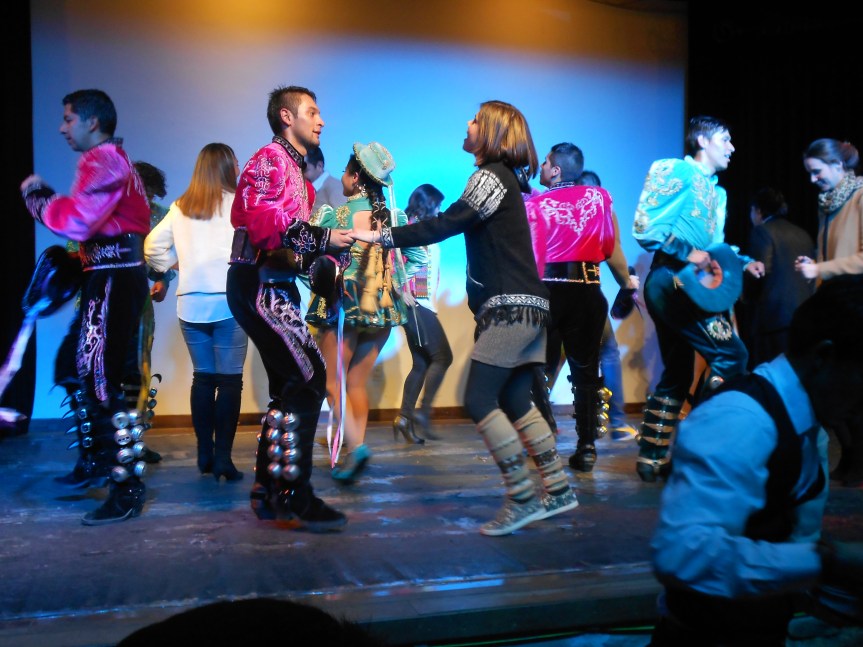
¿Por qué bailar solo?

Hay mucho sobre que pudiera escribir, pero quiero empezar con una discusión sobre la palabra ‘prójimo.’ Esta palabra ha entrado mi mente y mi mundo mucho recientemente, y estoy pensando en lo que significa ser una buena prójima. Otra palabra que ha entrado es comunidad. Fui a una comunidad ayer adonde es evidente que hay esta idea de vivir, en las palabras de una residente, “de una manera interdependiente.” Es, dice ella, una alternativa de vivir tan independiente, sin reconocer que somos dependientes el uno del otro. Por qué es tan dificil en nuestra cultura (en todas las culturas?? Algunas más que otras??) a aceptar que no podemos hacer todo por nuestra cuenta. Por qué se da tan mucho miedo ser vulnerable y aceptar ayuda? Pienso que es una funciona de nuestras percepciones sobre la relaciona entre nosotros y los demás, o sea, entre nuestro mundo interior y mundo exterior. Es aquí adonde traeré diabetes entra la conversación. Está semana me caí por las escaleras. Le di un asusto a la mujer que estaba subiendo desde la otra dirección. Fue interesante que mis movimientos y la acción a mi cuerpo podría moverla también – que estábamos conectadas en esta manera. Luego, en mi clase de bailar con mi pierna doliendo mal, me di cuenta que mi azúcar fue muy bajo y que posiblemente era por eso que caí. El nivel de azúcar dentro de mi cuerpo influye mis movimientos en el mundo. Esta es una metáfora perfecta para la influencia que tenemos en nuestros aldrededores. Nuestros pensamientos, creencias, prejuicios, y historias personales tienen un impacto en el exterior sin nos guste o no. Somos conectados. Solo podemos operar en el mundo sin reconocer que dependemos de otros mientras tenemos poder, o sea, hasta que perdemos el control. Para mi, cuando me caí, perdí control. Fue una experiencia humillando, que me transformó en otro cuerpo temporalmente. Este viaje, pienso que es valioso, porque permite empatía. Esto, empatía, pienso que es el ingrediente clave (para mi) de ser una buena prójima. Obviamente, hay otra moral aquí también para mis amigos que tienen diabetes tipo 1 (o 2 realmente), que es, por favor, mide tus niveles de azúcar frequentemente y cuídate cuando tienen bajos. Ahora mi pierna se siente mucho mejor y estoy otra vez pensando en como podemos usar la palabra gratitud como un verbo. Tal vez, si estamos luchando por encontrar empatía, podemos pensar en todas las cosas en nuestras vidas por lo que deberíamos tener gratitud.

H2O

10 things you can do with water (that are great for diabetes):

Brush your teeth – People with diabetes are at an increased risk of periodontal disease and oral health issues

Drink until you’re hydrated – Dehydration can lead quickly to an emergency situation during ketoacidosis

Make hummus (soak chick peas, cook them, achieve desired consistency) – The fiber, protein, and other nutrients in hummus make it one of my favorite diabetes power foods

Wash your hands – When you have diabetes, infections can cause inflammation in the body that elevates blood sugar levels, which in turn makes it even harder to get well

Mop the floor – Clean floors are a vital part of happiness

Flush the toilet – Sanitation, obviously important

Wash your clothes – Although, I read on a tag of one of my ‘Toad&Co’ shirts that ‘clean is the new dirty’ and we should wash our clothes less often

Wash your dishes – Along with the next one, cooked meals are typically healthier than meals out. Keeping your kitchen free of foodborne bacteria is important to avoiding gastrointestinal illness

Clean your (non-starchy) veggies – My favorite diabetes superfood group!

Take your Vitamin D – there’s some promising research out about the importance of maintaining healthy Vitamin D levels for people with diabetes (and all people)  

Interestingly enough, this is also a list of 10 things you can’t do without water. In my town this past weekend we were under a state of emergency for over 24 hours because of over-fluoridation and a water main break (two separate incidences). I had a friend visiting for the weekend, so she and I went to stay at another friend’s house in a neighboring county. We all had a great slumber party and then the ban was lifted.

It worked out so well for me that it was particularly sobering to realize how blessed/privileged I am – in terms of this country and internationally. I was able to afford bottles, access them, and also have a nice place to stay because of my social network. Then too, thinking about the world, how bizarre that we declare a crisis and state of emergency after an hour of reduced water when in some countries people live every day with no expectation of running water in their homes. Why don’t we think about how lucky we are to have clean water that we can access almost anywhere by turning on a tap? If clean drinking water is something you don’t think about every day, chances are you’re privileged in comparison to many people in the world. Worldwide, more than 1 billion people still lack access to improved drinking water. And in many places, global warming and industry is causing water sources that entire communities depended on to dry up completely: Climate Change Claims a Lake, and an Identity (this is a great NY Times article about Lago Poopó in Bolivia).

So I know you may be wondering, what’s the call to action here? Well I’ve got two for you. The first one is to sign up for your town’s Public Health Reserve Corps (PHRC) or another similar organization that will alert you to volunteer opportunities during crises like the water shortage we experienced. The second is to challenge yourself to discover one thing that you take for granted in your day-to-day and learn about what life is like in regards to this element, whether it be water, clean air, reliable transportation, or something else, for people living in another part of our world. Please feel free to add your thoughts, experiences and/or calls to action in the comments below!

The Story Begins

Epilogue

If you missed Chapters 1 – 3, which precede this post, you can find them here:

You’re Never Gonna Make It

With a Minute to Spare

The Plane is Coming Back?

And in case you’re wondering, “How long can she drag this story out?” I guarantee you that this is the last in the series about getting on the plane, but I had left the moral of the story untouched, or at least inexplicit, if there is one at all.

None of this was clear to me while I was writing the story, but I realized that during the whole journey from NC to Bolivia, I was balancing two contradictory emotions: panic and trust. Is trust an emotion? For me, at the time, it was. It was a force I could call on, not from outside of myself, but not just from inside of myself either. I would like to say I knew all along that it would work out, somehow, miraculously, meaning some fluke would allow me to defy the odds and make it on my flight, but really, I think I just knew that it would all work out even if I missed my flight and ended up stuck.

How nice that I have that security, even if sometimes it might be misguided. How lucky I am, truly lucky, to be able to have faith in humanity and in individuals, to help me if I am in a bind.

Here’s the thing about the panic: I could have skipped it. I could have proceeded with my plan, read SkyMag on the short flight to Miami, leisurely strolled down the deserted aisles, and arrived at my gate, right as the woman on the intercom was calling us over to let us know that the plane was re-docking.

I’m not advocating for panic. And since this experience, I’ve learned how to calm it down, and reassure myself in the moment that if I am feeling that trust, I can lean on it, and know that even if it doesn’t go according to plan, I’ll be able to make it work. But yet at the same time, emotions overtake us and sometimes hold on with a fierce grip. I didn’t breathe until I got on the cart with Jose and as we were racing, so to speak, towards the gate, I felt that people really wanted to help me, that I wasn’t alone.

With each kindness my panic subsided a little bit more and the glowing warmth of trust that I felt grew bigger. My path was validated by each point at which it seemed unfeasible.

On the plane, making my way to my seat, all emotions stepped aside so that I could experience pure elation (and exhaustion), which I have to say is one of my favorite states to be in. When I found my row, a man sitting by the aisle got up, looked at me quizzically, like, “Where did you come from?” and then let me pass. I flopped down in my window seat. He turned to me and said, “Are you just now getting on the plane.” “Yeah!” I said and smiled. “Yeah, it came back for me. No I mean, there’s technical difficulties I guess, but I missed it, and it came back.” “Wow, you’re the only person who’s happy about this” (talking about the tech issues, which at this point we had been informed were being addressed). I just laughed. Usually I would have explained but I didn’t even really understand what had happened. So we just talked about the plans we had for our trips and our work and lives back in the US. This person would become a friend who I would run into, by chance, two more times during the course of my trip.

The story didn’t end when I got on the plane; really that’s just where it began. Looking back, it seems like the interdependent lucky breaks that I caught were tailored to fit together in one precise pattern, like a code to crack. In truth, I suspect other versions of the story that would exist had one thing been different, would also have been rich and meaningful. But the blessed nature of my departure and take-off carried me through the challenges of travel, and reminded me that I was on the right path.

We all, each day, comprise the narrative of each other’s lives and write our stories together. Today I’m thinking about how we are a community even as we are strangers. Today I’m thinking about how the difference between apathy and compassion sometimes lies in simply looking people in their eyes.  Today I’m remembering the power of helping someone get where they need to go.


Marching Today Because I’m Over It

I’m proud to be marching today next to so many of my powerful sisters (and brothers) who are mobilized to create and embrace positive changes in our society.

I encourage you to read the full mission statement behind the Women’s March on Washington and the Women’s Marches across the nation.

Click here to read about the Women’s March on Raleigh mission and march info.

The March gives me a chance to stand up and say that I’m over it. I’m over the empty promise that we’re making progress on the wage gap. Women in the United States still make on average $0.80 to the $1.00 that men make for the same level of work. I’m over degrading and restrictive attitudes and practices regarding women, their bodies, and their roles. We are not grabbable commodities.

Today, I’m over ‘just getting over it.’

I feel so grateful that I’m not alone.

#NoisyMajority

#WomenMobilizeNC

Resources:

IWPR. “About Pay Equity and Discrimination.” Institute for Women’s Policy Research. Retrieved on 1/21/2017. http://www.iwpr.org/initiatives/pay-equity-and-discrimination.