Applying for Marketplace Health Insurance

Last Saturday I graduated with my Master’s of Public Health! I’m so excited for everything that’s ahead of me, except losing health insurance coverage on May 31st.

A friend and I who help each other get through life’s hurdles, sat down to apply for marketplace coverage together. She just turned 26 and has had to go off of her parents’ health insurance. As for me, my coverage as a student research assistant only extends to the end of May. Because having health insurance is vital for all people, but especially those living with diabetes, I wanted to share my experience with the process.

Website screening tool: First I went to www.healthcare.gov and clicked the big green button that says “SEE IF I CAN ENROLL.”

Turns out after entering all of my info that losing coverage was a ‘qualifying event,’ so I was eligible.

Creating an account: At some point I had to create an account – which I did. The security questions for this process were really funny to me – I would suggest writing your answers down somewhere because they weren’t the easiest to come up with.

What if I don’t know?!?: The hardest part of using the screening tool and applying was estimating my income. I’m at a point where my income is in flux – my hours at work and the way I get paid are changing. I’m also hoping to find full-time employment soon and know that if I do, my annual income will be different than what I’m able to estimate now. Dealing with that uncertainty is hard, but in keeping with all recent blog posts, it’s just a part of life. In this context, the instructions make it clear that it’s important to update your account frequently if your income changes. There is also flexibility with how much of the premium tax credits you can use if you qualify, which can help those whose income might change.

Premium tax credits: Based on my current income, I qualified for a substantial premium tax credit which I could apply towards my premium when selecting a plan. I didn’t realize this before beginning the process, but you don’t have to use your whole tax credit each month, rather you can choose to use only part of it and have the rest applied as a credit at the end of the year when you file taxes. On the flip side, if you use it all and then your income goes up, you may have to pay back in some of it on your taxes. It wasn’t super easy to decide how to use this information, so I just elected to use enough of my credit to make my premium manageable each month.

Selecting a plan: This step involved a lot of reading and deliberating. The website helps to point you in the right direction by allowing you to enter your preferred doctors and prescriptions to see if they are covered under various plans, along with the level of health care you plan to use. For us people with diabetes, that’s a really hard one to estimate. Additionally, I was frustrated that no matter how I wrote ‘test strips’ or with what brand name I used, I could not get the system to register them under preferred prescriptions. Hopefully others will have better luck with this. Ultimately I chose a plan banking on at least one type of test strip being affordable. I’ll report back on my experience with this once coverage starts.

More documents: It seems like there are always more documents. I have to prove that my health insurance coverage is ending, so I have to send in a document/letter to this effect by the end of the month. Oh and I have to pay for the first month, which I can’t fault them for. What I did like about the process is that you could begin the application and revisit it and then select a plan and confirm enrollment before having to send in the supplementary documents or payment. This way, I was able to move forward and secure coverage that will begin June 1st, even while gathering my other resources.

Overall experience: Applying for marketplace health insurance coverage is not easy per se, but it is doable. My personal suggestion (based on my typical approach to things) is to get the process started, create an account, do the eligibility screening, and then know that you can find the information you need and log back in once you have it to complete things. If your situation is not very clear cut, I think it’d be really helpful to have a navigator (i.e. real person) to help you through the process. At our school there is an insurance office above our student health clinic and I’m assuming this is the case at many universities. During open enrollment, volunteer navigators are available to walk you through the process, and although I don’t know if that is true at all times of the year, I suspect real-person assistance is available and would be helpful. If you have experiences with this, please leave a comment with your thoughts!

How to beat the springtime blues

Springtime blues? “What’s that about?” you ask. After about four years of consistently feeling miserable for about a week every April, I think I’ve finally realized that for me, something about springtime wreaks havoc on my diabetes management.

I find myself suddenly feeling sluggish, cloudy and hungry.

My blood sugar levels go up and stay up, like they’re stuck on a higher plateau.

Insulin just doesn’t bring me down like it typically does and because I’m running higher, my appetite increases and I just want to eat…carbs.

And then all of a sudden the insulin will bring me down like a ton of bricks and I’ll be arrested by an intense low blood sugar.

So…I have some hypotheses. It does make sense to me that the same inflammatory response caused by seasonal allergies would not be so great for T1 diabetes, which by its nature is an inflammation of the immune response. My friends with T1D have turned me on to some research to suggest that springtime is a hard season for many people with various autoimmune conditions.

Spring is also a time of new beginnings, change, waking up from winter and everything suddenly gets so busy. In this space of having so much to do and so little time to do it (and feeling like my head is full of pollen), my typically stress and diabetes management technique of daily concerted exercise hasn’t been as attainable. So I’m here to share – with no guilt – that this week I got a massage.

This was actually my second of two 30 minute massages with Monique Kennedy, who I recommend highly if you’re in the triangle area. Check out her practice: Exhale Massage Therapy – where you can book directly online.

And the name really says it all – exhaling (a topic I’m excited to write more about soon) and its partner inhaling are so hard to prioritize and yet so very beneficial. Since the massage and the reminder to breathe deeply, to prioritize resting and recharging, my blood sugars have been just a little bit more ‘normal.’

I’d love to hear other people’s experiences with autoimmune conditions and spring time and about massage as part of a healthy life!

Choices

On my first day of grad school, my pod alarmed in the middle of an orientation session and I had to rush home, still unsure if the bus I’d chosen was the right one to get me to my apartment. On the way, my iPhone 4 and I struggled with the spotty internet to email my advisor and let her know I wouldn’t be able to meet her – technical difficulties. That’s not really what I told her of course. I explained it all – because you can’t just explain a little bit of diabetes once you get going. It’s hard to just say “My blood sugar was low” or “My insulin pump malfunctioned.” I always feel like I sort of have to justify that statement with, “Oh and I have Type 1 diabetes. And I’m ok – I’ve just got to handle this.” The good-hearted people of the world want to know that you’re ok, which is touching. It can be really hard to give people who want to help and be there for you some reliable protocol to follow, because so much of diabetes is adapting to the moment. So much of it is being in-tune with your own body and responding in what might seem, to an outside audience, like a contradictory way from how you responded before. Sometimes I eat cake, sometimes I don’t. That doesn’t mean that in one situation I’m thinking about diabetes and in the other I’m not. It’s always there, presenting choices or at least weighing in on them.

This post is meandering because my thoughts are meandering right now. If there could be a central theme here, it’s choices and how they fit into our otherwise unpredictable lives. Diabetes reminds me that I make many choices in the day, from how I treat my body to how I communicate my identity, positionality and needs to others. It also reminds me that no matter how fixated we become on one choice or path or reality, our pod could always alarm right in the middle of it and we’d have to respond. This is another diabetes metaphor, but please don’t let that prohibit you from translating it to your own life if you are a person without diabetes (or not, maybe you don’t like metaphors). I’m just grappling with this – the contradiction between writing and reading our lives, both of which (I’m gently arguing), are quite necessary.

Yes, there are ants in my car

Yes there are ants in my car,

because I left a half-eaten honey packet open in the cup holder.

It’s 26 grams of carbs, but I only needed 13 ~ apparently.

And those things are expensive.

No food waste!

The last time I drank a juice box was yesterday.

Safety first means never leaving home without fruit snacks in my pocket

and my monogrammed silver bracelet.

One time on a first (and last) date

I tried to jump a curb on my bike

Which was also a first and last experience

and I didn’t make it over the curb – but I did make it

over the handle bars – and knocked my pod loose.

Which is a weird thing to explain – and an unlikely sounding excuse.

Sometimes I alarm.

Sometimes happiness is an 87 –

Sometimes it’s a fresh supply of test strips.

A hundred small reminders in the day,

that I have to remember not to forget.

Of course if I’m being truly honest,

it’s not so clear what came first…

the diabetes or the ants.

Find your break

This past weekend I went on a run with a friend. I resort to running when I’ve crammed my life so full that I feel it’s necessary to expedite working out. My usual preference is for walking, which I’ve just returned home from.

Here are some of the things I saw on my walk:

  • White and pink Dogwood blossoms. Dogwood trees have a distinct smell – sweet and earthy.
  • A black and white cat tiptoeing through an overgrown corridor of leggy flowering grasses.
  • A mockingbird trilling from a tree limb.
  • Tightly packed azalea flowers flocking front porches.

This walk and yesterday’s yoga class were inspired by suggestions from two people whose wisdom I value. They suggested that in order to get everything I needed to done, I take a break. Different times call for different sorts of breaks, and lately I’ve needed a computer break. Like my friend, I’ve been losing productivity as one assignment blurs into the next. I’ve been losing sleep too and waking up with high or low blood sugars. These past couple days, stepping away and doing something slowly has made space for me to breathe – which, one could argue, is just another way to practice public health.

It’s frittata time!

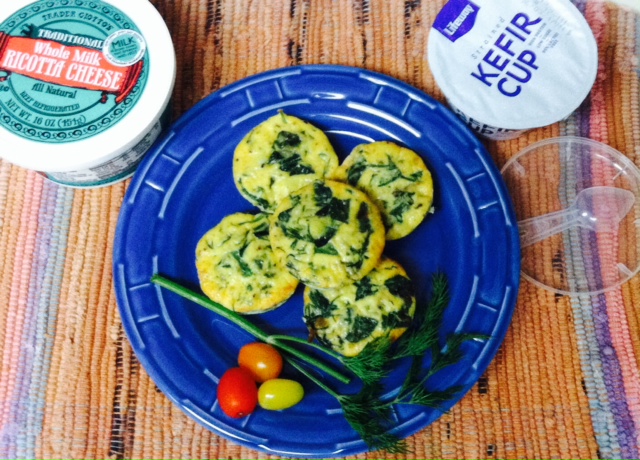
I actually did it! I saw an intriguing recipe and made it-successfully!

This past week, I discovered a magical source of energy that allowed me to prepare multiple meals in advance. I became inspired to bake as a present for a friend who was turning 30, and then I couldn’t stop.

Everything I’ve made has involved cheese. In my fridge right now, I have over five kinds of cheeses, which admittedly is just average for me. I am most excited about this mini-frittata recipe that I found in an article titled, The Morning Meal, which was featured in a recent issue of diaTribe.

The recipe came from a food and diabetes writer named Catherine Newman, who edits a magazine called ChopChop which looks to have some great recipes that kids can help prepare.

For the recipe, check out her full article. There are also other diabetes-friendly, delicious, and Sunday morning appropriate recipes in her article!

I tested the frittatas out on a friend who doesn’t have diabetes – she was equally impressed. They were the perfect brunch meal paired with a little salad and buttered toast.

A couple more shout-outs:

Ricotta cheese – oh my gosh, ricotta cheese is so delicious. Now I have a bunch of it in my fridge that I’m eating with a spoon.

Lifeway Organic Kefir – This stuff if amazing and helps me eat less ricotta cheese.


Immersive Experience

I’m at the beach, looking out at the ocean. As my mom pointed out, the horizon line is choppy and each wave is being attacked ferociously by the wind, causing a thick fan of mist to spray from it.

This morning, inspired by the rhythm and beauty of the sea, we talked about moments in life that become preserved (perfectly?) in our memories. Of course as mother and daughter we had some shared moments to talk about – and also some individual ones. I told mom about a moment I shared with a friend of mine on a backpacking trip, when we rushed to the tip-top of a peak called ‘Shining Rock,’ with just too little time before the sunset to search for and find out cameras in our wet packs. When we hit the crest of the mountain and emerged onto the quartz outcrop, the sun was breaking through the clouds in an array of colors and beams that took our breath away. It reminded me of the ocean in a way – like seeing underneath the water. The clouds set a soft horizon line over the expanse of blue ridges.

There was a moment in this moment when we both were exasperated by our lack of picture-taking devices – but then came the freedom. When ‘preservation’ with a camera is possible it’s hard to resist the fantasy that holding on to these moments in our lives is possible (oops, I guess this is a continuation of my explication on change). When preservation is impossible, say we don’t have cameras and we left our phones locked up in the car, immersion becomes possible. What are the ingredients of immersion? Dedication, curiosity, gratitude? I don’t know. I would say though, that those moments in life that we can never forget, are most likely ones in which we were not concerned with holding on.

Everything in life I ever needed to know…

“I decided many years ago that a high blood sugar does not define me any more than a great blood sugar defines me. For 42 years I have been chasing the perfect blood sugar. It has never happened for more than a minute just the same as the really high ones do not last any longer.”

– Rick Phillips

I want to give a shout out to change. Year after year, change has stood by me. More than that, change even visits me day to day and moment to moment. So here’s to change: a truly dedicated friend.

Obviously, I also want to give a shout out to Rick Phillips, whose response to last week’s question is today’s featured quote. A big thanks to everyone who responded and added to our conversation around high-blood sugar blues and how to pick yourself up from them. Rick’s quote jumped out at me because of its utility for maintaining perspective as we manage (versus ‘control’) blood sugar and also as we manage (versus ‘control’) life. Last week I was talking to a fellow graduate student, job seeker and swimmer in the sea of uncertainty at a social for public healthers in my program. She mentioned that it’s taken her a year and a half to feel like she’s truly gotten her footing here and now it may be time to shift everything once again, perhaps even in a totally new place. I thought of Rick’s quote – how many ladders of learning and accomplishments and life experiences do we climb up, only to reach the end and realize we’ve moved not to a new plateau of constancy, but simply on to the next challenge? That sounds a little pessimistic I think, but it’s not intended to. Blood sugar management from the accept and let go perspective can sound a little pessimistic to – like, no matter how hard I try, even if I check my blood sugar and get that magic 90 mg/dl, it’s already changing, I can’t hold on to it. But! BUT! In truth, this is a comfort too. This wisdom of letting go is so helpful in diabetes and in life, because it directs us back to the process, not the product.

I think I’d like to make one of those posters like you see on the wall of dentist’s offices: ‘Everything in life I need to know I learned in kindergarten,’ except it would say: ‘Everything in life I need to know I learned from diabetes.’ That’s a little over-simplified though. In truth, not knowing has led me towards these conversations with friends and others that help me to break free from dichotomous thinking and see that there are ways of seeing and thinking about challenges that I have not even considered yet, which is itself a comforting thought.

So change, you may be a wildcard, the guest who comes to the party in sequins, carrying a jello-cake and two days early – but, you might as well come in.

Calling all people with diabetes!

Community Discussion: High Blood Sugar (hyperglycemia)

How do you pick yourself back up emotionally when you have a high blood sugar reading that frustrates you? Please weigh in in the comment section below! I think we could generate some good wisdom amongst ourselves!

Oh, and if you don’t have diabetes, please share this link/blog with someone who does…I know you know someone who does. I’m really hoping to build this community and you are an important part of that effort!

Interdependence

This is the English version, slightly adapted to the current moment, of my last post from Sunday.

There’s a lot I could write about, but I’d like to start with a discussion about the word ‘neighbor.’ This word has entered my mind and my world a lot lately, and I’m thinking about what it means to be a good neighbor. Another word that has appeared again and again is ‘community.’ I went to a community this past weekend where it is evident that there is this idea of living, in the words of one resident, “in an interdependent way.” It is, she says, an alternative to living so independently, without recognizing that we do depend on each other. Why is it so hard in our culture (in all cultures?? in some more than others??) to accept help? I think that it’s a function of our perceptions about the relationship between ourselves and others, or saying it another way, between our inner world and our outer world.

It’s here that I’ll bring diabetes into the conversation (did you know that everything relates to diabetes?). A week ago I fell down the stairs (or more like I fell on the stairs while going down them). When I fell, it scared the woman who was climbing up from the other direction and she gasped and grabbed her heart. For a moment she looked worse than me. It was captivating to me that my movements and an action occurring to my body could move her too – that we were connected in this way. Later, in dance class with my leg hurting badly, I realized that my blood sugar was very low and that maybe that was why I had fallen. The level of sugar (glucose, officially) inside my body influences my movements in the world. This is a perfect metaphor for the influence that we have on our surroundings. Our thoughts, beliefs, prejudices, and personal histories have an impact on our environment whether we like it or not. We are connected. We can only operate in the world without recognizing that we depend on each other while we maintain power, or rather, until we lose control. For me, when I fell I lost control. It was a humbling experience that temporarily transformed my body. We’re always talking about shoes, but this journey taught me that a novel way to experience empathy is to imagine what life would be like in another body. Empathy is the key (for me) to being a good neighbor. Obviously, there is another moral here too for my friends who have Type 1 diabetes (or Type 2 for that matter), that is, please check your blood sugars regularly and be careful when you’re having a low.

Today my leg is feeling much better (I danced – joyously, today), and once again I’m thinking about how we can use the word gratitude as a verb. If our heart is struggling to let empathy in, maybe gratitude can help us tear down the wall.