Camping with the Omnipod 5

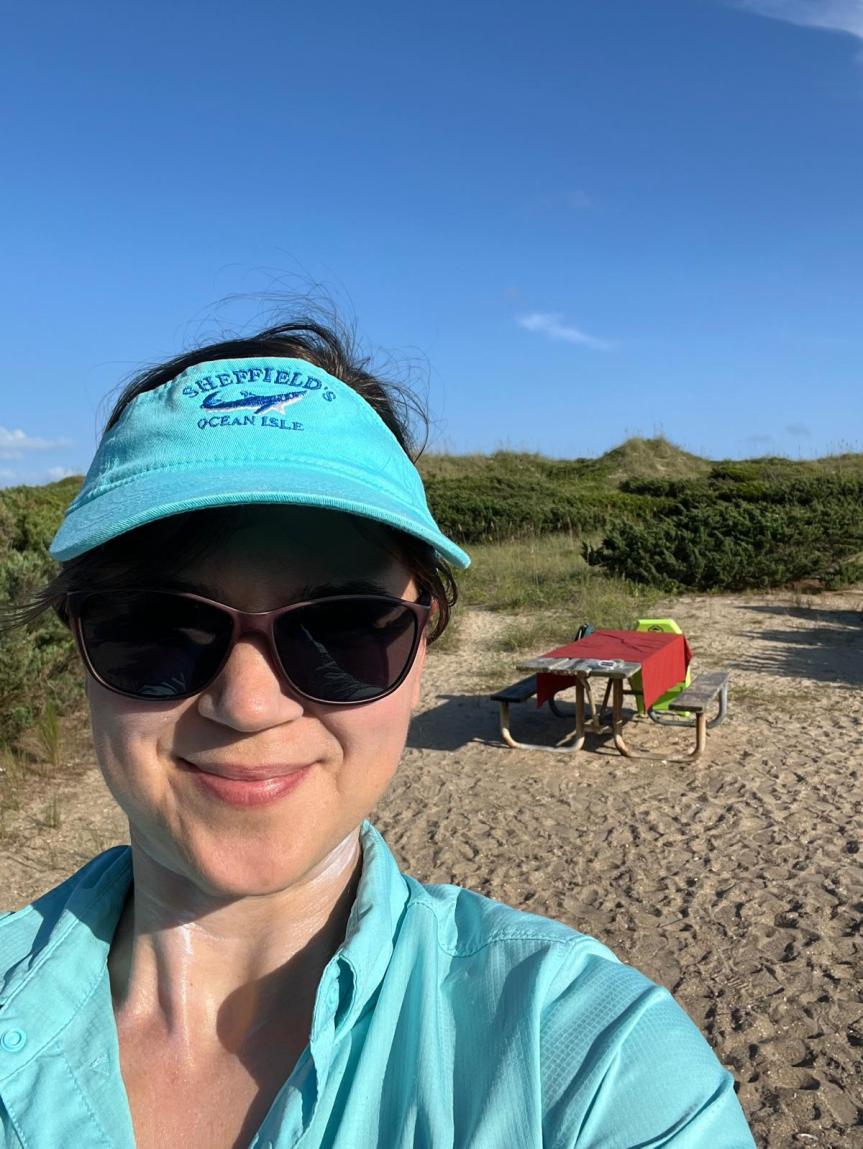
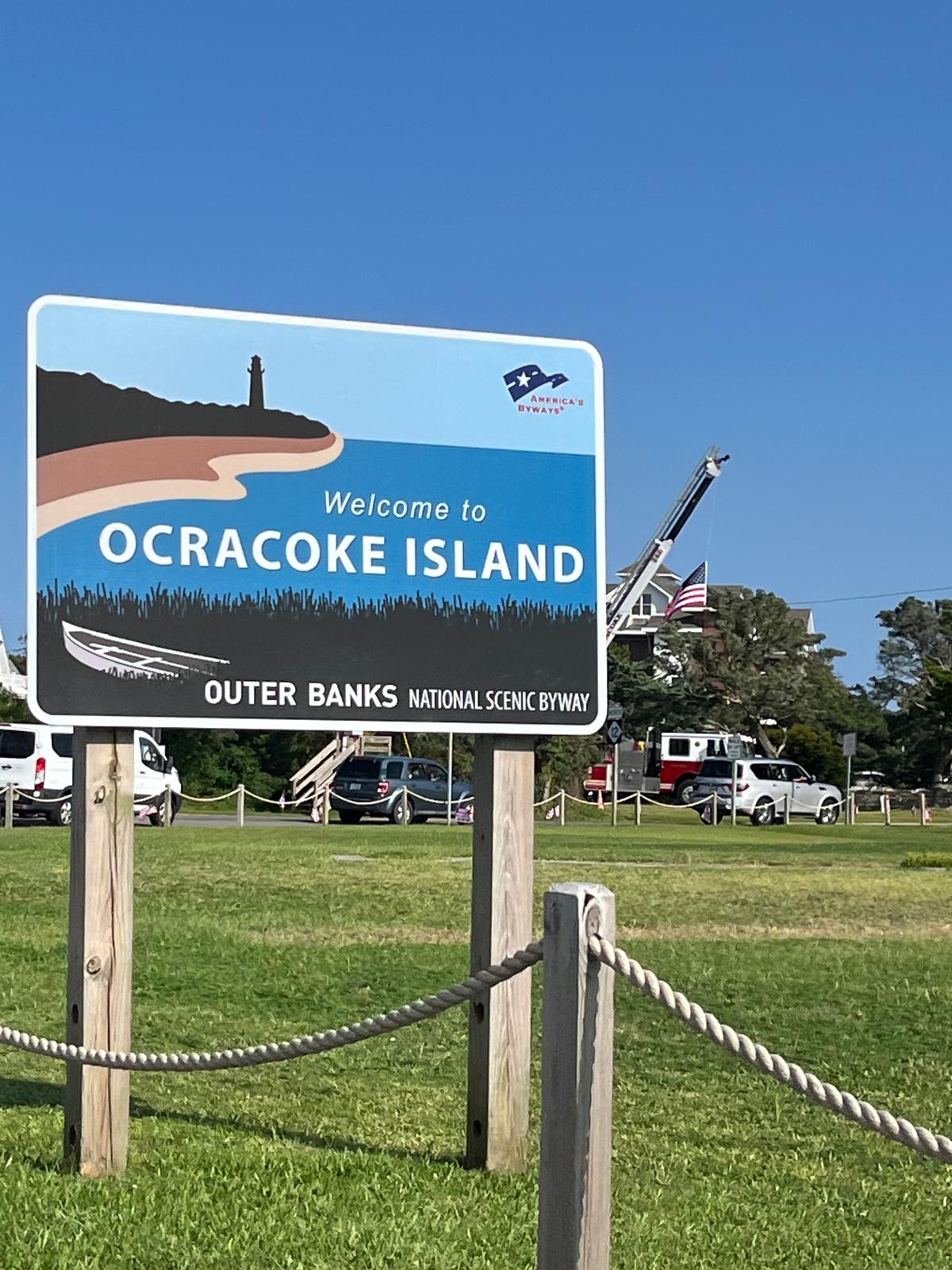
Grad school really interfered with my camping habit. In the two years before I started the program, I was on a camping spree, spending more than 25 nights outside. Now that I type this out, I realize that’s really not many – roughly 3.5% of the time. Maybe some year in the future I would like to spend 25% or more of the nights outside. But in any case, during the two years I was in my graduate program, that number dropped to 0. Luckily, this past weekend broke the dry spell and offered a night on Ocracoke Island, in the middle of parallel stands of juniper bushes, one dune away from the waves of the Atlantic Ocean. It was my first time camping with the Omnipod 5 system, and like nearly everything with the Omnipod system has been for me, it felt easier. Learning from the trip I wrote about in my previous post, I packed an anti-nausea medication prescribed by my doctor and familiarized myself with the location of the island medical center. I also brought an external power brick to make sure I could keep my phone, which I use as my CGM reader, and my Omnipod personal diabetes manager (PDM) charged. The only thing I remained concerned about was the chance that my medication would get too hot in the late August sun, or that my pod or CGM would work its way off in the salty water.
The first concern was easy to mitigate. We were only camping for one night, so we brought a cooler full of plenty of ice, in which I placed my small medication coolers. I have used these coolers ever since my trip to London a year and a half ago, and I have found them wonderful for keeping my medication cool on their own, or when stored in a larger cooler for longer trips. I find the cooler in a cooler technique extends the overall cooling power of the small coolers, while also insulating the insulin from freezing, as I would worry about if it was directly up against the ice. While it is recommended that insulin be stored in the refrigerator to maintain its effectiveness over time, freezing ruins insulin. For this reason, I do like to keep a small amount of insulin in a separate cooler that is not up against ice at all, just to be cautious and ensure that I will never be in a situation in which all of the insulin I have with me freezes. On this short overnight trip, we did not even have to buy more ice, and my medication stayed sufficiently cool.
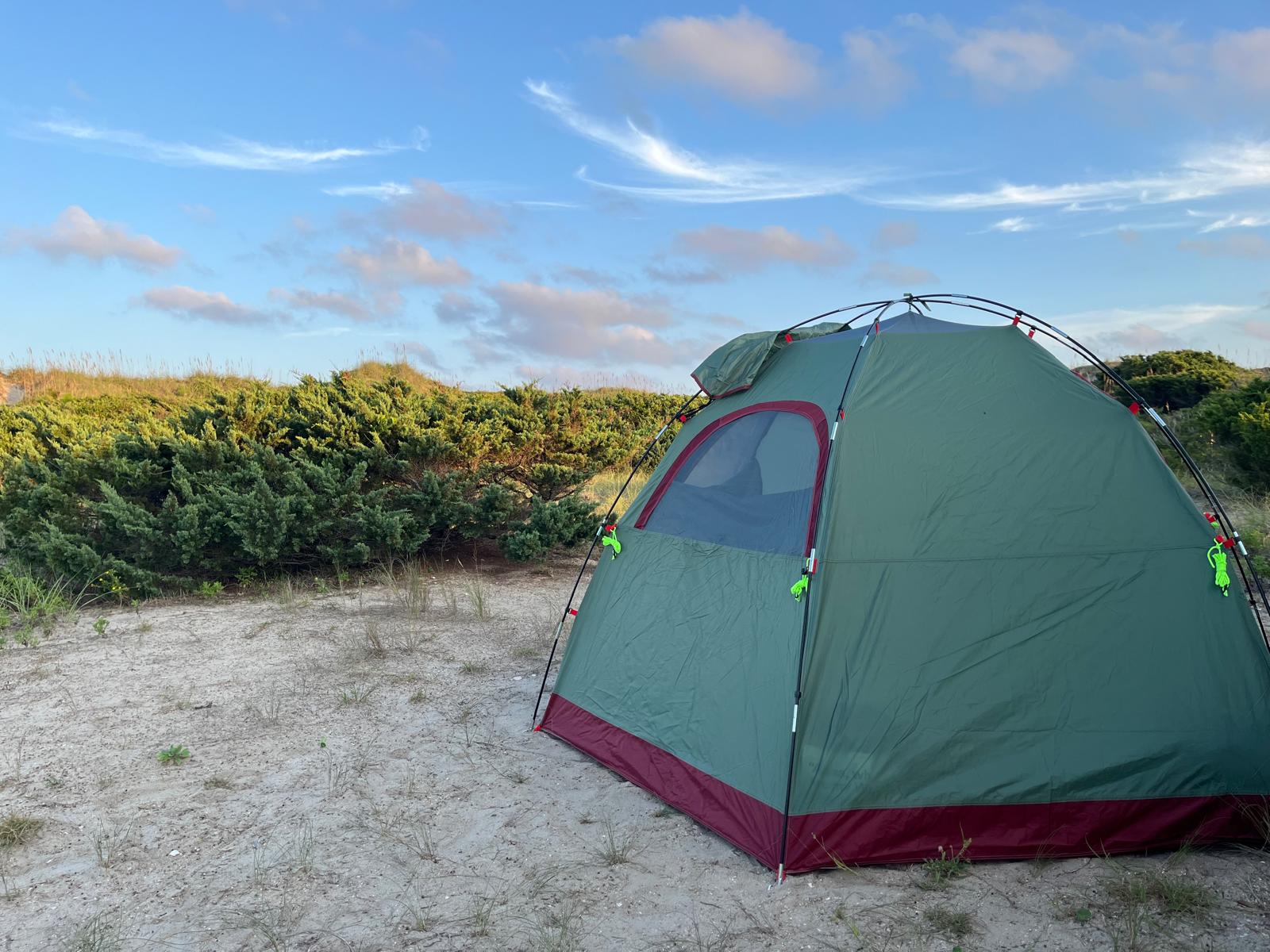
We pulled into the Ocracoke Campground, part of the Cape Hatteras National Seashore, after a nearly three hour ferry ride. Because it is a national campground, I am able to get a lifetime discount using my Access Pass that having Type 1 diabetes (T1D) makes me eligible for, and which can be obtained from the National Park System. (Now, we need guaranteed affordable access to life-sustaining insulin and supplies!) The land of the campground is sandy and windswept, with low vegetation and dark supple leaves that may be marsh-pennywort interspersed in the grass. When we arrived at our campsite, we immediately set to putting the space in order. Car camping brings a different level of luxury and offers the potential to really add style to your overnight home. On this trip, I brought my trusty big red tablecloth as both a cover for the picnic table and a beach-sitting surface area to protect against sand fleas. For the evening, it created an inviting setting for our dinner of cauliflower steaks, corn, and a pre-prepared curry tofu stir-fry, which we cooked/heated over charcoal. Easy dinner allowed us to maximize evening beach time. Beach camping is not very comfortable,* and the only place that seems to be reliably free of biting insects is right at the edge of the waves. When we crested the sand dunes, the light had softened, but the sun still illuminated the clear water so that we could see through each turquoise wave as they crashed into the sand. We both agreed that the water here was bluer and clearer than the rest of the Outer Banks, perhaps because of less dense shoreside development.

*But it’s worth it for the stars! Also, wearing long sleeves, long pants, and a bug net around the site really helped reduce bug bites.

I don’t think I am inherently a very organized person. I base this off others in my life for whom order seems to come naturally. What comes more naturally to me is packing in a haphazard way based on what activity or need I think of at any given time. But organization does seem to lead to organization, and establishing a camping box where I keep all of my supplies, organized somewhat by function, has really made the thought of camping on a whim less daunting and the whole process easier. Checking and repacking my diabetes supplies is necessary every time, so if I can establish ways to keep other aspects of my life and my activities organized, it frees up more time and space for me to use on diabetes, without setting me up to resent that I have to.
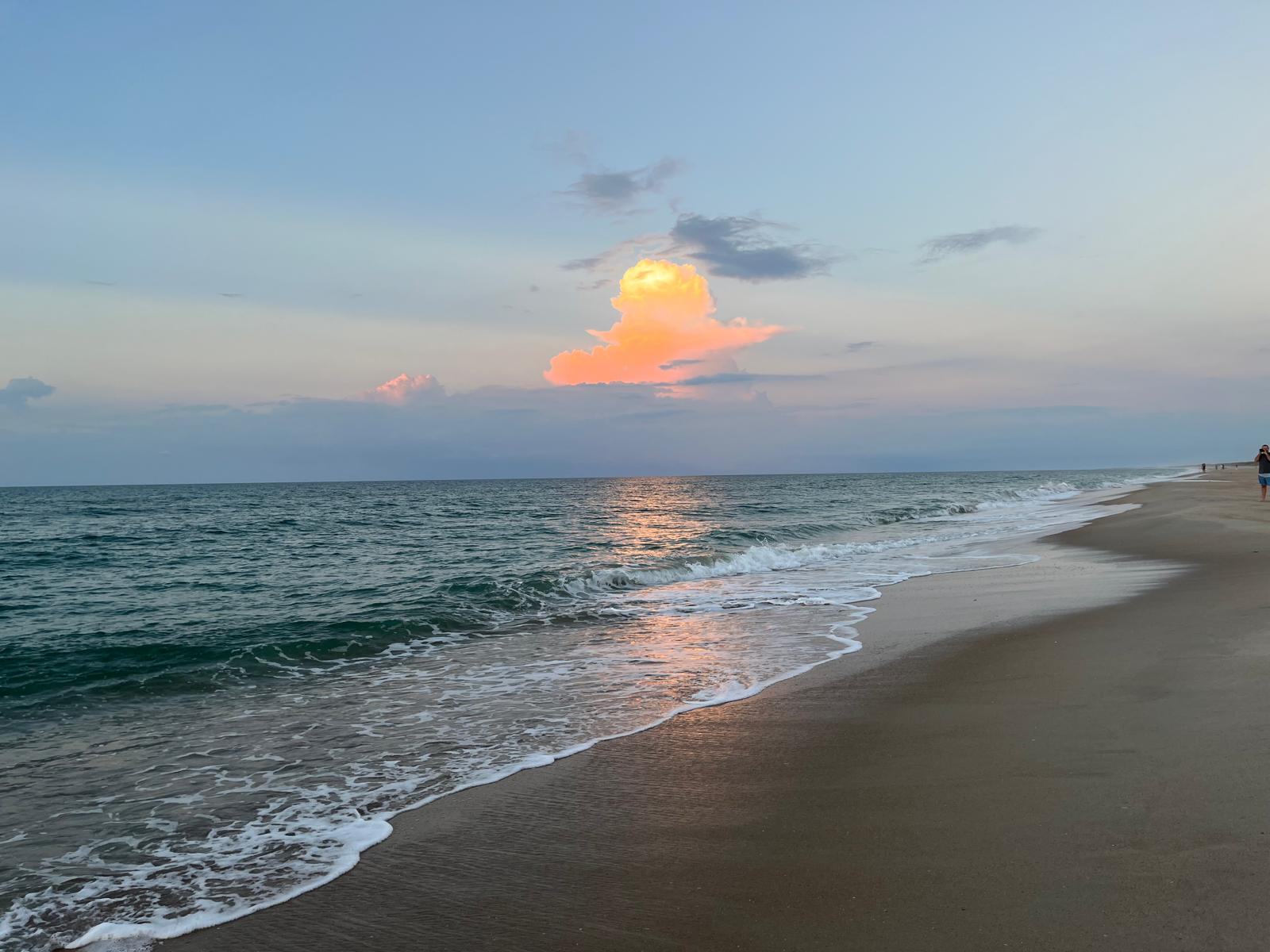
One of the most important pieces of camping gear on any trip – my favorite piece of gear in fact – is my MSR pocket rocket camp stove. I love to take it out of its little red case and spin it onto a fuel canister. I love flipping out its three wings and listening for the whisper of escaping fuel as I twist the handle before lighting it. It’s so satisfying to cook on that little stove, and it has allowed me to have a cup of instant coffee in some of the most beautiful places, one of life’s true delights. I am not usually excited about waking before sunrise, but knowing that we could stumble over the dunes to the soft greys of the morning cloaking the sand and waves, and brew a cup of strong instant coffee while waiting for the first rays to crest over the low cloudbank, made me excited to throw on my bug net and jump out of the tent. And because we were so close, bringing what I needed for diabetes was as easy as throwing my Omnipod pdm and phone in my fanny pack, along with the stores of fruit gummies, honey packets, and Werther’s I keep stocked in case of low blood sugar. 

After the sun illuminated the waves once again, we splashed around for few hours before packing up our site. The sweat, salty water, and crashing of the waves eventually did begin to work my pod off of my body. I had brought along some ‘overpatches,’ which is a tape cut into the shape of Dexcom sensors that I sometimes also cut to cover the edges of my pod, but realized I should have used it before the adhesive of my pod and CGM got dirty and began to peel. My pod ended up straggling along to the next day, its adhesive curling and needing to be pressed down several times. Next time I do any beach frolicking, I will plan to apply extra strips or patches ahead of time.

Before we left our campsite, we paused to breathe and take in the chiming chirp of the grasshoppers and shore insects, the briny smell of the place, and the occasional gritty wind that whisked around our ankles. We did a sweep to ensure we collected any remaining trash, feeling lucky to call that place home for a night. Before we rolled onto the ferry for our return ride home, we stopped at a bustling café in the village for a hearty meal. Even with low treats and camping snacks, I was in need of a solid meal to stabilize my blood sugar after the added running around that comes with accomplishing daily tasks from a campsite. From walking through the scrubby fields to the outdoor showers, to breaking down and packing up our tent and supplies, everything takes a little bit more energy than it might at home. And while my blood sugar was high on the ferry ride back, it coasted down to a comfortable level before I fell into bed that night, still feeling my body rocking back and forth from the sway of the ferry on a choppy sea.

*As always, all views expressed are my own. I share my personal reflections on T1D and my writing is not medical advice.*

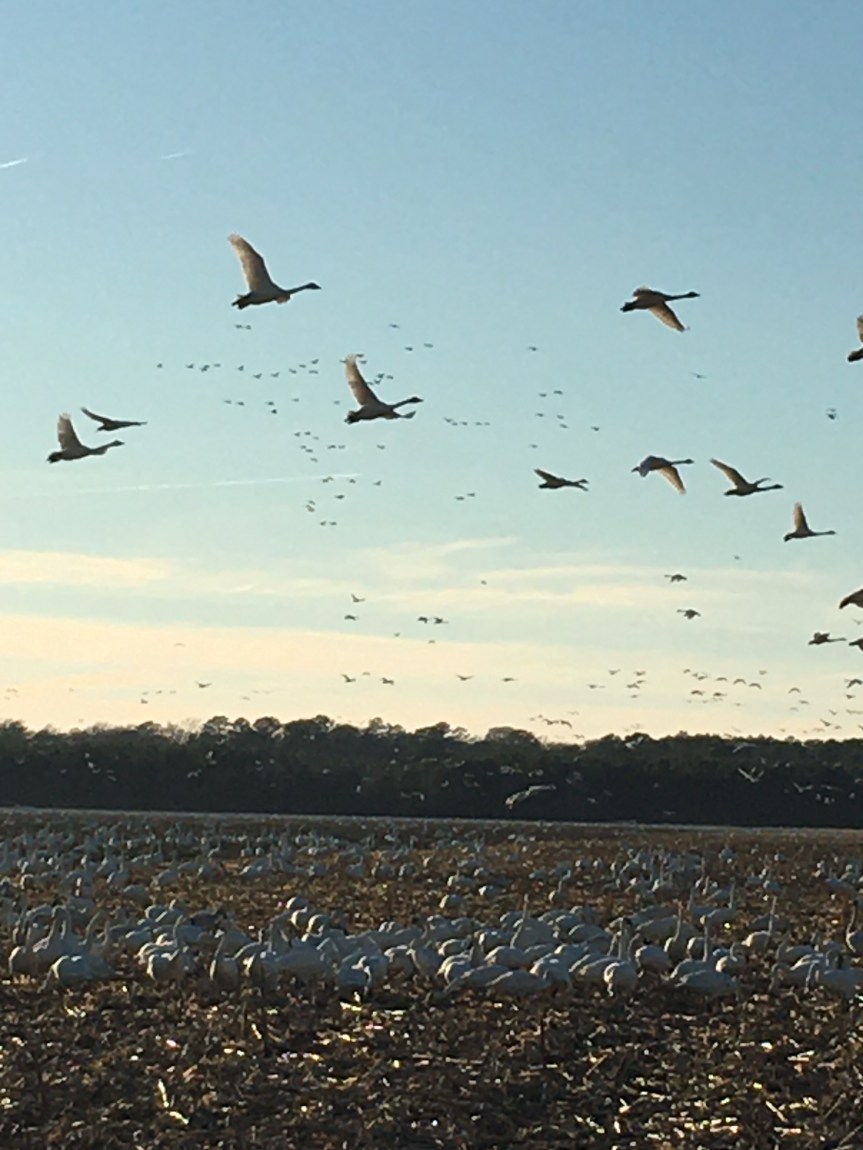
Components of Healing and Wellness

Before my diagnosis back in 2005, I had been sick for months. I knew nothing about diabetes (oh how much has changed!). In those months, I’d told myself that even though I could barely get out of bed, was losing weight rapidly, and once passed out in the library for hours, I was probably fine. Turns out, I was not. By the time I was diagnosed with type 1 diabetes (T1D), I was in diabetic ketoacidosis, which means that my body had started to burn muscle and my blood had become overly acidic due to a buildup of ketones. As a person with T1D, I am at risk of this life-threatening condition throughout the course of my life if I experience any interruption to my insulin, including if being sick means that I cannot take insulin as usual.

I preface with this because I want you to know that seeking help is not something that comes naturally to me – at least not until things get really bad. Which is why I was surprised when, overcome with intense dizziness and nausea, I found myself on all fours in the back of a plane yelling “Help!”

It was about a year ago when my friend (who is also my colleague), and I were on a flight back from Germany where we had participated in a conference talking about the need for equity when it comes to closed-loop insulin delivery technology. If that’s confusing, I’ll explain, so stick with me. We were approaching the last leg of our journey, headed back to London to spend one night in the airport hotel before I flew back to the States, and she returned to her town.

It could have been dinner the night before, it could have been our midday snack, it could have been travel stress or any number of things – the point is, I got violently ill on the plane. I will not go into details of that except to say, when I cannot keep food down, I run a greater risk of becoming dangerously dehydrated and going into DKA. If I cannot eat/absorb food, taking insulin becomes dangerous because of the risk of low blood sugar, but if I don’t get enough insulin, my risk of DKA is greatly increased. It can be a dangerous loop. That is why, at around 11 pm, when my friend and I had finally checked into our airport hotel, she suggested we consider a trip to the ER. This brings me to what I have identified as the three key components to my personal sick day wellness strategy with T1D.

1. Having a detailed plan

When I was first diagnosed and in the few years after, I prepared extensively for travel. As I became more comfortable with diabetes management over the years, I let some of my preparation slide. While experiencing less anxiety over what could go wrong has been really great, preparing for what could go wrong is still essential for me, which I was reminded of on this trip. I was also reminded that the time to prepare is when I am well. Luckily, I had support, but if I had been traveling solo, as I have in the past, I could have ended up in really bad shape.

2. Willingness to accept help

I admit that I was resistant to the idea of going to the ER. For the first18 years of my life I did not have T1D and I dealt with sickness differently. But my friend has weathered more sick days with T1D than I, and I really trust her. Once she finally convinced me, she called an Uber and set the wheels in motion. When we climbed in, she told the driver where we needed to go, she let the front desk know that we were checking out and would not return. I simply languished beside her as she orchestrated my safe passage to the ER. It was also she who sat next to me in the ER for 6 – 8 hours and reminded me to check my ketones, check my blood sugar, and generally kept an eye on me.

3. Available help from someone understands diabetes and can be your advocate

The other thing about having help from this friend was that she really gets diabetes. She knew what to say to the staff at the ER to get them to take my concerns seriously. She knew that my rising ketone levels were a problem. She minimized nothing and was an advocate for me when I could not be. I have thought about what I might do if I was alone in this situation and identified a few things I learned from her that I will carry forward, specifically knowing where the nearest ER is anywhere I go, and having an up-to-date sick day note that specifies what I need if I am sick. Even though I might know no longer need to reference these as written guidelines, it’s helpful to have them at the ready for medical providers or others I might be traveling with. Before I go on my next trip, I will do preparatory work ahead of time, when I’m well, in order to be that stable friend for myself if I need to be. *This post’s featured image is one of us a few hours before I became ill.

4. Supportive technology or access to supplies

This one I want to spend a little bit more time on. For the past year, I have used the Omnipod 5 system in conjunction with the Dexcom 6 CGM. This means my insulin pump, which delivers my insulin, can communicate with my continuous glucose monitor (CGM), which measures my blood sugar. This allows my insulin pump to automatically adjust my basal insulin, which is the continuous background insulin that I need, to help me stay closer to my target blood sugar range. There are still a lot of inputs required from me such as carb counting and bolusing for what I eat, adjusting based on my physical activity, and the logistics of site changes and troubleshooting. The pods, which I change every three days, are expensive, even with insurance, costing $140 a month. However, while in grad school, the amount of time and energy the system has saved me has felt invaluable, even though it has meant taking out loans to pay for school. Previously, I was making up for the work the system is now doing, and when I went on this system I became aware of a renewed energy and increased capacity to focus on my schoolwork and be engaged with part of my mind that had previously been allocated solely to diabetes.

When I became sick abroad, my perception of the system as something that I had to justify to myself shifted to something that was a life-saving necessity. All the while that I was unable to eat and finding it hard to even think about diabetes, my CGM was reading my blood sugar and my insulin pump was giving me little micro-boluses to compete with its rising levels as I slowly drank soda and other fluids. By the end of the 24-48 hour period, it had given me an amount of insulin within my usual daily range, and kept me hovering from 150 – 180 mg/dl, which for me was a good sick day range. That is work I could have been doing, giving myself shots with a half-unit pen, but not nearly as precisely and definitely not as effortlessly. In fact, that would have added a new level of error that would have most assuredly brought more difficulties my way, which I say from previous sick day experiences.

It was amazing to be able to just focus on healing, instead of micro-managing blood sugar all day. In fact, once I made it through the nausea, I remember my recovery day as peaceful, rather than miserable, in part because I was not working, not in school, and not really focused on diabetes. Just resting and being cared for.

For years, in fact from the first weekend of my diagnosis, the narrative I have heard from many healthcare providers and diabetes organizations has been “if you take care of yourself, you can live a completely normal life with diabetes.” I get that this can empowering for many people, but I wondered for many years why I felt like I was failing to achieve that normalcy. Yes, I was managing to pursue my dreams, but I was working so hard, filled with anxiety, and felt like I was struggling to keep up. It might have looked normal from the outside, but from the inside, it felt like a continual marathon. Since I began using this system my life has felt a lot closer to normal – and I can barely afford it. I think my more accurate narrative for many years was, “if you work constantly, other people will think that you live a normal life, but you will know that you can keep fooling them only as long as you are willing to keep working 24/7 and say that you’re fine.” Or maybe, “you can live a normal life, but only if you have really amazing health coverage and a good deal of expendable income and supportive family and friends and adequate time off from your job…”

Now, at this point, my narrative has shifted to encompass the emotional adaptation to T1D that has been part of the journey for me. After many years of T1D I think my most accurate narrative is, “your new normal will be planning and adapting to the unexpected. It will be asking for and accepting help and meeting really amazing people who are navigating T1D too. It will be learning to rest and do less every day so that you are able to enjoy what you do. And it will be feeling like you are failing sometimes and living in fear of your health insurance coverage changing or ending.”

It makes me think that maybe if we said all of that, rather than saying, “you can live a normal life if you take care of yourself,” we would be forced to confront the need for support and the reality that without adequate, reliable, affordable access to diabetes management supplies, normalcy is a false promise. Moreover, we would take the relieve some of the burden from the person with diabetes and center it appropriately on healthcare systems, which are currently leaving many people out and bankrupting others.

I’m concerned that when I’m no longer in grad school, I will not have an insurance plan that allows me to get supplies at even the cost I currently pay, and I will have to go back to shots. It’s amazing the reservoir of mental and physical energy that going on such a system opened up for me, and I want that for anyone with T1D who is interested in such technology. That requires prioritizing insulin access as a human right. For many people in the world, shots or even vials of insulin are not guaranteed, and this is a horrific injustice. Battling supply scarcity and paying a huge chunk of your income just to have what you need to live steals the energy needed to dream and thrive. So as this amazing technology progresses, my hope is that for each advancement in diabetes tech, there is the same energy and eye to access for all people with T1D, both for the technology itself, and the insulin it requires.

*As always, I share my personal reflections on T1D and my writing is not medical advice.*

Attainable goals

As briefly mentioned in the previous post, I recently (in the last two years) starting experimenting with what it would be like to set goals in line with my desires. This seems basic as I type it, but I think what I was doing before was setting goals in line with my hopes or maybe more realistically, my shoulds. Even if it was a goal I wanted (desired) to accomplish, I would set it on a hope/should timeline. For example, I wanted to publish a book – by the time I was thirty – and I didn’t. Although really, I just meant that I wanted to write in a format that other people would read. But I thought I needed to manipulate this desire into a framework where I could measure it and check it off and somehow through that process feel good about it. I wanted to accomplish!

I’m 35 and I haven’t published a book. At the start of the pandemic I put together a manuscript of poems from my twenties and submitted it to a poetry publishing contest. I didn’t win and then I didn’t really pursue it further, in large part because the poems I had compiled didn’t speak to me the way they had years before. Almost all of my poems are about things that fly – birds, bugs, bats, that kind of thing. And searching for something. I guess maybe once I had gone off to find something else, these poems didn’t make as much sense to me as they once had.

The interesting thing about pursuing a sense of good feelings, aka accomplishment, through goals is that if you’re not careful, you’ll take the joy out of the process. I’ll never write a book by the time I’m 30. I’ve missed my goal. Should I even write? What’s it all even for?

So that is why last year I set my New Year’s Resolution to eat more cheese. I knew I wanted cheese and I also knew I would eat cheese, and aren’t goals just about fulfilling our desires anyway? I have to tell you it went really well. I’m not saying I did this to make a big statement to myself, it was more of a joke, but I did notice that if flipped the script a little bit. When I was first diagnosed with diabetes I got a food scale. I was a freshman in college and had struggled with times of obsessing over calories in high school. Suddenly I was sanctioned to restrict my food (albeit based on carbohydrates, not calories) in the name of blood glucose management. While I actually did learn a lot about carbohydrate counting that has been beneficial for me throughout my time with diabetes, it also contributed to the culture of restriction I was building for myself around diabetes management. And chronic conditions rarely visit alone – so I amassed other restrictions and before long I was running into many invisible walls hoping that if I could just stay within them, I would feel great.

These last few years, maybe starting in the height of the pandemic, have been some of my least restricted when it comes to diabetes. And I’m happy with my current blood glucose ‘control,’ aka levels. I want to be clear that this doesn’t mean that I abandoned blood glucose targets or stopped counting carbs or bolusing when I eat or any of the other self-management tasks, it just means that I loosened my grip on achieving blood glucose perfection. Sometimes this meant that I rested instead of taking a walk. That I ate foods I would not have eaten at other points in my diabetes journey, just because others were having it and I wanted to share. That I didn’t feel bad about having to correct for it later. Sometimes I did still feel bad for it, but I didn’t let that stop me from making that brave choice. I loosened my grip on the idea that somehow, if you took everything else away, perfection was even something I had control over.

Because you can’t remove all the other variables from life. There are other goals in my life besides my hemoglobin A1c or time in range that are really important to me and that I want to prioritize. In fact, my motivation for glucose control is to live the life I desire, so constant restriction will never get me there. By the way, food is just an example, not the point here. The point is that there are ways I was trying to control the situation through any means I had available. And for certain aims, that control worked, especially at various points in my diabetes learning journey. But, now when I step back and ask, ‘why the control?’ I’m confronted with the desire to be more fully present with my life. My goals are flexible and interconnected. Maybe I’ll write a book, maybe not. In the moment, other things might feel more important, like making plans with friends or taking a last minute trip with my mom, or doing nothing with a cup of tea.

*This blog contains my personal reflections on my journey only. I am not a medical provider and nothing in this blog is intended to serve as medical advice.

Blood glucose and the stress response

My travels to Ohio last weekend were more exciting, but very related to, this post’s title. I have been less interested in travel over the past year, as the COVID overlay has made everything just a little bit more tiring, both in the lead up and the recovery. Wearing a mask all day in the airport, making sure I understand the ever-changing travel requirements, and just being worried in general about the virus has discouraged me. But this past weekend I was happy to be getting out of NC and headed to Columbus for a dear friend’s wedding.

I arrived at the airport a little less than 2 hrs early and made it through security in less than 15 minutes. I settled into the gate to wait for my departure, when it became clear that the flight would be slightly delayed. My connection would be tight, but I’ve made tighter, so it didn’t seem problematic. But then the flight was delayed further. Now we would be arriving at my connecting departure time. Obviously, this would not do.

Before learning that there was no way I would make my connection, I had been entertaining myself by scrolling through my mind to see if I could find something to worry about. I get this way on travel days. I think it comes from the necessary process of asking myself, “do I have everything I need to survive over the next X days?” I usually stick a post-it note inside my front door: “insulin; a way to get insulin into my body; test strips, poker (lancet device), and backup meter; charging cord; contacts; glasses.” If I’ve got this stuff, I’m gonna survive, so I’m good to go. Still, the packing and double-checking leaves me with this feeling of, I’ve surely forgotten something important and, subsequently, a vague sense of unease. But, what I love about travel is that it’s unpredictability almost always jolts me into the present.

This was true when I learned that I would not be making my connecting flight, and even truer when the agent on the phone said, “We’re going to do everything we can to help you,” followed by, “I’m sorry, but there’s really nothing we can do,” in the same conversation. There were no seats on later flights that day from Charlotte to Columbus. “Could I fly into Dayton, OH and rent a car?” the airline agent asked. “Only if the airline will pay for it,” I countered. “Oh, I’m not in charge of that, you can write to customer service.”

We all know that when a company that has its own app and operates giant flying machines wishes for you to write somewhere, this means they intend on doing everything they can to not give you any money.

So I declined Dayton and also declined the option of leaving Charlotte at 10:30 pm Friday and arriving in Columbus at 10:30 AM Saturday (“What? how could this even be possible?..” you ask. The layover would have been in Phoenix, AZ. Don’t fly to Phoenix from NC to get to Ohio. Just don’t do it.)

The point of this story isn’t the weird details of how I got to Ohio, although I did make it. Ultimately, I decided to take the risk of getting on the flight (inspired by my previous success) and making it standby for a later afternoon same-day flight. The point of the story though, is what happened to my blood sugar during this whole ordeal.

Graph Alert!

Graph 1 shows my blood sugar during the hours before and after finding out about the flight delay. Notice how I spike around 11:45 and stay above 200 for much of the afternoon.

Graph 1
Graph 1

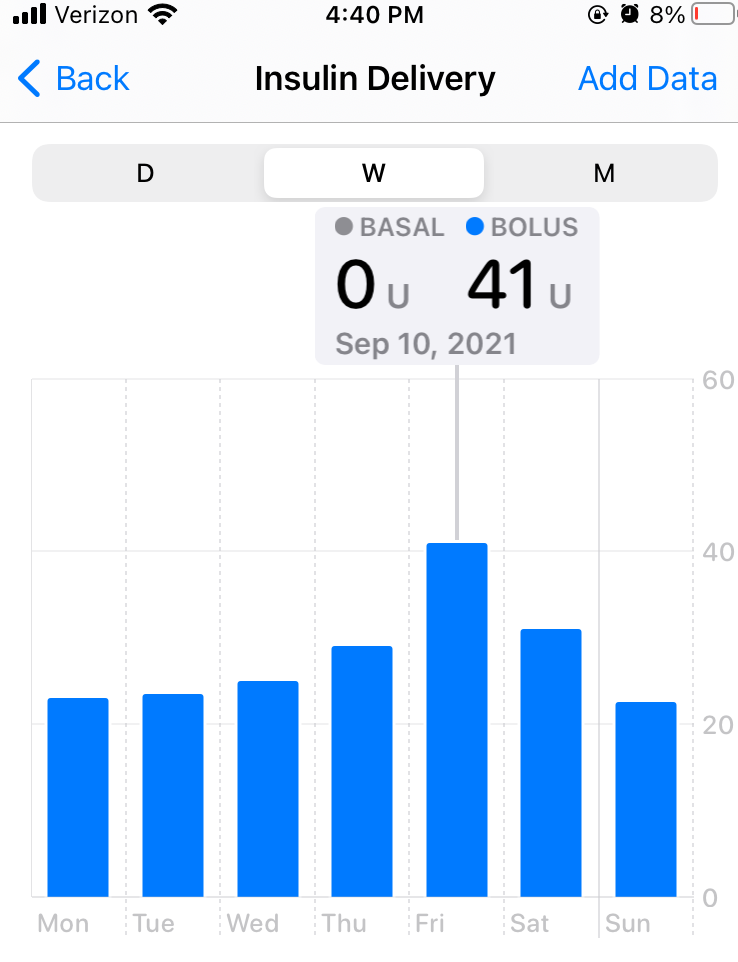
Graph 2 shows that I had to take 41 units of insulin that day to keep my blood sugar in range. The other bars show a useful comparison of ‘typical’ days.

Graph 2
Graph 2

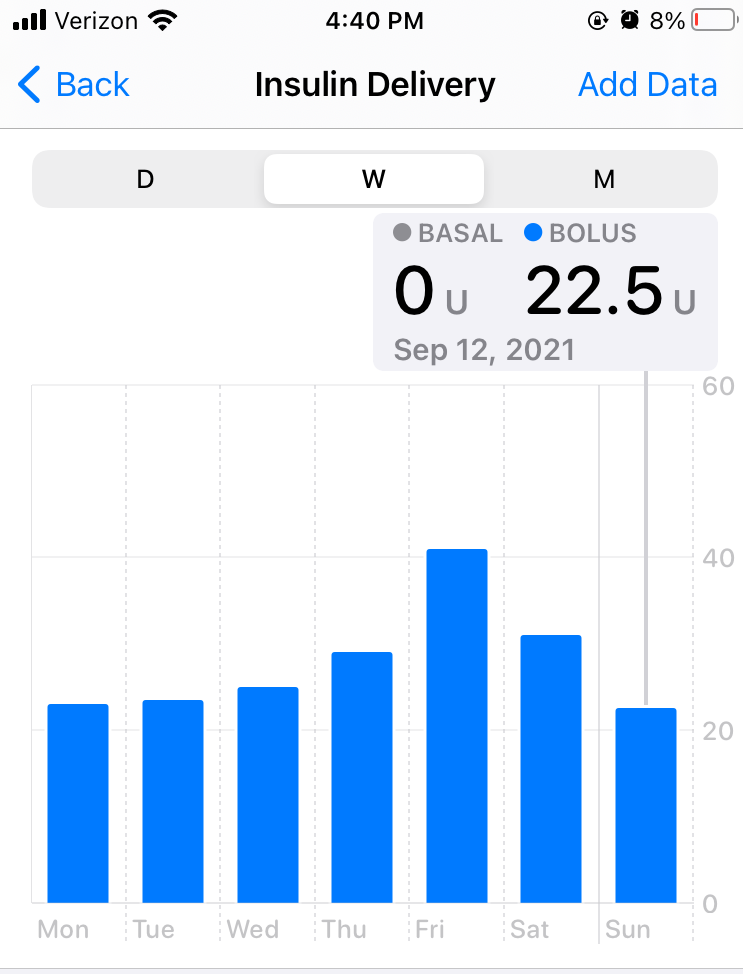
Now, don’t let me fool you, there are no truly ‘typical’ days with diabetes, but to give you a reference, my average short-acting insulin use per day has been about 25 units a day over the past few weeks. So, even allowing for the necessary amt. of typical variability, 41 units is an extreme anomaly. Graph 3 shows how many units I used on my return day, which went off without a hitch. Graph 4 shows my blood sugar on a more stable Friday, one week later.

Graph 3
Graph 3
Graph 4

What is it about stress that tends to make blood glucose spike and also makes us more resistant to insulin? Well, it comes down to a few things interacting together.

First, let’s disentangle the state of being stressed from various potential stressors. It’s the process of becoming and being stressed that raises blood sugar – aka the response. I like the definition of stress provided in here, “Essentially, stress can be considered as anything that tends to change the control that you have over our body and our emotions.”1 While I don’t much like this article’s terminology or conclusion, I do like this definition because there is a synthesis that has to happen between a stimulus and the stress response in our body. Some people are stressed by holidays – it’s not that holidays are inherently stressful – it’s our associations with them. When I heard that I would not make my connector, the associations I made were:

  • I’m going to miss the wedding
  • I’m going to let all my friends down
  • I’m going to lose the money I paid for this ticket

All of these thoughts were very paralyzing. I was also low at the time that I was trying to rebook my ticket and literally couldn’t figure out the order I needed to do things in. Interestingly, it was diabetes that got me back on track. Once I recognized that I was low, I stopped frantically flipping between my American Airlines app and my web browser, and hung up the call line I was waiting in. I ate some Annie’s gummy bunnies (sponsor me, Annie’s?) and took some deep breaths. I then realized that I would survive and everything would be fine.

But my blood glucose had already received the signal that it was go time. And in truth, it was. I had to make calls, decisions, perhaps hustle from one gate to the other, so it was great that my body was ready for that. When we get stressed, either physiologically or mentally/emotionally, the body releases certain chemical signals and hormones, namely epinephrine and norepinephrine, to prepare itself to take action.1,2

Brief aside – I hate the term ‘fight or flight.’ It’s overly binary and it leaves out freeze. Personally, I first exercised freeze, as previously described, and then I chose to fight respectfully on the phone with the first American Airlines rep who I talked to, before moving to schmooze, which is really another key omission in the term. After schmooze, I finally landed on plead, which was really the ticket.

Anyway back to stress hormones. So when the body releases these ‘stress’ hormones, they stimulate the liver to actually produce glucose (what, the liver can make glucose? Read about that here and see some cool diagrams).3 The liver releases that glucose into our blood stream, thus raising blood glucose levels.

So at this point, maybe you’re making some conclusions. Perhaps you’ve decided that stress is bad for blood sugar. This used to be my perspective too. Now, however, I would say that it depends. In truth, my body is doing what it’s supposed to do – preparing me to handle a situation. Wow, thank you, body. An important conclusion though, is that your response to stress really matters on a physiological level (I’m looking at you too, people without diabetes). There are a couple of ways I’ve learned to manage the effects of stress that I typically deploy with varying success. During my travel day, I tried to keep some perspective on the issue at hand. I had a support network to help me out if I was stranded, I had a cellphone to call customer service, and above all, I’ve been through things like this before and been just fine. So I reminded myself of that, did some deep breathing, and remembered quicker than I could have that I could handle the situation. The second thing, and this is the most important in my mind related to blood sugar, is that I no longer get as stressed about being stressed as I used to. Earlier on in my diabetes days, I would be watching my blood sugar climb over the course of the day and get so distressed about higher than normal levels. This would then perpetuate the stress cycle and I’d be left with higher than usual blood glucose levels for days. I think that over the course of my time with diabetes, I’ve lessened my expectations for consistency in how I feel day to day, moment to moment. I’ve also tried to let go of that idea of perfect, normal blood sugar, and employ more gratitude for my body’s efforts to get back to stability. I don’t always succeed, but it’s been a relief to try.

The sources linked here will provide you with more information, but remember that no source is perfect or absolutely complete and that no one person’s experience of diabetes is representative of the whole.

People with and people without diabetes, please let me know in the comments how your blood sugar/body reacts to stress and some of the ways you deal with it!

Sources:

  1. https://www.diabetes.co.uk/stress-and-blood-glucose-levels.html
  2. https://pubmed.ncbi.nlm.nih.gov/1425110/
  3. https://dtc.ucsf.edu/types-of-diabetes/type1/understanding-type-1-diabetes/how-the-body-processes-sugar/the-liver-blood-sugar/
“And the pitch, it’s a delayed flight! She knocks that stressor out of the park!”

Walking through Innsbruck

To awaken quite alone in a strange town is one of the pleasantest sensations in the world. – Freya Stark

I stayed in a small Air BnB across an azure blue river that ran straight through the middle of Innsbruck. I walked there for the first time from the train station – my gracious host offered to pick me up, but I screwed up military time in a text message and told him I was coming 2 hours after my actual arrival. He gave me directions and I looked them up using the train station’s wifi (which was the only way I could use my phone) and headed on my way.

Google Maps estimated a 25 minute walk. I arrived an hour and a half later. Although I was toting my backpack stuffed to the brim, a rolling suitcase, and finally my purse, flung around my shoulders, I wasn’t slowed down too much by my baggage. I just simply couldn’t stop spinning around in circles to take in the shining spirit of the city. Here’s my walk in pictures:

IMG_0390.jpg

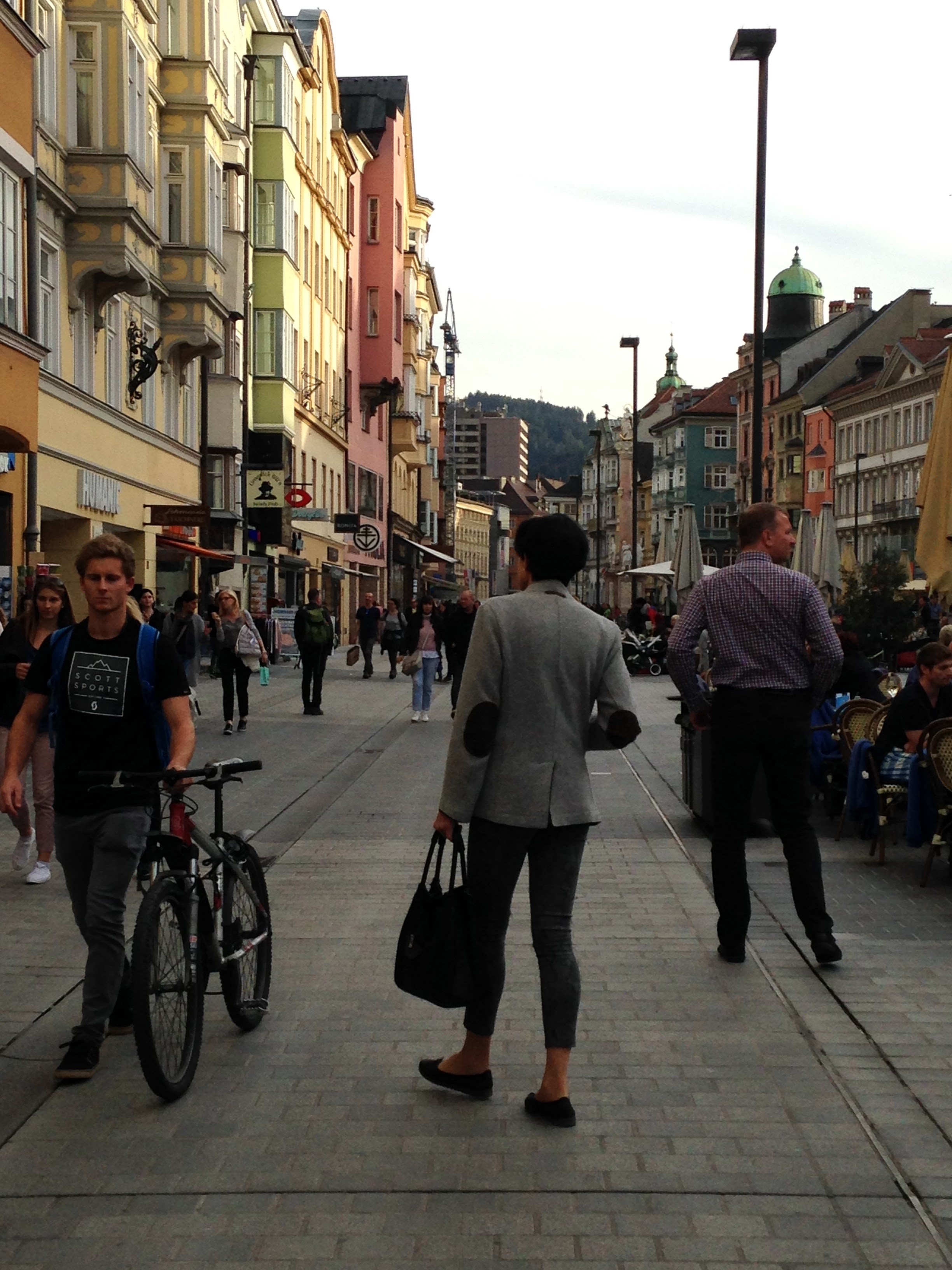
I strolled across the street to a pedestrian only plaza where shoppers and diners milled and mingled.

IMG_0400.jpg

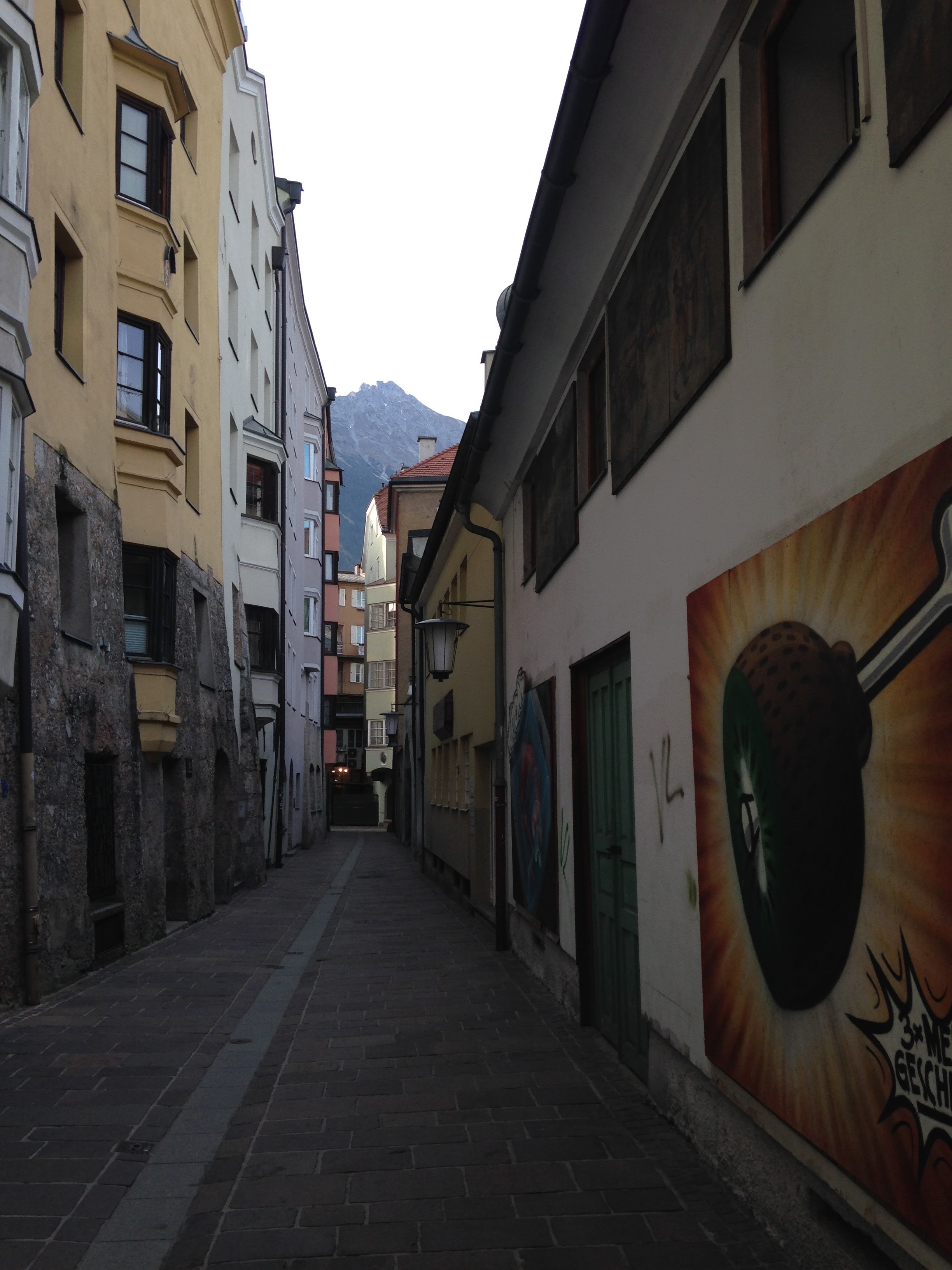
…before finding this strange alley of murals. That closest one is a kiwi on a chicken bone. Perhaps a show of peace among vegans and carnivores (although I’m doubtful).

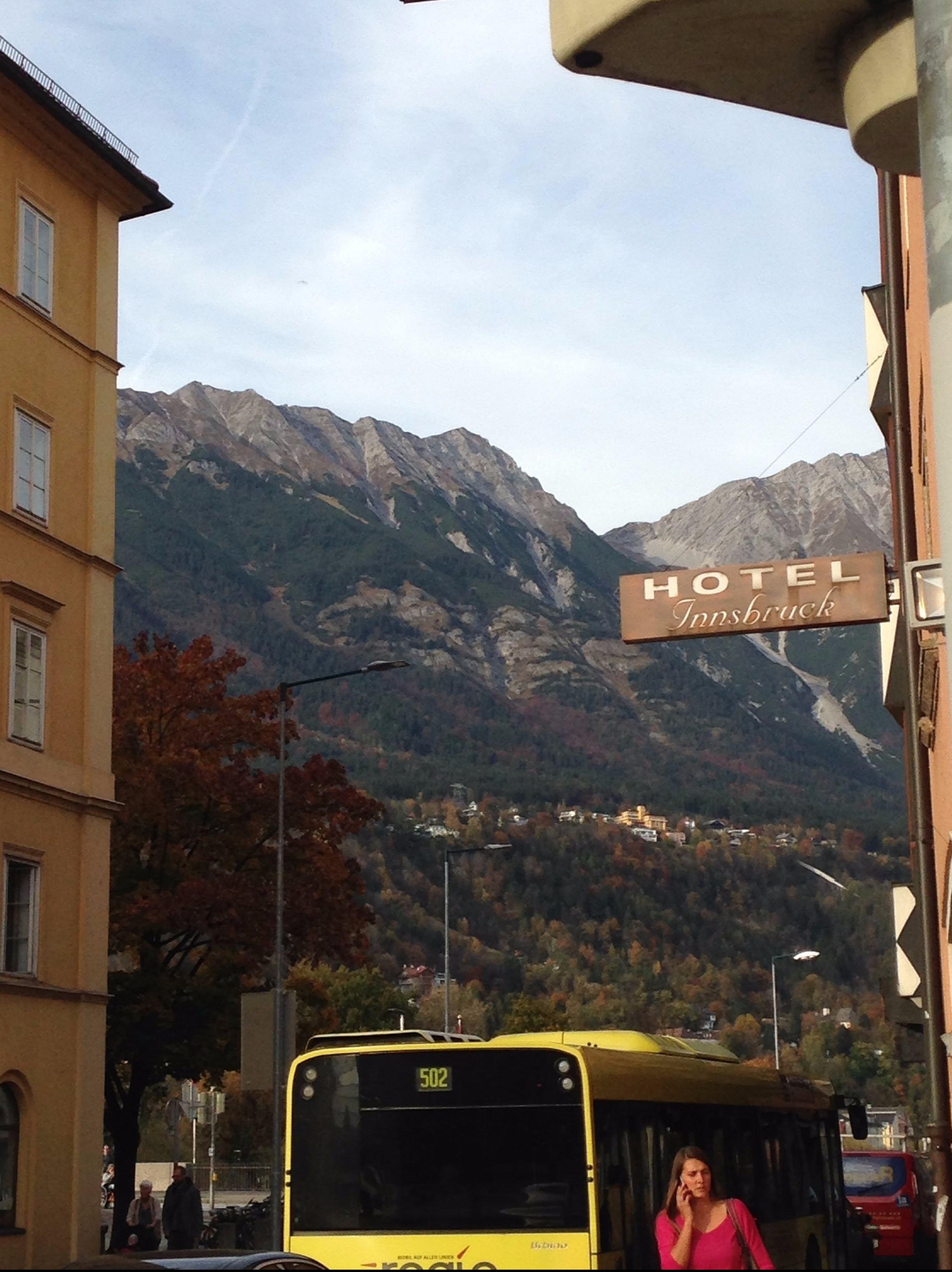
img_0402.jpg I didn’t stay at this hotel; I just took this picture to prove I was really in Innsbruck.
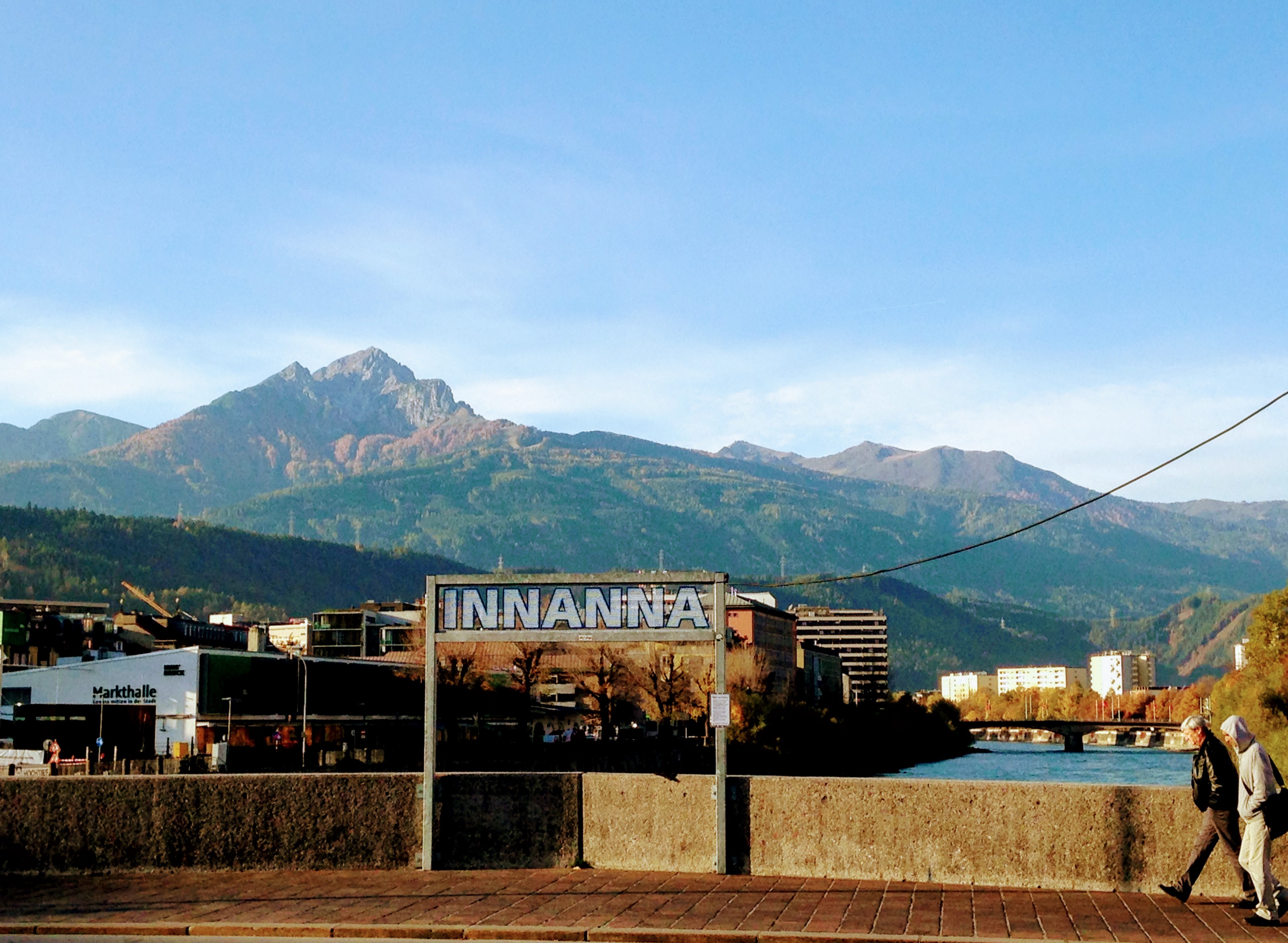
IMG_0438.jpg

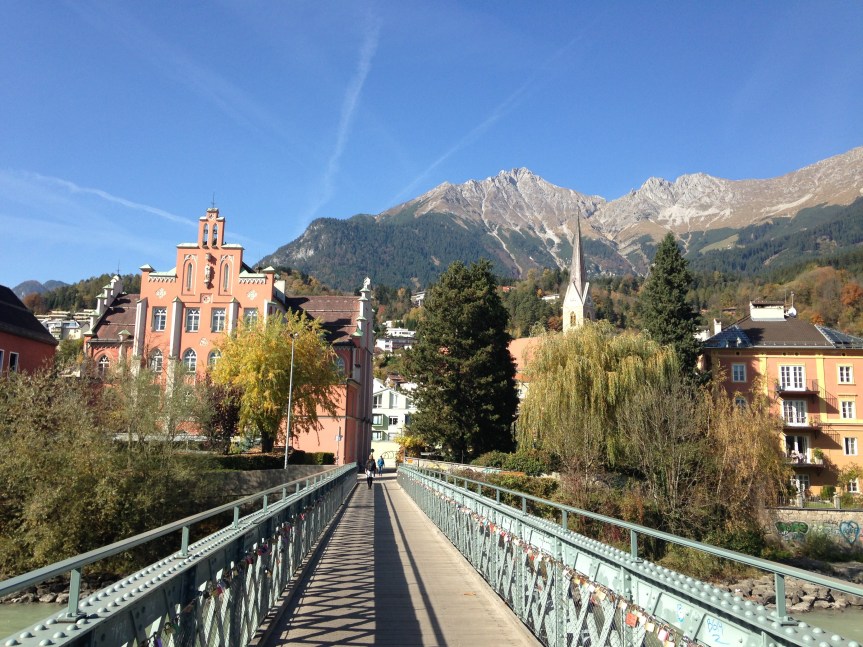
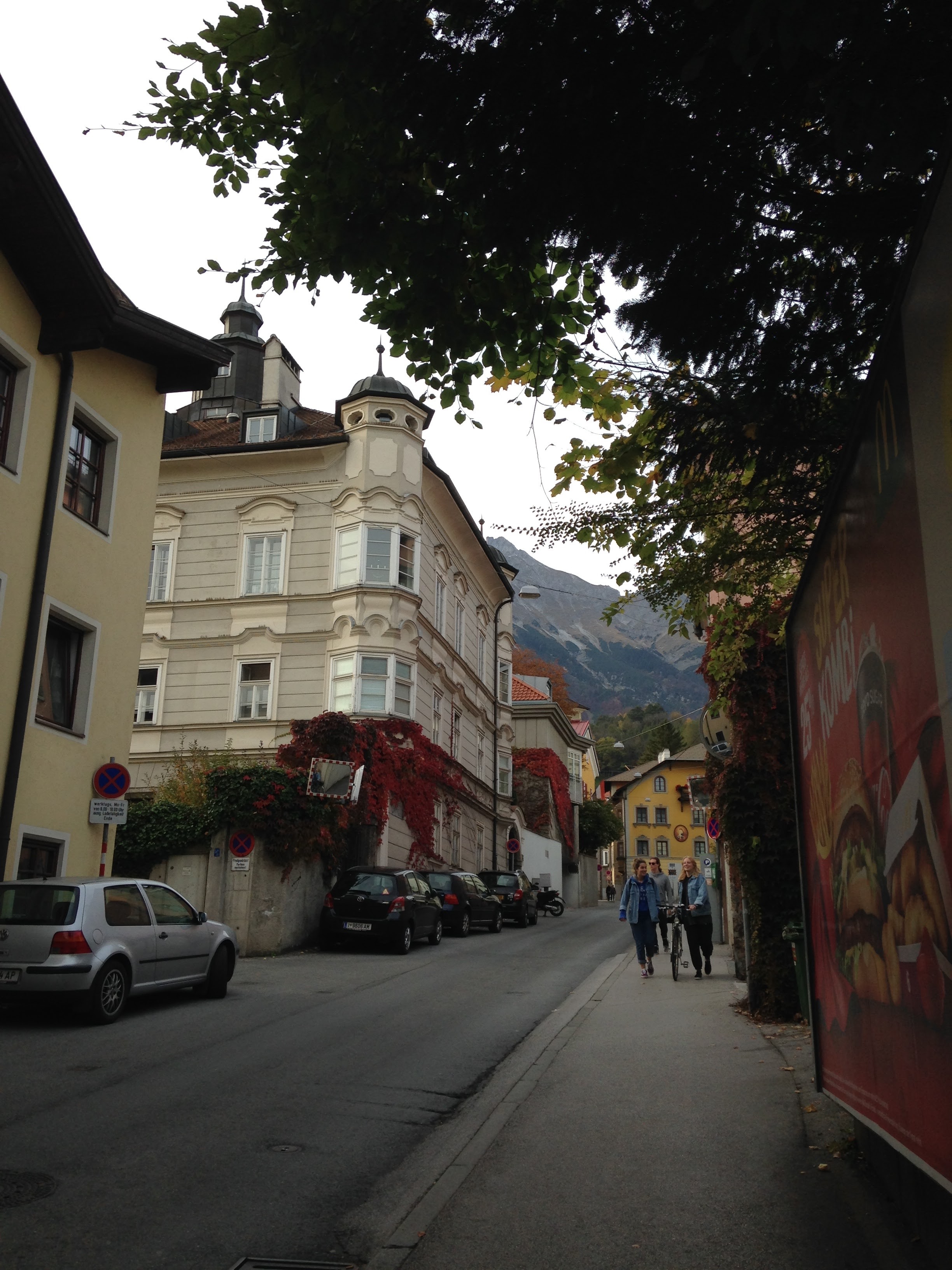
I walked across the bridge towards my new abode in the wake of mountains all around.

IMG_0409.jpg

Et voila, practically home. The huge wooden door was tucked behind a swath of climbing red ivy between two classically Austrian buildings.

Everyone was walking or biking up and down the steep hills. In many places there were wide pedestrian sidewalks next to double-lane bike paths, bordered by a line of trees and flowers, before finally meeting the edge of a quietly buzzing road on which the motorists dutifully slowed on yellow and stopped on red.

It took me awhile (I mean like two weeks after I returned) to realize why I felt (at least in part) such a sense of peace in Innsbruck. It could have been the mountains all around or the fact that I was at a conference where everyone was thinking and talking obsessively about diabetes (just like me!), but another huge part of it was the pervasive walkability of the city. Pervasive because it was unavoidable – you couldn’t get where you needed to go without walking. It didn’t just feel safe to walk alongside the cars, but in many places there were no cars at all. The restaurant I ate at twice – Osterreich – which I actually thought had something to do with an Ostrich, before I realized how painfully complacent my brain was acting – was only accessible via foot. And, what’s more, the whole time you sat, enjoying grilled chicken or roasted sausages, fluffy piles of freshly grated horseradish, or mounds of sauerkraut, you could watch, not cars whizzing by, but a live feed of humans doing human things.

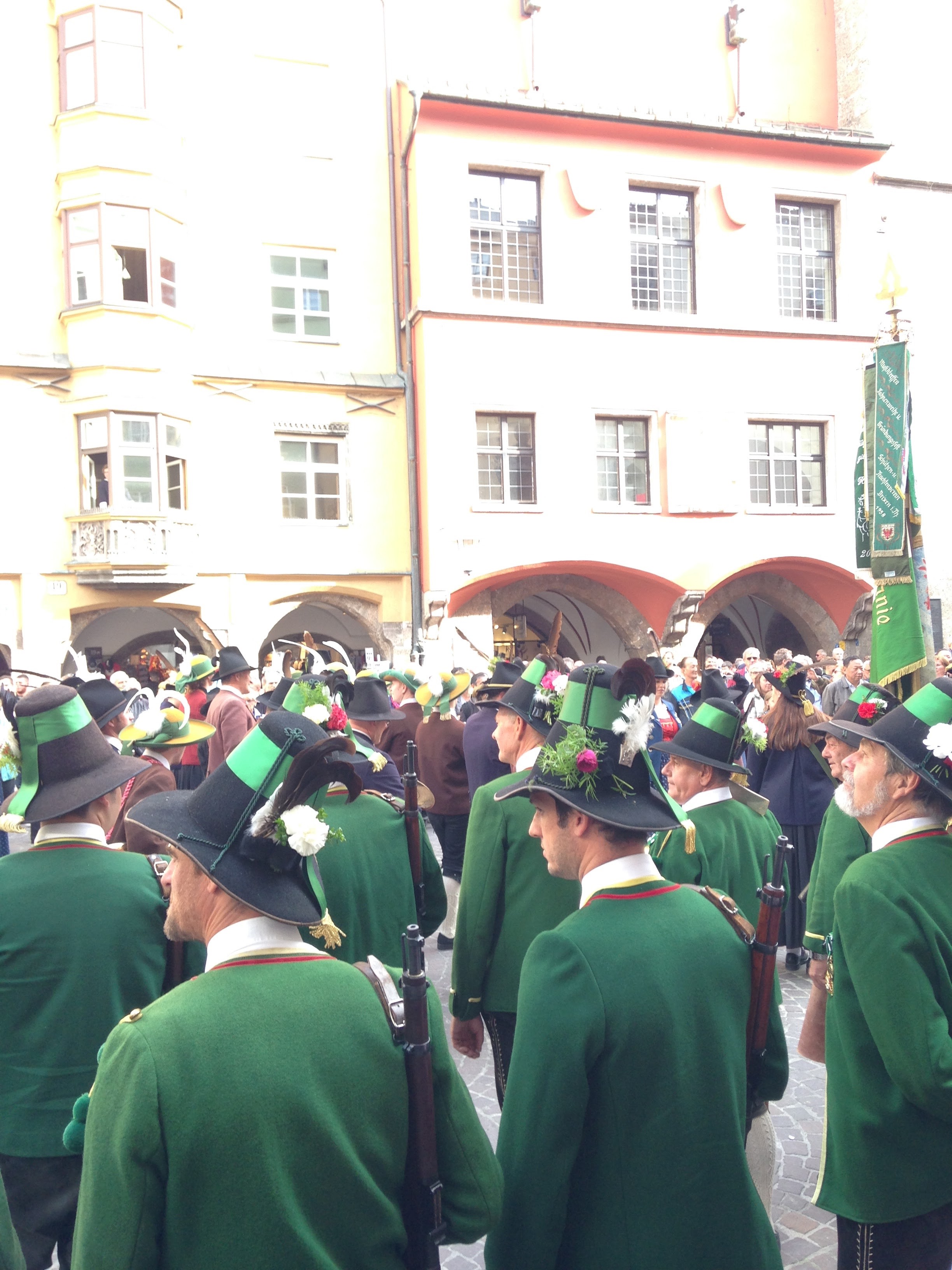
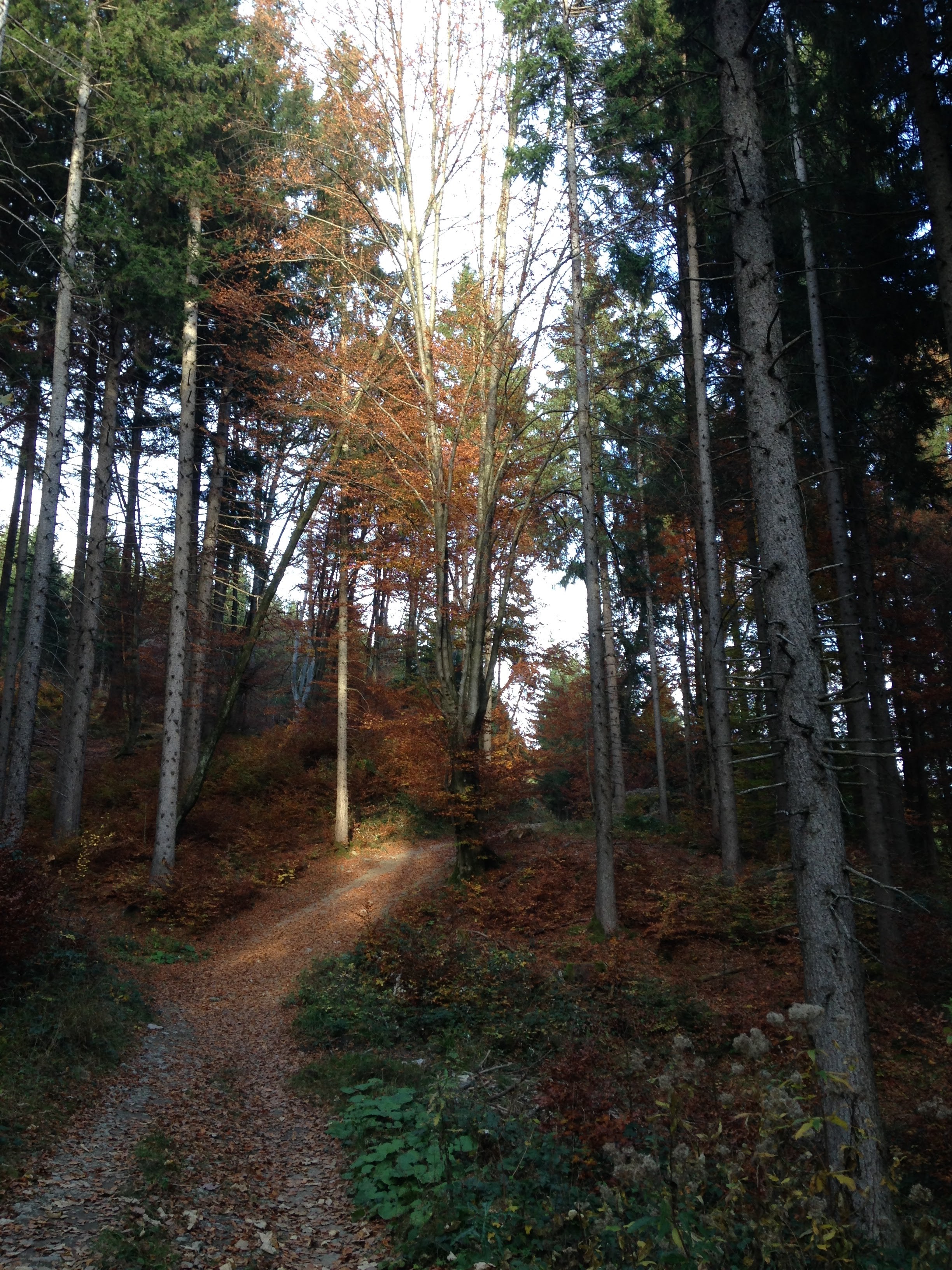
IMG_0475.jpgFor example, this brass band bedecked in green, who lined up to play in the heart of the city.
Walking is one of my favorite things. But also, walking is one of my favorite things about traveling. I’m grateful to have a car, but I don’t like cars. I like moving more slowly through life and having the chance, if I so choose, to reach out and touch it. And diabetes loves a walk. People talk about the benefits of exercise for diabetes management, as if exercise was some strange set of unnatural activities that the body must be guided through. I’ll admit, I go for a run every now and then, and it does bring my blood sugar down, but for me, there’s nothing like walking to bring my body into balance. Adam Brown, a writer often featured on diaTribe, explains the blood sugar benefits of walking beautifully here. When my bg is high, instead of dropping rapidly like I do while running, I glide towards a more reasonably blood sugar. Instead of tiring me out, a long walk makes me ready for another walk, or a night of dancing (lucky for me too, because of all the specialists, pediatric endocrinologists are the best dancers).

My last day in Innsbruck, after cramming my head full of presentations and standing up to do a couple myself, I took myself on a mind-clearing walk. My host had told me there was a tram to the top of the mountain, so I headed up the hill towards the peak. Shockingly, I did eventually find the tram, but then decided that my budget preferred continuing to walk. Oh also, that’s another thing, walking is cheap!

IMG_0491.jpg

Not to mention beautiful.

IMG_0487.jpg

Gazing out over Innsbruck, I felt overwhelmingly grateful for my experience and for all the people who helped me get there. Although I enjoy the feeling of solo exploration, traveling, more than anything else I think, makes our interconnectedness blazingly obvious. I was guided by countless mentors and passed from hand to hand of old and new friends on this journey. Thanks to each and every one.

Leaving Vienna in the morning

**Monday of this week was World Diabetes Day 2017, so in honor of all my diabetes sisters, brothers, and supporters, this post will offer a little more intimate look at the diadetails of my life than others.

After yoga Monday evening in Vienna, I followed a group of yogi/inis to a delicious dinner of Vietnamese food. Yes, definitely Vietnamese and not Viennese – although I would end up eating a lot of traditionally Austrian fare. I was just a little bit low by the time we arrived at the restaurant [70 mg/dl or so], which was really a pleasant surprise after battling some higher numbers on the sedentary plane ride. I ordered an ‘Elderberry Water,’ description in German, so I was taking a total leap. It was, in fact, an elderberry-infused glass of water – and totally delicious.

I also ordered several other things – Vietnamese crepes and spring rolls with interesting mayo-based sauces. As a lover of sauce I was delighted. I was also almost delirious from exhaustion, approaching the evening of the day that should have been a night, but it was wonderful to be sitting at a table with people living their lives in this new city I’d just stumbled in to.

That night, teeth brushed, ready to climb the ladder to my lofted bed, I found the walk back to the apartment could not compete with the long plane flight, screwed up schedule, and reduced control over food choices. Nevertheless, despite a blood sugar of 201 mg/dl, I took an extra shot and crawled happily into bed.

Every morning I wake up and check my blood sugar. Then, as my coffee is percolating, I take my shot – the same amount each morning unless something exceptional is happening that day. I have my first cup of coffee and plan the day while my insulin activates, so to speak. It’s a wonderful routine – a forced stillness and reflection courtesy of diabetes. When I awoke in Vienna to a dreamy light pouring into the vaulted living room, my blood sugar had evened out to some degree (mid-hundreds). I drank my coffee staring out onto the criss-cross of streets below and apartment windows across.

IMG_0367.jpg

Unless you have it, at this point you may need a diabetes glossary to understand a few concepts:

Walk competing with a plane ride…What?

Insulin activating…Hmm?

The day-to-day details of life with diabetes are heightened when traveling, precisely because of the exciting release of control that a good adventure requires. So at the same time that you’re sinking into the moment, diabetes can loom even bigger in the back of your mind. But I’ve learned, slowly, painfully over the years, to not let it steal the joy of the unknown from me.

A few ways I’ve successfully experienced this reclaiming of joy:

  • Allow myself a wider target range while traveling – if I’m not dropping dangerously low at night, I’ve succeeded! Likewise, as long as I can bring a high blood sugar down, things are fine. Interestingly, often this more ‘relaxed’ attitude brings with it surprisingly ‘good’ numbers.
  • Tin foil and plastic Ziplock bags at all time. How could a Ziplock bag improve my bg numbers while traveling? – you ask. Well, this may not be true for everyone, but I am the sort of person who doesn’t need to eat a whole treat to be satisfied, but who feels utterly denied if I can’t try a bite of something I’m offered. I don’t typically buy or order things that don’t support my blood sugar, but if they are there and free – I just gotta know. There are only a few exceptions I turn my nose up at completely (likelihood increases if said ‘food’ is enveloped in sealed plastic). So if I get a treat while traveling, say a flakey pastry pinwheel like they displayed on small square, porcelain plates at the conference during coffee breaks, I have a delicious bite (sometimes two) and pop it in the bag. Although often I throw away the remains before completely consuming it, it’s still less waste overall because one treat extends over a whole day, or sometimes even two or three (remember to refrigerate when necessary)!
  • And let’s talk about refrigeration. I always arm myself with a doctor’s note before traveling that states that I will be traveling with my medications and that they will need to stay cool. Perhaps because of this, or maybe my medical id bracelet (also essential when traveling alone), or because I am open about proclaiming my diabetes in airports, I have always been able to carry a little cooler with me without being stopped for having what is technically an ‘extra’ carry-on bag. I never let this cooler out of my reach – not to put it in overhead bins and definitely not to check it. I’m curious if others with T1D have successfully traveled with small coolers. Mine is soft and I use a little tiny icepack – which does flag the security scanners sometimes. Both times this has happened I have been cleared to continue on my merry way.

My diabetes travel guidelines in summary:

  • Be kind to myself, aka loosen up
  • Carry Ziplock bags or tinfoil
  • Be open/up front about diabetes

I packed a yogurt in my icepack for my four-hour train journey to Innsbruck, during which I would retrace on the ground the route I had flown the previous day. I jostled back in forth from one side of the train to the other trying to catch views of mountain peaks and aquamarine waterways, before finally being lulled into a nap by the hum of the rails.


The Story Begins

Epilogue

If you missed Chapters 1 – 3, which precede this post, you can find them here:

You’re Never Gonna Make It

With a Minute to Spare

The Plane is Coming Back?

And in case you’re wondering, “How long can she drag this story out?” I guarantee you that this is the last in the series about getting on the plane, but I had left the moral of the story untouched, or at least inexplicit, if there is one at all.

None of this was clear to me while I was writing the story, but I realized that during the whole journey from NC to Bolivia, I was balancing two contradictory emotions: panic and trust. Is trust an emotion? For me, at the time, it was. It was a force I could call on, not from outside of myself, but not just from inside of myself either. I would like to say I knew all along that it would work out, somehow, miraculously, meaning some fluke would allow me to defy the odds and make it on my flight, but really, I think I just knew that it would all work out even if I missed my flight and ended up stuck.

How nice that I have that security, even if sometimes it might be misguided. How lucky I am, truly lucky, to be able to have faith in humanity and in individuals, to help me if I am in a bind.

Here’s the thing about the panic: I could have skipped it. I could have proceeded with my plan, read SkyMag on the short flight to Miami, leisurely strolled down the deserted aisles, and arrived at my gate, right as the woman on the intercom was calling us over to let us know that the plane was re-docking.

I’m not advocating for panic. And since this experience, I’ve learned how to calm it down, and reassure myself in the moment that if I am feeling that trust, I can lean on it, and know that even if it doesn’t go according to plan, I’ll be able to make it work. But yet at the same time, emotions overtake us and sometimes hold on with a fierce grip. I didn’t breathe until I got on the cart with Jose and as we were racing, so to speak, towards the gate, I felt that people really wanted to help me, that I wasn’t alone.

With each kindness my panic subsided a little bit more and the glowing warmth of trust that I felt grew bigger. My path was validated by each point at which it seemed unfeasible.

On the plane, making my way to my seat, all emotions stepped aside so that I could experience pure elation (and exhaustion), which I have to say is one of my favorite states to be in. When I found my row, a man sitting by the aisle got up, looked at me quizzically, like, “Where did you come from?” and then let me pass. I flopped down in my window seat. He turned to me and said, “Are you just now getting on the plane.” “Yeah!” I said and smiled. “Yeah, it came back for me. No I mean, there’s technical difficulties I guess, but I missed it, and it came back.” “Wow, you’re the only person who’s happy about this” (talking about the tech issues, which at this point we had been informed were being addressed). I just laughed. Usually I would have explained but I didn’t even really understand what had happened. So we just talked about the plans we had for our trips and our work and lives back in the US. This person would become a friend who I would run into, by chance, two more times during the course of my trip.

The story didn’t end when I got on the plane; really that’s just where it began. Looking back, it seems like the interdependent lucky breaks that I caught were tailored to fit together in one precise pattern, like a code to crack. In truth, I suspect other versions of the story that would exist had one thing been different, would also have been rich and meaningful. But the blessed nature of my departure and take-off carried me through the challenges of travel, and reminded me that I was on the right path.

We all, each day, comprise the narrative of each other’s lives and write our stories together. Today I’m thinking about how we are a community even as we are strangers. Today I’m thinking about how the difference between apathy and compassion sometimes lies in simply looking people in their eyes.  Today I’m remembering the power of helping someone get where they need to go.


The Plane is Coming Back?

First, I want to recognize MLK Day and my gratitude for a day of remembrance, action, and unity.

Chapter 3

“I’m here! I’m here!” I shouted as I leapt off the airport go-cart.

“Hi, hi, I’ve got to get on the plane, I’m the last passenger” (I’m not sure when I decided this fact), I said as I stumbled over to the airport boarding and security person, my backpack flopping to and fro.

“Goodbye Jorge! Thank you!” I turned and yelled to my friend who shook his head at me and motored the cart a few feet away.

“You’re too late. The plane is gone. Nothing we can do.”

The airport guard said all these statements in a rapid montage that I like to call, ‘The most painful one-liners a hopeful traveler can hear.’ It was as if he’d practiced the exact combination of phrases that would shut down all hopes the quickest.

I was crushed, like a peanut shell on the sidewalk. Yet, shockingly, I remained undeterred by this obstacle. Somehow, the run had made me confident in my choice to get on the plane to Miami and embark on the first leg of my journey. The adrenaline coursing through my veins made me feel like I was in the sort of adventure where the protagonist overcomes incredible odds and ultimately completes her goal.

I said, “Nooo!”

He said, “Yes.”

I said, “I have to get on that plane. I have to go to BOLIVIA!”

“I said there is nothing we can do. The gate is closed. The plane has left. You were too late.”

At the repetition of those words I was filled with shame. I had let the plane go by. I was too late.

The moment passed and I decided to try arguing again.

“But I can see it! I know it’s there. I can see the plane!” I exclaimed, pointing out a foggy wall-length window.

“This is an airport. That’s not your plane.”

I realized then, the flaw in my argument. I realized too, how fixated I had become on this goal, as if it were the only way that my plans, my life, could work out.

I began to sob. Heaving sobs. I think it was that I hadn’t been able to really breathe for some time now. That and, up until this man, everyone else had been SO supportive, as if they were sent to help me along on my journey. Now suddenly it felt as if he’d slapped me in the face with a wet fish of reality (just trying that metaphor out).

“Stop crying. You don’t need to cry. People miss their flights every day. It’s not like somebody died, you just have to go over there and rebook your flight.”

Now this struck me as simultaneously cruel and also useful. He had reframed what was a complete disaster, to me, as a normal, everyday ‘oops’ from which there was a recovery protocol. And it was, right over there, at a counter where I noticed a little more than a dozen other passengers talking anxiously among themselves.

I looked back at him. “I do need to cry. I appreciate what you’re saying, and I’ll go to do that, but first, I just need to cry for a second.”

At this I saw his eyes soften, almost imperceptibly, but it was there. He walked away as I exhausted the rest of my adrenaline, still strapped to my backpack in one of those little hard blue chairs. I looked over to see Jorge, staring at me with sympathy in his eyes from the other side of the hall.

I thought about going in search of food, or to make some calls, or something before jumping right back into the mess that I’d created. But instead, after a few minutes, I got up, blew my nose (and then washed my hands because I was in an airport and that’s the right thing to do), and walked over to the ticket counter. I was in line behind a beautiful couple who were holding what appeared to be a wrapped painting as their only carry-on. I sniffled as I listened to the conversations around me in Spanish and tried to contact my friend in Bolivia (who I actually hadn’t met in person yet) through Whats App.

Lo perdí (el avion)…voy a ver que pueda hacer ahora. Hay muchos aqui que perdieron.’

She replied: ‘Que pena.’ I agreed.

Estoy en Miami. No se adonde esta mi otra maleta…’

‘Que complicada – no creo que puedas viajar hoy en Bolivia.’

The other problem was that my friend was flying from her hometown to the capitol, La Paz, to meet me. She would have been on the verge of going to sleep to wake up just a few short hours later for an early morning flight. And by early, I mean 3 am.

‘Estoy en la linea para hacer otro vuelo, pero no pienso que puedo volar hasta manana.’ – 10:33 pm

I heard another Whats App message come in from her, but I was too distracted by the sound of an airline employee speaking into her walkie-talkie: “What? What about the plane? Pasajeros a La Paz! Passengers going to La Paz! Passengers going to La Paz, come over here.”

That was me! I ducked under the stretchy cord that was creating our queue, got stuck because of my backpack, fell to my knees and crawled, heaved myself up, and made it to her, right behind the elegant couple with the painting. It was just us three. She wasn’t looking at or acknowledging us at all, but rather, still communicating over her walkie-talkie: “The plane is coming back?” she queried into it. “Well, should I send them over?” “Send us over!” I said, quietly, but audibly, eyes wide. “Yeah, send us over,” said the man with the painting. She finally looked at us. “Ok, I’m gonna take you over to the gate. It looks like the plane may be coming back. But nobody get excited.” I was NOT excited. Promise.

We got back to the gate, and she walked us up to the yellow tape line. She said, “Nobody step in front of this line. If you step in front of this line, you’re not getting on the plane.” We stood several feet back.

I heard her talking to a male airline employee who looked to be dressed for a technical occupation, building, repairing, etc. He was very nice and started to talk to us, in Spanish, and by us, I mean the couple in front of me. He looked at me and asked if I understood. I said yes. I had called my friend in Bolivia on Whats App as we hurried over to the gate moments before, to tell her that I thought I was maybe getting on the plane, and so, to not cancel her flight and to continue on with the plan as we’d laid it out. I told her I would let her know. I also told her that the plane had come back just for us. That was, after all, the only explanation I could think of. I wondered if my tears had anything to do with it.

“Problemas tecnicos,” the airline worker said. “El avión tenía problemas tecnicós.” Technical difficulties. Hmm. In one way, this was extremely lucky, in another, a little disconcerting.

The woman reappeared. She said that the plane was now back at the gate while they fixed the issue, but they had to check to see if there were still seats available (plausibly they had given away our seats to standby passengers because we were late).

The man of the couple put me in between him and his wife, which I thought was one of the kindest in the string of kindnesses I’d experienced that day. Obviously, they were not going to split up a couple.

The female airline employee found a seat for woman of the couple and she walked through the door, which had reopened, to board our plane. The employee looked back to her computer. A minute passed, I was sweating. She looked at me, and she said…

“Are you ok with a window seat?”

I would have been ok sitting on one of those fold out platforms that the flight attendants use during shuttling and take-off. I would have been ok pushing the carts of beverages up and down the aisle. I probably would have sat for 8 hours on the lid of the toilet in one of the bathrooms. So I said, “Yes, that should be fine.”

I stepped onto the jet bridge and was shortly followed by the man of the couple who’d also been found a seat. Moments later, at 10:55 pm, I sent the following Whats App message: ‘Estoy en la avion!’ Which means, sort of, ‘I’m on the plane!’

I was on my way.

Stay tuned for the epilogue (as it currently stands), coming soon.

With a Minute to Spare

Chapter 2

So at 8:05 pm I’m sitting on the plane to Miami muttering, “Come on, come on,” under my breath, and hoping they start the engines soon. By 9:00 I felt like I had aged several years and my cortisol was jumping up and down like a jack russell terrier. I had one of those little in-flight tracker screens right in front of me, and although I enjoy many traditional flight hobbies like writing in my journal, doing crossword puzzles, and reading SkyMag, this time all I could bring myself to do, literally, for two hours, was watch that little plane icon move slowly through my home state (Georgia), and onwards towards the tip of Florida.

At 9:05 the estimated arrival time had jumped back from the original 10:15 (which remember would leave me with a total of 5 minutes to make my connecting flight) to 9:44 pm. I would have, calculating time for deboarding, at least 20 minutes of straight running time before the gate to my second flight closed. At this time, I did decide to update my journal. In it I wrote:

24 minutes to destino. Quick update, I’m on the plane. BG (blood glucose) is 320 mg/dl. Was so low in Raleigh that I couldn’t think. Didn’t take insulin for a long time. We are set to arrive @ 9:44 and then depart at 10:20. As long as no gate change I’ll be at F25 (only 20 gates away from where we arriving). I’m going to write an update at 10:40 pm saying I made it, and my BG will be perfect. Then I will fall into a nice sleep until 4 am, then write for an hour. Someday I’ll learn Portuguese.

This was my last journal entry for four days.

Back on the plane, as we declined in elevation towards our destination, I looked at the screen, then back at the overhead compartment, then at my purse, then at all the people around me, in a nervous loop. There were so many people in front of me, and I knew I had to get off of that plane. A flight attendant walked by. I asked her if she could help me. I said, “Hello there…I know this might be a weird request, but my connecting flight leaves at 10:20, and that lady up there, hers leaves pretty soon too, and if there’s any way we can get off this plane, like, first, or sooner, that’d be great.”

She agreed to make an announcement over the loudspeaker. She was very kind.

5 minutes later, as people rustled around and the captain updated us of our status repeatedly, a quiet announcement urging passengers to allow those with close connecting flights to depart first, was made. The attendant warned me that most likely, people would take little heed, especially those in first class.

And yet a door opened. Behind me, a couple on their way to an island off the coast of Florida, anticipating their vacation, had heard my anxious request. “You’ve got a close connector too?” One of the women asked. I sighed. “Yeah, it’s pretty close…” “Yeah ours got crunched with the delay. What’s yours?” she asked. I told her. “OH, that is close. That makes me feel pretty good about ours.” Despite this, she was very sympathetic. ”Here’s what you need to do,” she said. Follow us off of here and we’ll get you pointed towards the Sky Train. You’ve got to get on the Sky Train because where we are, you’re never gonna make it on foot all the way to your next gate. This airport is a giant.”

Now remember, our flight was arriving considerably early. It was 9:40, and we were descending towards a gentle landing. At 9:44 we touched down.

At 9:55 we were still waiting behind several other planes on a slow, slow pathway towards deboarding. Our huge machine idled in the queue. I began to feel flushed and frantic (noticing a theme?).

My friends from a few seats back knew that everything wasn’t going to go as smoothly as they’d originally presented. They amended the plan. “Ok, here’s what you’ve gotta do. As soon as we get up there, and they turn off the seatbelt sign, we’re gonna stand up and make an opening for you so you can get your backpack and get off of here. And then, don’t look back. Don’t wait for us, we’ll just slow you down. You gotta get off this plane and run like hell. You gotta get to gate 11 (9 gates away) and get on the Sky Train. I think you’ll have to go up some stairs…”

At that moment we docked.

The seatbelt sign went off.

My friends stood up, and I began to act.

I heaved my Osprey backpack from the overhead compartment and hiccupped down the aisle, meeting the line as it slowly moved off of the plane. I stepped onto the connecting bridge and could see the light of the airport at the other end, but I was still blocked by a throng of passengers. I tried to wait patiently because I don’t like pushing through crowds or running around other people who I could potentially crash into. So I slowly trudged along, until suddenly, in the Miami airport, at what was now 10:08 pm, I saw an opening, and I made a break for it.

My backpack was flapping on my back because I hadn’t buckled the waist strap and my purse was bouncing repeatedly into my stomach. If I had ever pushed myself this hard in high school track, I might have placed in a race. I had never run like this before. I also had never run before wearing a 35 lb. backpack. There was no one in the airport, no one out in front of me. Which is sort of a figure of speech because there were a few others, walking on the moving sidewalks which had been disabled because of how late it was. After about two minutes of running, my hair flying into my face, cheeks red, eyes wide, heaving breaths from the exertion, I see a business man and I think, he must know how this airport works. As I pass him on my right, I turn my head like a frenzied bull and with panic in my eyes I scream, “Where’s the Sky Train?!” “What?” he queries back. “THE SKY TRAIN?!!!”

I still don’t know where the Sky Train was. He failed my question a second time and I waved my hand at him in dismissal before continuing to sprint through the deserted airport.

Up ahead, one of those little cars was sitting horizontal in my path. As I approached it, I yelled to the conductor, “Please, sir, I’ve got to get to gate F25,” and instead of dodging it, I jumped on (not recommended behavior).

I learned my friend’s name, and where he was from, and that he had no faith that I would make my flight because moments before he had taken the last passenger who they were calling for over the loudspeaker to the very same gate.

I disagreed with him, but I was grateful for his kind presence and effort, nevertheless. We sped (at 5 mph) through the airport. My hair flew behind me, finally out of my mouth and eyes. I began to try to breathe again, although my lungs burned and my chest was tight. I was invigorated, I was going to make it. I had 1 minute before they would close the gate at 10:10 pm as we neared F25.

…To be continued.

You’re Never Gonna Make It

Well I’m snowed into my apartment in North Carolina, so I think it’s finally time to tell the story of the time I missed my flight to Bolivia and got stuck in Miami, and then, miraculously, how the plane came back for me.

Chapter 1

It was 4 pm on a Tuesday in June, and I sat in the Raleigh-Durham airport next to several women dressed for the beach. A woman on my left read the paper, the news showed the latest escapades involving Donald Trump, who at this point hadn’t become President. Reality still felt somewhat trustworthy, and I expected soon enough to hear over the loudspeaker that my plane to Miami would board.

I was albeit, quite early, having left my house around 2 pm for a 6 pm flight, driven to the airport by my friend Sadie, who escorted me all the way to security at which point she waved goodbye dramatically. We wouldn’t see each other for at least three weeks, which was far longer than any other separation we’d had since becoming friends in grad school.

Sadie sent me several WhatsApp messages while I waited at my gate. I was going to Bolivia, where text messaging wouldn’t be possible, so we’d already assumed the new mode of communication. She told me to be careful, to have a safe flight, implying that I was somehow in control, which seemed doubtful.

Things still felt very normal, but I was on edge, as I am before all big things that involve a dramatic leap into the unknown. In this case, this trip, involved several layers of unknowns, from the people I would be working with to the culture and landscape I’d be entering.

And then the first text message arrived from American Airlines. My flight was now set to depart on time at 8 pm. This was not on time at all. My connecting flight from Miama to La Paz, Bolivia, was set to depart on time at 10:25, which meant that if my flight was leaving RDU at 8:00 and arriving in MIA at 10:05, I would have a layover of 20 minutes. Miami is a large airport, but I did not know this at the time, and even were it small, the gates close 10 minutes (at least, I would learn) before flight time.

I saw people around me lining up at the counter. I, flustered, quickly followed suit.

When it was my turn, I explained my situation, and the airline professional explained theirs right back. There had been heavy rains in Raleigh, making landing impossible for a while, and all the flights coming in, mine included, had been delayed. However, now flights were arriving on time. There was nothing they could do to get me there sooner. However, she looked at my itinerary and said, with a slightly detectable accent, “Oh, you’ll make it, you’ll be fine.”

I went and sat down. “I’ll be fine,” she said. I tried to remain calm, or rather, become calm again, which I hadn’t been for several days. I thought about eating, but I had stress-eaten an apple while trying to interpret the text message, and now my blood sugar would be soaring because I hadn’t thought to give myself more insulin until after I spoke with her, so I decided to wait.

A beautiful woman with lush black hair sitting near me, was talking about her crumpled plans. I guessed she was returning to Brazil, but I found out her destination was actually Argentina, and they had told her a similar explanation of why, but that in fact she would not be fine, and would have to reschedule the second leg of her trip because she would never make her connecting flight with such a short layover. I asked her how long her layover had become, and she said her original connecting flight was set to leave at 10:45 PM. My brain registered a problem.

I went back up to the counter where the woman with red lipstick and perfect scarlet gel nails had told me that I would be just fine. I recounted my situation again, almost verbatim, with the caveat that although she told me it’d be ok, I just didn’t see how that could be true. She clicked her nails on the desk and asked for my boarding passes. “Oh no! You’re never gonna make this. Sorry.”

“What?” I asked, or said, because I had heard her, and really didn’t want to hear it again.

“Yah, no, you’ll never get from that gate to the departing gate in, what, 20 minutes. Nope.”

“Ok, well, can you offer me some other options?”

And then she starts looking at tomorrow’s flights, and she’s talking about how I can leave in 24 hours, from here, this gate, and just do this whole thing that I’ve been waiting for, for months, tomorrow, instead of today. And tomorrow feels so far away, in fact, so far, that it doesn’t even exist in my mind. Tomorrow is supposed to exist in Bolivia, which is a place I can’t even imagine, and that I would learn was totally different than even the small imagining I had been able to do. And I couldn’t imagine, going back home. Going back home to my apartment where I had eaten all of the food except for half of a carrot because I wanted to make sure I could leave everything closed up like a book I had finished and come back fresh from this journey. The house that I had checked four or five times to make sure that the dryer, and coffee pot, and oven, and lights, and sinks, and all of it, were turned off, that the door was locked, the blinds were drawn. I couldn’t go back.

“I can’t go back” I told her.

“Well if you go to Miami, I mean, you might be able to get on a flight tomorrow at 11 AM instead of 6 PM but….”

“No” I said, “I have to get to Bolivia by tomorrow morning.” (I was scheduled to arrive and meet my friend in the airport in La Paz at 5:30 AM).

I began to look more and more frantic. My eyes were wet, I was crying a little. I heard her speak Spanish to a co-worker as she turned and took a break from me. She looked back.

“What are you doing in Bolivia?”

I responded in Spanish, which was a good move, it turns out. I explained to her about the children with Type 1 Diabetes I would be meeting and talking to. Her eyes looked wet too. Suddenly a flurry of google searches, she was really trying to help me. I had become ‘Mamita,’ which I felt really good about. But…there were still no good options.

“What if,” I started, “the weather gets bad in Miami,” and then the planes can’t leave or are delayed from there?”

“Nah, it’s not as hard for them to leave, and your second plane is already there, sitting at the airport. Not gonna happen Chica.”

“Ok, ok, well what if my first flight gets in earlier than expected, I mean that happens right? And then I run like crazy to the next gate and at that one, maybe they know, at the airport, because y’all could give them a call, and tell them, that it’s not my fault but I’m going to be just a few minutes late..and…”

“Mmm, look, if you get on the plane to Miami, you better make sure you have some backup once you get there. Because since this is weather, and we can’t do anythin’ about that, they’re not gonna pay for any accommodations for you either.”

I go sit down. I get on Facebook. Miami in the search bar. I know no one. I start to send text messages fervently. I realize I know two people who know two people in Miami. Neither can promise me outright that those people want a house guest who may, or may not, be arriving at 11:00 PM and leaving early the next morning, but it’s the best backup I’ve got.

I go back up to my friend at the counter. She says hello, with sympathy in her eyes. I explain the situation and I say, “What would you do.” She meets my gaze and says, “You’re never gonna make it. But you could go for it.”

This was the whole truth. I was never gonna make it, but I could postpone that realization by several hours and accept it once I was alone in Miami. So that’s what I decided to do.

To be continued.